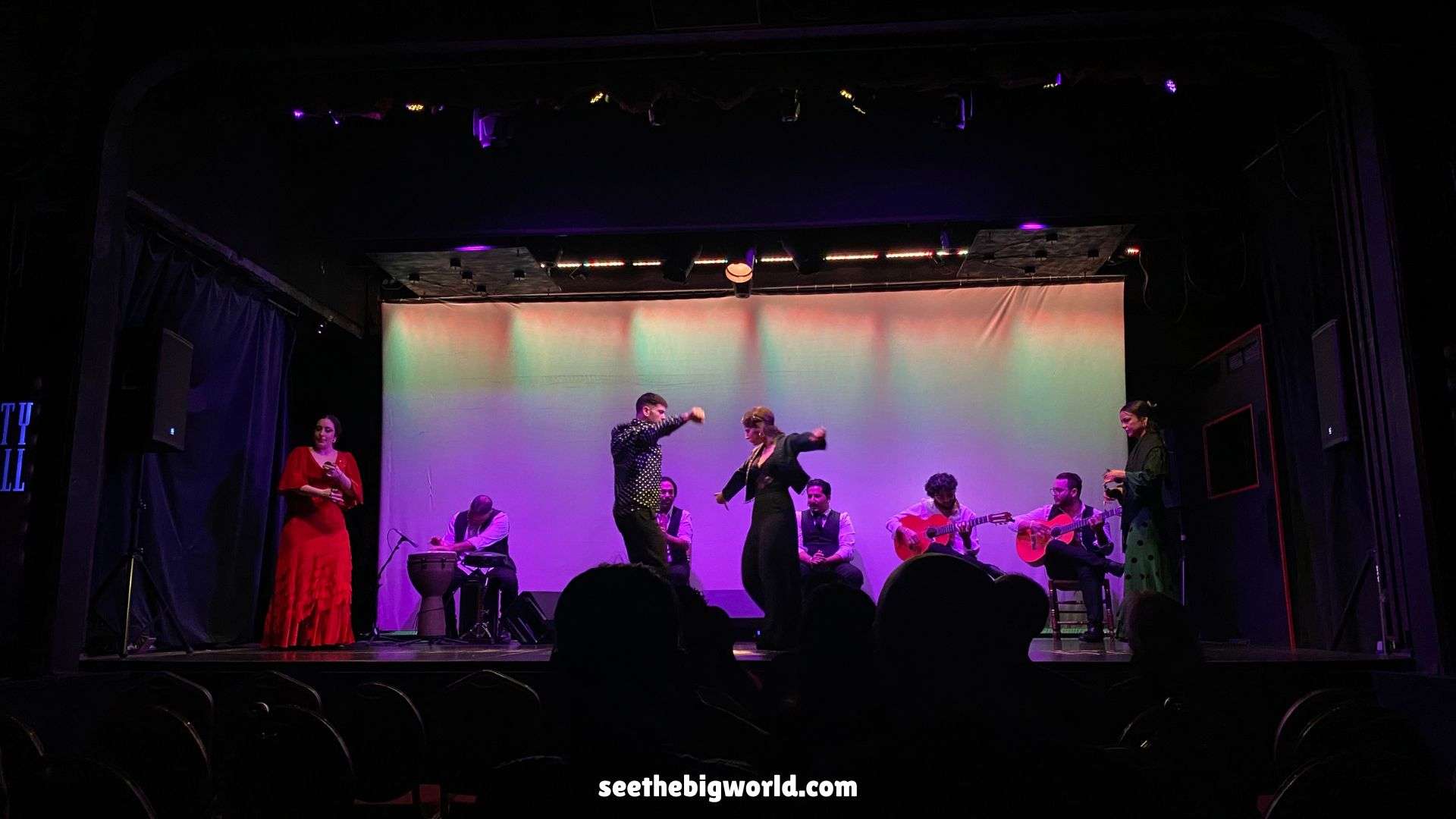
Updated on 22/12/2025 | Published on 25/12/2024
Many travellers put watching a flamenco show on their must-do list when visiting Barcelona, Spain. Yet this is actually a fascinating cultural paradox: flamenco is not originally part of Catalan culture. Why come to Catalonia to watch an art form born in Andalusia? In this article I first explain what flamenco is, then look at the historical and urban-economic context to answer whether it is worth watching flamenco in Barcelona, before listing popular venues and sharing my experience at City Hall, including seating tips, ticket booking and practical advice.
Barcelona Flamenco Fast Facts
- Recommended Venues:
- Tablao Flamenco Cordobes:A classic venue known for its traditional and high-quality flamenco shows. It’s one of the most iconic tablaos in the city.
- El Duende:A modern venue that combines contemporary artistic styles with traditional flamenco roots
- City Hall:Offers a convenient 10pm show, perfect for after-dinner entertainment. Photography and filming are allowed during the performance.
- Los Tarantos:Conveniently located with frequent daily performances
- Dress Code: Generally smart casual; no strict code (trainers/sneakers are acceptable).
- Photography: Usually prohibited, but City Hall is a rare exception that allows photos/videos during the show.
What is Flamenco?
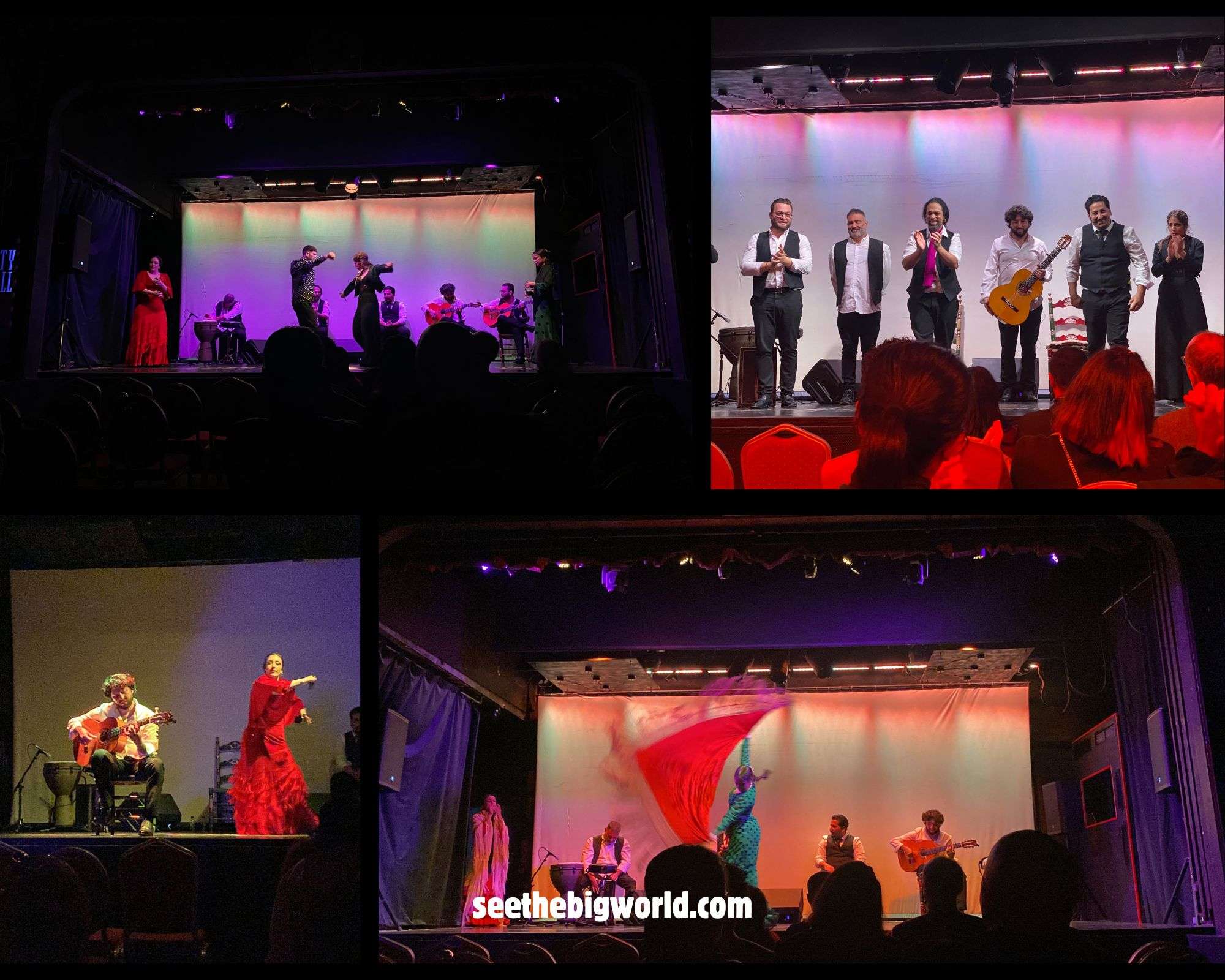
Flamenco is often simplistically described as “Spanish dance”, but in reality it is a complete performance form built around three core elements:
- Cante (song):vocals loaded with grief, protest or self-encouragement; this is the soul of flamenco.
- Baile (dance):refined hand movements, body posture and powerful footwork striking the floor.
- Toque (guitar):not only providing rhythm and harmony, but also “conversing” with the singer and dancer.
Together with rhythmic handclaps (palmas) and occasional percussion, flamenco is essentially an underclass form of expression shaped under pressure, originating in southern Spain’s Andalusia and closely tied to the histories of Roma communities, Moorish influences and working-class life.
That is why truly great flamenco is not about admiring “beautiful choreography”, but about feeling an intensely condensed surge of emotion and lived experience on stage.
Is Flamenco in Barcelona Worth It? Flamenco on a Foreign Stage
In most travel guides, “flamenco in Barcelona” is treated as an almost compulsory item on a trip to Spain.
In cultural terms, however, flamenco originates in Andalusia in southern Spain, blending the joys and sorrows of Roma communities, Moorish heritage and the lower classes; its music and dance are charged with emotional release and struggle. For Catalonia, this is essentially an “imported” culture. Barcelona has its own collective dance, the Sardana, with strict rhythms and ordered formations, more like a performance of shared identity, standing in sharp contrast to flamenco’s almost confessional loneliness.
However, in the peak decades of twentieth-century industrialisation, many migrants from the south moved north to work in Catalonia, bringing the rhythms of home into factory-city streets and taverns. As tourism later boomed, Barcelona became an international gateway with enough spending power and audience numbers to sustain high-level shows, creating a kind of “geographical mismatch”: flamenco’s roots lie in the south, yet one of its most polished stages grew up in Catalonia.
Compared with the flamboyant sets and strict dress code of Paris’s Moulin Rouge, flamenco in Barcelona tends to be staged in small taverns and mid-sized theatres known as tablaos, with a more intimate format and generally more accessible pricing. You sit close enough to see the force of the dancers’ footwork, their sweat and facial expressions; that slightly rough realism actually fits flamenco’s social origins better.
So if your itinerary only takes you to Barcelona and you cannot travel down to Andalusia, it is still worth watching a flamenco show here. What you are seeing is not “traditional Catalan culture”, but a concentrated showcase of Spain’s regional cultures, staged in Barcelona as an international city.
Best flamenco shows in Barcelona
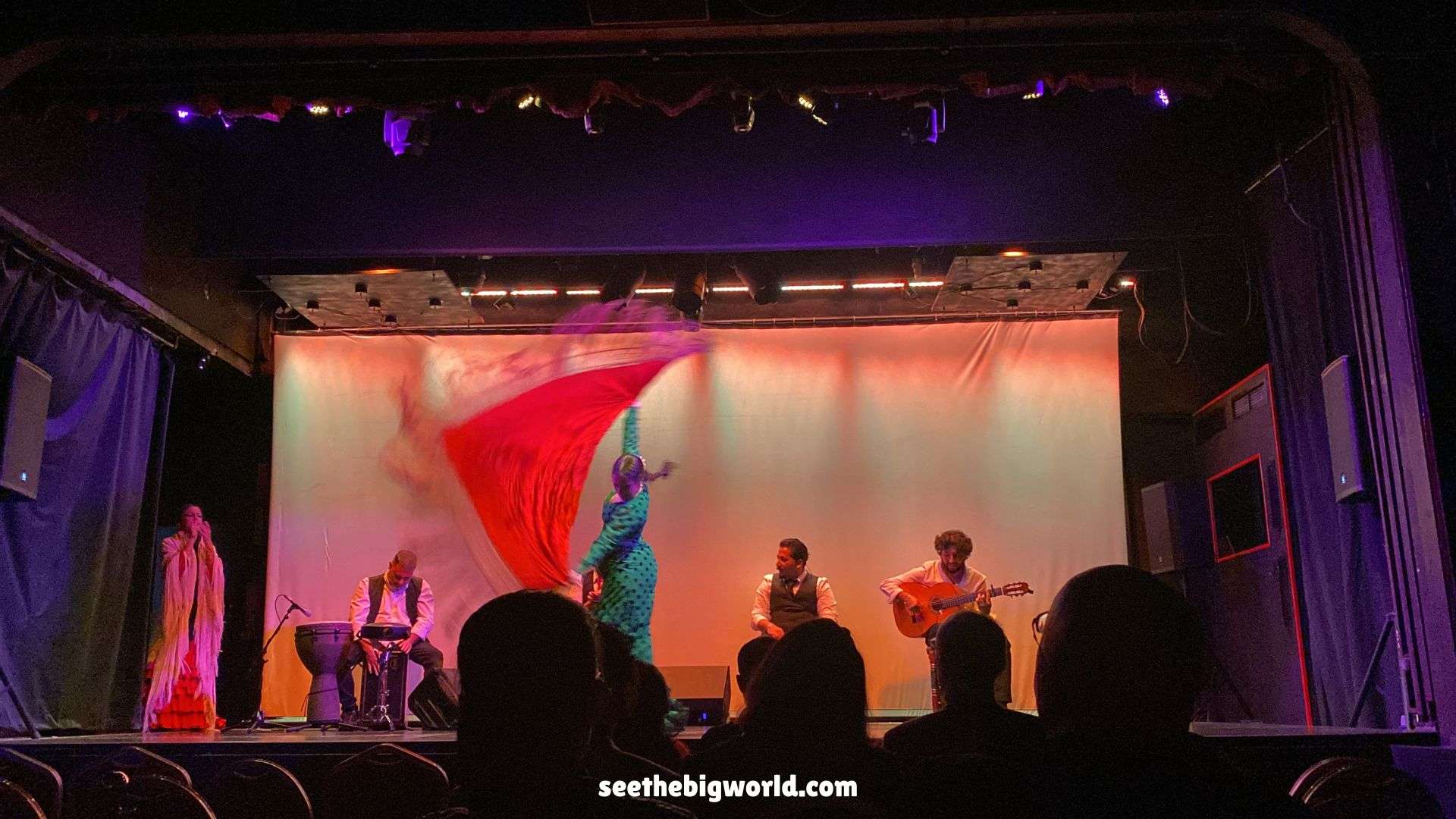
Flamenco shows in Barcelona can be enjoyed in a range of venues, from intimate tablaos (flamenco bars) to grand theatres. Here are some of the city’s most popular spots to experience the magic of flamenco:
- Tablao Flamenco Cordobes:A classic venue known for its traditional and high-quality flamenco shows. It’s one of the most iconic tablaos in the city.
- El Duende:A modern venue that combines contemporary artistic styles with traditional flamenco roots
- City Hall:Offers a convenient 10pm show, perfect for after-dinner entertainment. Photography and filming are allowed during the performance.
- Los Tarantos:Conveniently located with frequent daily performances
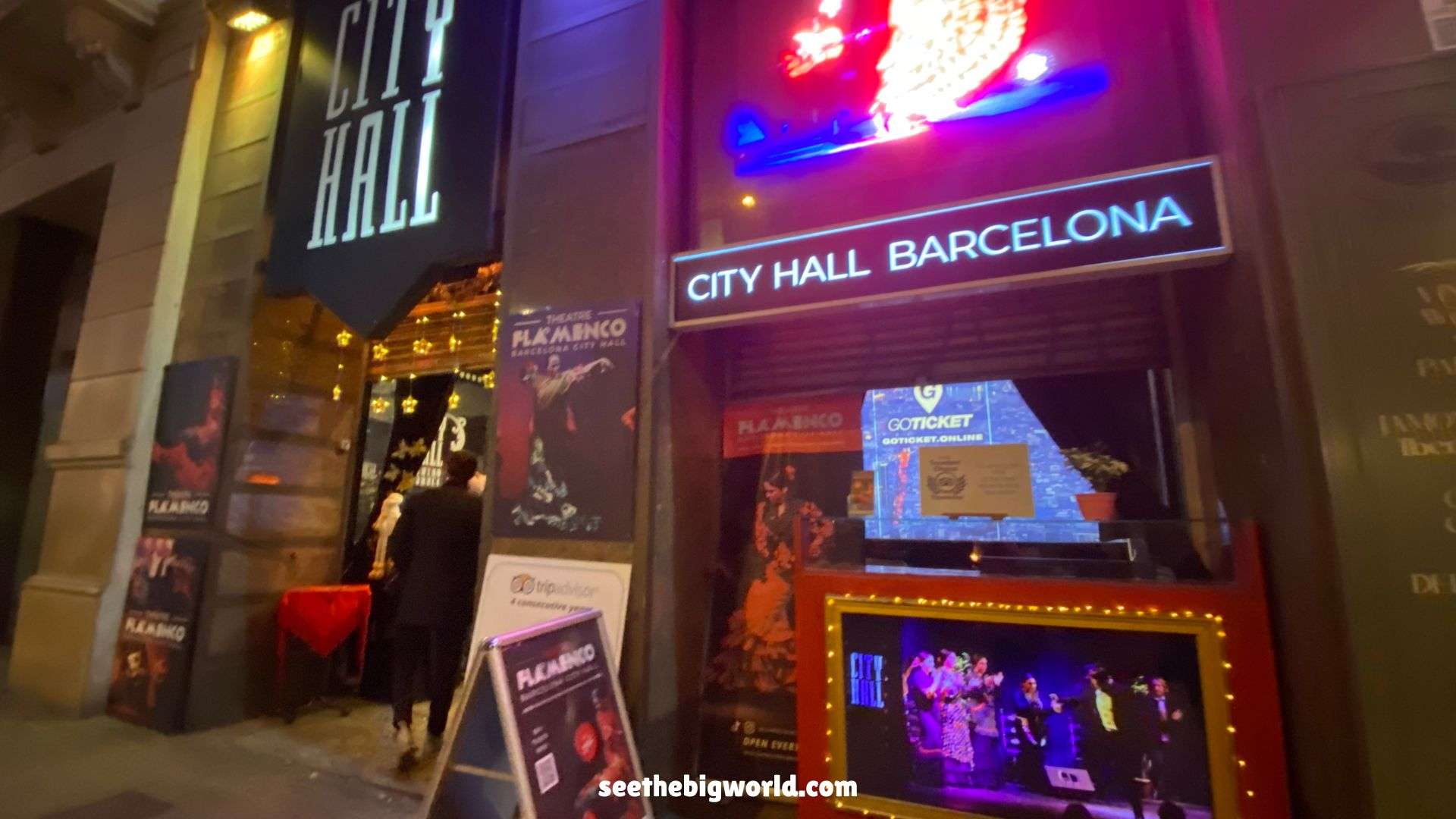
Flamenco Experience at Barcelona City Hall Theatre
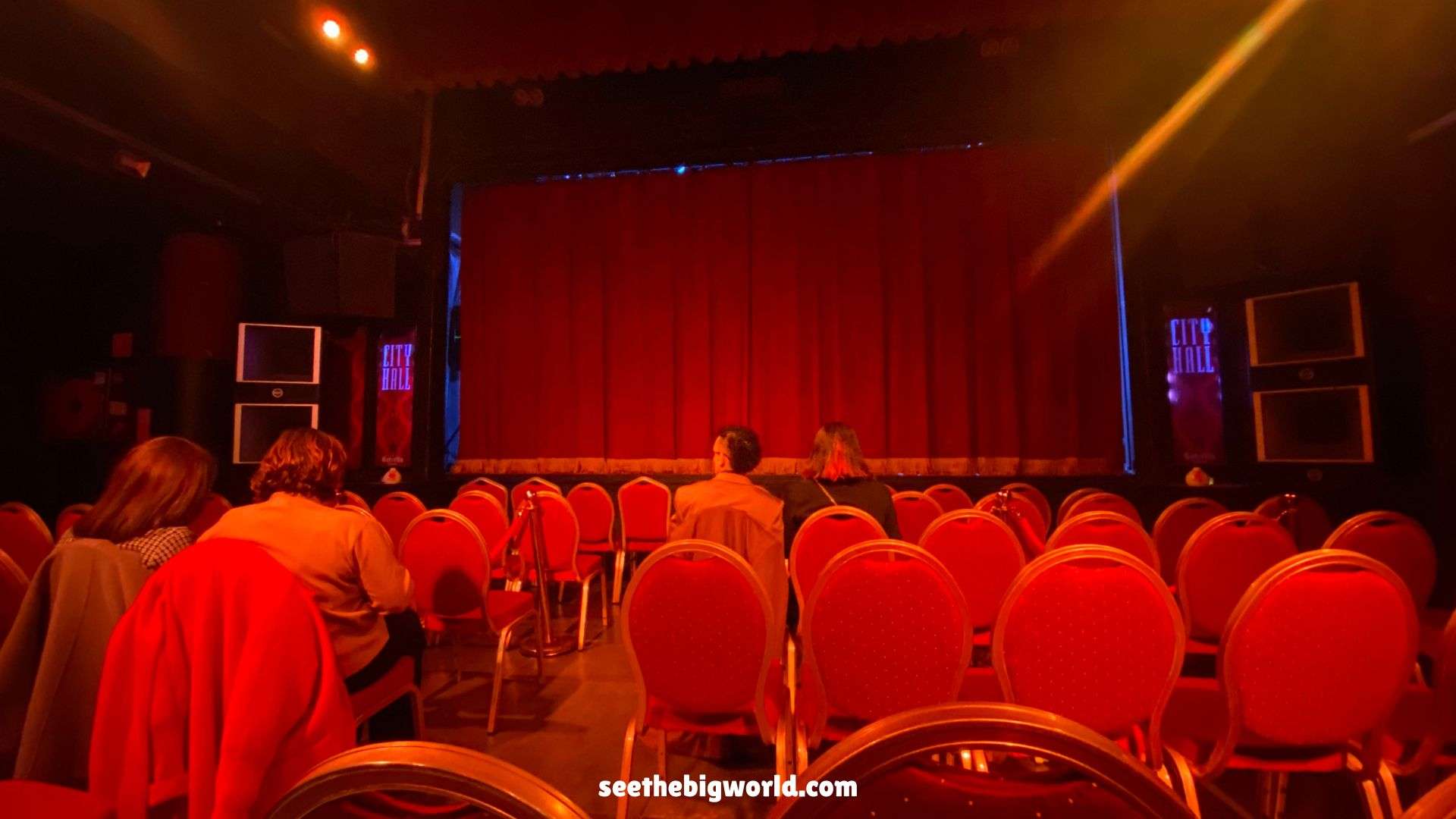
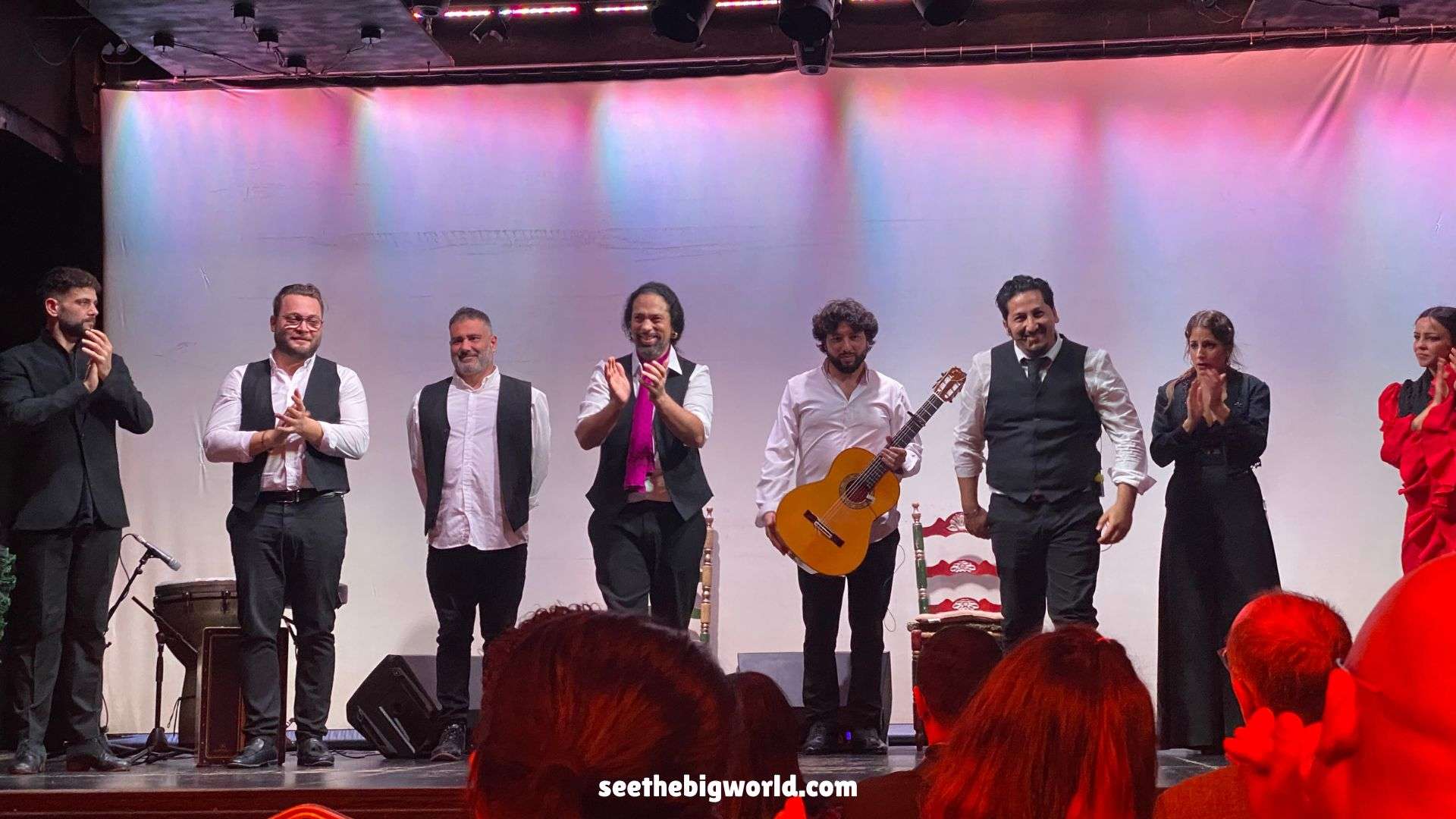
I chose the Flamenco performance at City Hall because it offers a 10 p.m. show, which is perfect for wrapping up a day after dinner. Although the stage design is simple, the close proximity between performers and the audience allows for a more direct connection with the emotions and expressions of the dancers.
The dancers’ footwork is exquisite, with every movement conveying intense emotion, leaving a powerful impression. The harmony between the guitarist and singer enhances the melodies and rhythms, vividly showcasing the emotional depth and artistic charm of Flamenco.
Flamenco Dress Code
Unlike the Moulin Rouge in Paris, most flamenco venues don’t have a strict dress code. That said, it’s still best to dress neatly and appropriately. In our experience, wearing comfortable trainers is perfectly acceptable and won’t raise any eyebrows.
Can You Take Photos at Flamenco?
At most flamenco venues, photography and filming during the performance are not allowed, though you’re usually welcome to take pictures before or after the show.
However, when I attended a performance at City Hall Theatre, I was pleasantly surprised to find that the venue does allow photos and videos during the show. It was a rare opportunity to capture the passion and intensity of the performance as it unfolded live on stage.
How to Get to Flamenco at City Hall Barcelona
City Hall Theatre is conveniently located in the heart of Barcelona, making it easy to reach:
- Take the metro to Liceu Station (L3 – Green Line); it’s just a few minutes’ walk from there.
- It’s also only a short stroll from the famous La Rambla, so you can easily fit it into your city centre itinerary.
Things to Do Near City Hall Barcelona for Flamenco
If you’re planning to explore the area around City Hall Theatre before the show, here are some attractions to consider:
- La Rambla
- Mercado de Boqueria
- Gothic Quarter (Barri Gòtic)
All of these attractions are centrally located, making it easy to experience the charm of Barcelona without interfering with your evening plans.
Where to Stay Near City Hall Barcelona for Flamenco
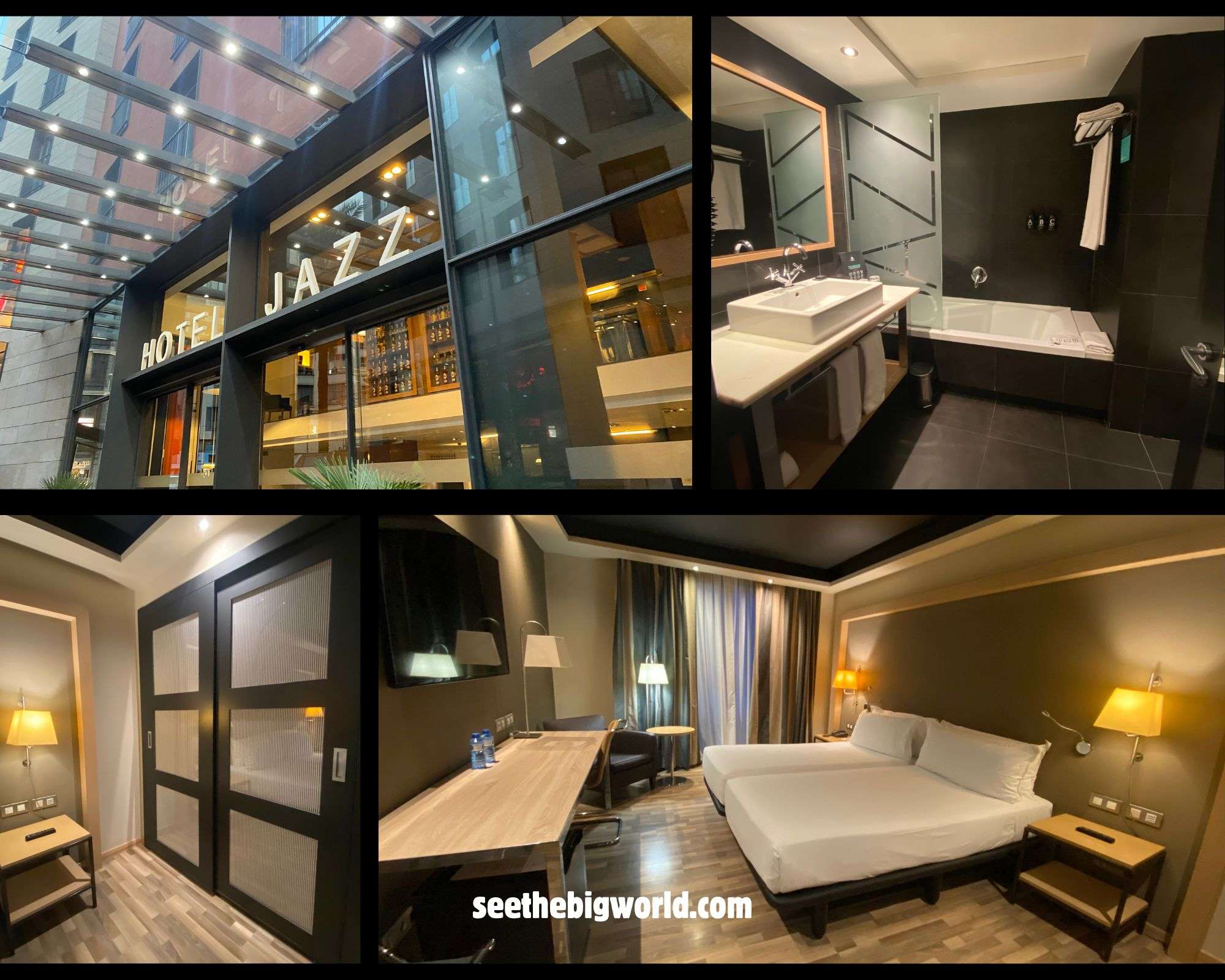
I was very satisfied with my stay at Hotel Jazz in Barcelona. Check room rates:Expedia|Hotels.com
The hotel is located less than a minute’s walk from Universitat metro station, 13 minutes’ walk to Casa Batlló, 5 minutes to Plaça de Catalunya, and less than 10 minutes to La Rambla and the Boqueria Market (Mercat de Sant Josep). Additionally, the hotel has a rating of 9.4 (based on 1,004 reviews), with a three-night stay costing £300 (excluding breakfast, with free cancellation), which perfectly met my criteria for choosing accommodation.
Read More
City Guides:Barcelona
Barcelona Articles:Barcelona Transport Guide|Sagrada Família|Park Güell|Casa Batlló|La Pedrera (Casa Milà)|Casa Vicens|Palau Güell|Palau de la Música Catalana|Hospital de Sant Pau|Barcelona Cathedral|Port Vell|La Boqueria Market|Montserrat|Flamenco Review
Passes:GoCity Barcelona|Hola Barcelona|Euro Train Pass
Sagrada Família:Get Your Guide|KLOOK
Casa Batlló:Get Your Guide|KLOOK
Casa Mila:Get Your Guide|KLOOK
Park Güell:Get Your Guide|KLOOK