The Spanish Steps are one of the most recognisable landmarks in central Rome, famous as a filming location for Roman Holiday and, more recently, for a rule that catches many visitors off guard. This article covers the history of the steps, why they have a Spanish name, what to look out for when you visit, and the fine you will want to avoid.
Spanish Steps Visitor Information
- How to Get There:
- Metro Line A to Spagna, the steps are directly outside the station
- Around 10 minutes on foot from the Trevi Fountain, 15 minutes from the Pantheon
- Roma Pass|Omnia Card|Euro Train Pass
- Opening Hours:Open All Day
- How Long to Spent:15 to 30 minutes; allow 45 minutes if visiting the church at the top
- Tickets:
- The steps and the church are both free to enter
- Rome: Spanish Steps, Trevi, Navona and Pantheon Sunset Tour
History, Architecture and Why the Name
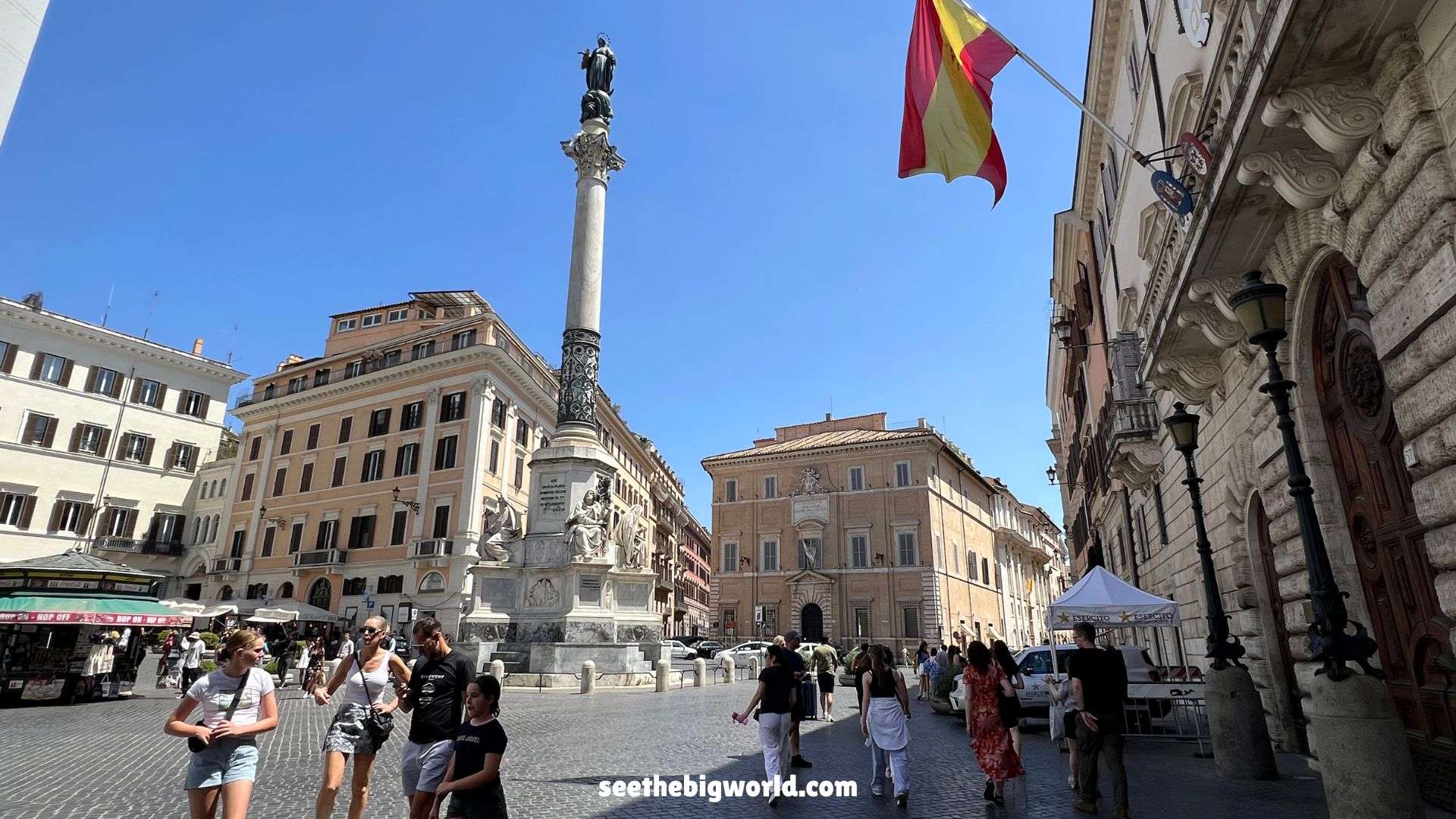
The Spanish Steps are in Rome, but the name comes from the Piazza di Spagna at the base of the staircase. The square has been home to the Spanish Embassy to the Holy See since the seventeenth century, and the whole area took its name from that association.
The steps themselves were funded by the French Bourbon monarchy and built between 1723 and 1725, designed by architect Francesco de Sanctis to connect the square with the French church at the top, the Trinità dei Monti.
In other words, France paid for the stairs, but Spain got the name. This kind of historical overlap is not unusual in Rome.
On Screen | Roman Holiday and Emily in Paris
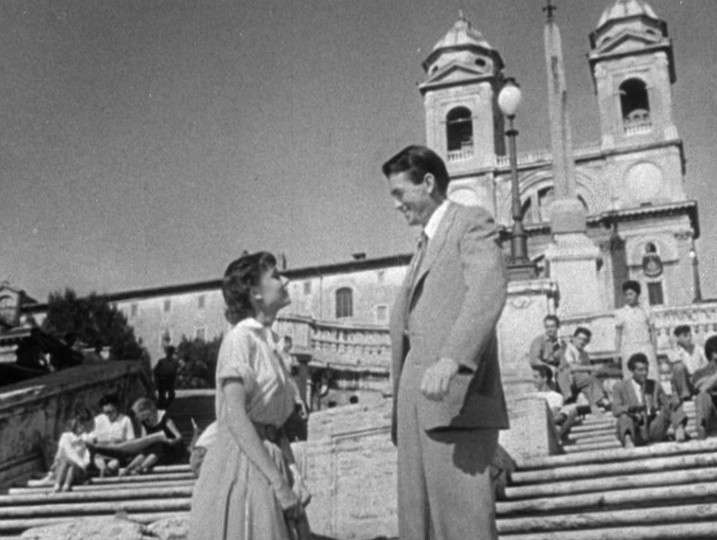
The most well-known cultural connection is the 1953 film Roman Holiday.
Audrey Hepburn and Gregory Peck shared a scene here that turned the steps into a global symbol of romance and freedom.
Seventy years later, Emily in Paris Season 4 brought the steps back into focus.
Emily and Marcello spend a night riding a Vespa through Rome and end up at the Spanish Steps to watch the sunrise, one of the most memorable scenes of the season.
The €400 Fine
Since August 2019, sitting on the Spanish Steps has been prohibited. So have wheeled luggage and folding chairs. Fines go up to €400, and the rule is actively enforced.
The Emily in Paris sunrise scene was filmed here, but the moment where Emily and Marcello sit on the steps would technically result in a fine in real life. Fans have called it a parallel universe. Do not use it as inspiration.
Visiting in Person | Four Things to See
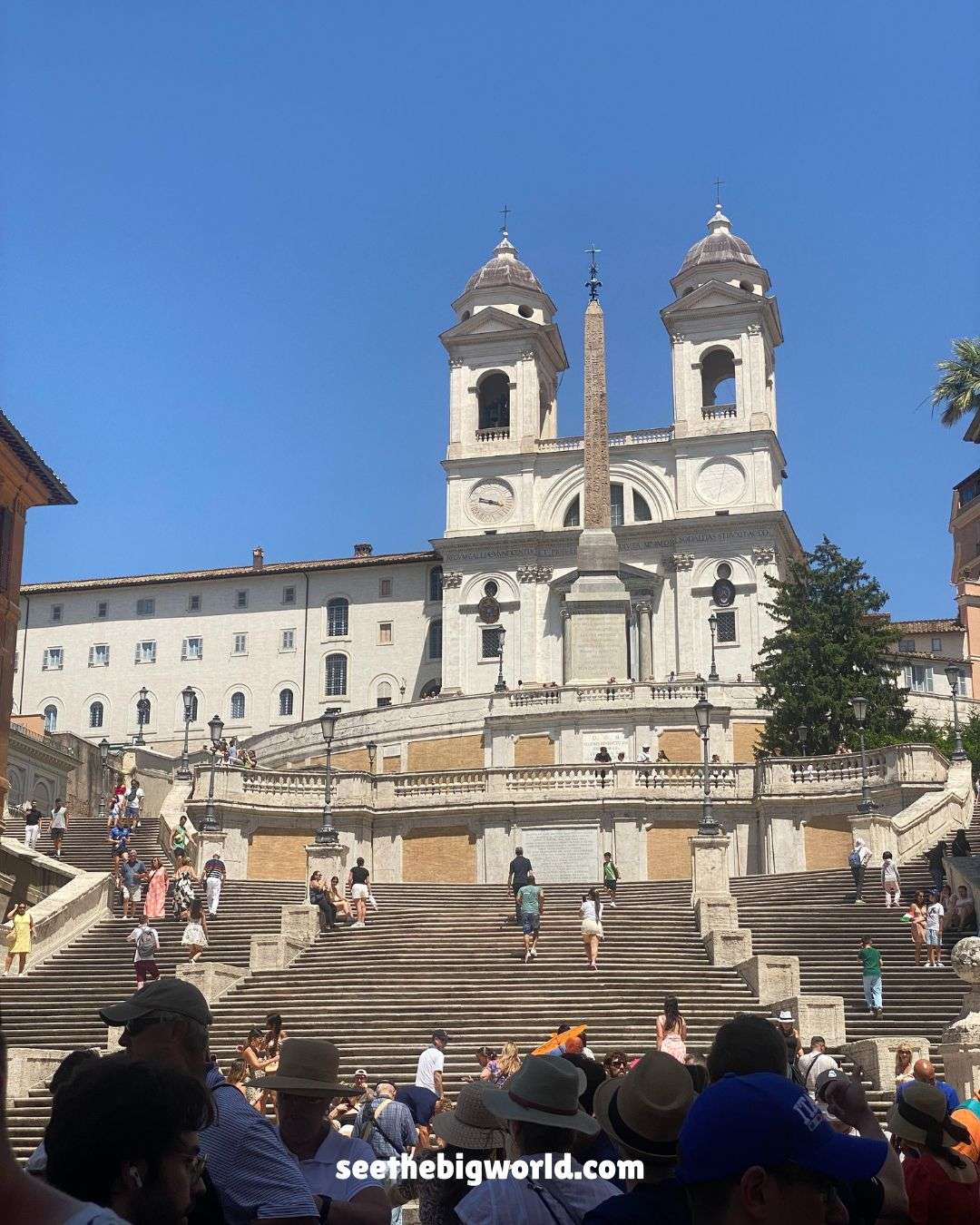
I visited in the afternoon, at peak crowd. The steps were packed. That is the reality for most visitors. If your schedule allows, early morning is the better option: the crowds thin out, the light is softer, and for a short window it is possible to have the steps almost to yourself.
1. The Steps
138 steps connecting the Piazza di Spagna to the church at the top. One of Rome's most enduring social spaces, as busy today as it has ever been.
2. Trinità dei Monti Church
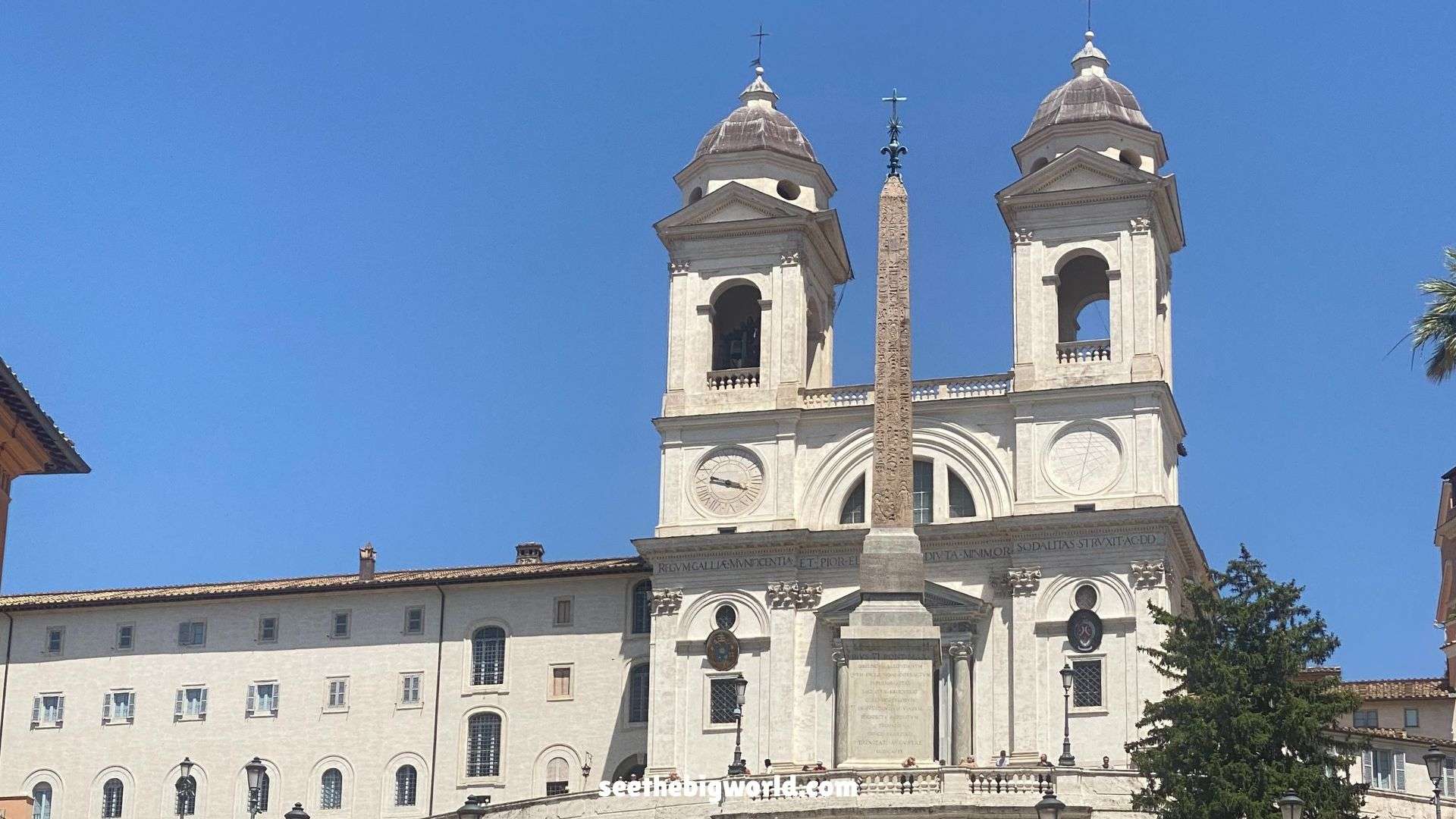
Situated at the top of the Spanish Steps, this church is recognisable for its distinctive twin bell towers, a rare architectural style in Rome. Consecrated in 1594, the church has deep ties to French royalty. In 1494, King Charles VIII of France commissioned its construction to honour Saint Francis of Paola’s assistance to his father, King Louis XI.
The church features a single nave flanked by six chapels on either side, later updated with 18th-century additions. A wrought iron gate was installed to preserve monastic privacy. The elegant structure offers breathtaking views of Piazza di Spagna, making it a must-visit for history and architecture enthusiasts.
3. Piazza di Spagna
Considered one of the most historically significant squares in Europe, Piazza di Spagna is a bustling hub of activity. Surrounded by shops and cafés, it’s an ideal spot to relax and recharge during your tour of Rome.
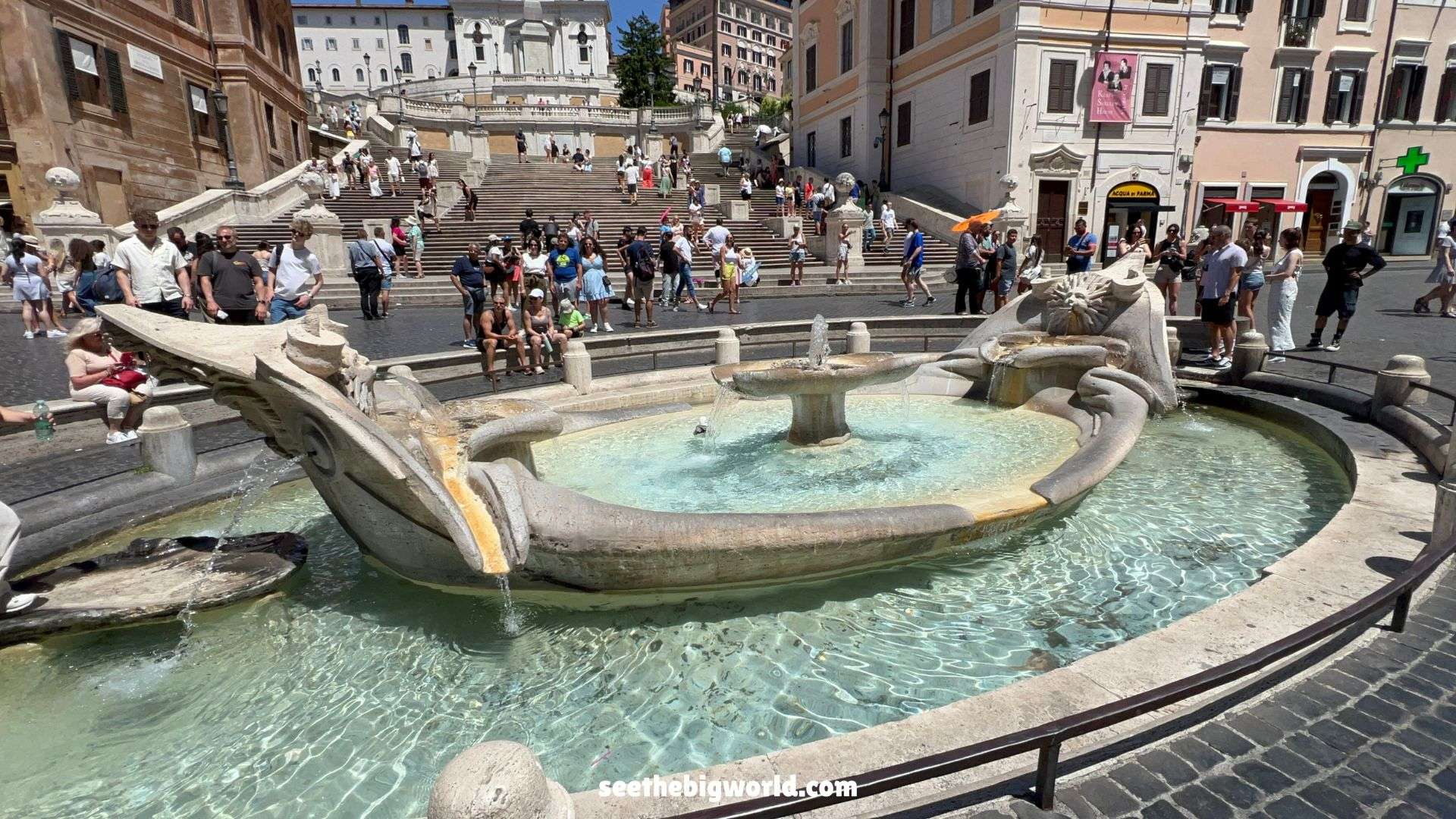
4. Fontana della Barcaccia (The Fountain of the Old Boat)
Located at the base of the Spanish Steps, this Baroque-style fountain resembles a partially sunken boat. Designed by Pietro Bernini and his son Gian Lorenzo Bernini, the fountain symbolises the floods that historically plagued Rome.
The inspiration for the fountain came from a 17th-century flood that left a boat stranded at this site. The intricate carvings and flowing water create a dynamic display, making it a perfect photo spot. Visitors are often captivated by the delicate curves of the water cascading from the boat’s sides.
Read More
City Guides:Rome|Milan|Florence|Venice|Cinque Terre
Rome Articles:Colosseum|Pantheon|Spanish Steps|Trevi Fountain|Vatican Museums|St. Peter’s Basilica
Milan Articles:Duomo di Milano|Galleria Vittorio Emanuele II|The Last Supper
Passes:Euro Train Pass|Roma Pass|Omnia Card
Colosseum:Get Your Guide|KLOOK
Vatican Museums:Get Your Guide|KLOOK
Duomo di Milano:Get Your Guide|KLOOK
Florence Cathedral:Get Your Guide|KLOOK