Updated on 25/11/2025 | Published on 15/10/2025
Jungfraujoch, located in the Bernese Oberland region of Switzerland, is one of the most iconic destinations in the Alps.This guide summarises my personal experience visiting the summit, covering transport routes, ticket prices, must-see attractions, weather advice and accommodation options — to help you decide whether this high-altitude journey deserves a place in your Swiss itinerary.
Read Before You Go
Swiss Articles:Scenic Train Comparison|Glacier Express|GoldenPass Express|Swiss Mountain Comparison|Jungfraujoch|Matterhorn|Harder Kulm
Passes:
Swiss Travel Pass(STP):Get Your Guide|KLOOK
Swiss Half Fare Card:Get Your Guide|KLOOK
Gornergrat Train:Get Your Guide|KLOOK
Jungfrau Travel Pass:Get Your Guide|KLOOK
Why Jungfraujoch is a Classic Swiss Landmark
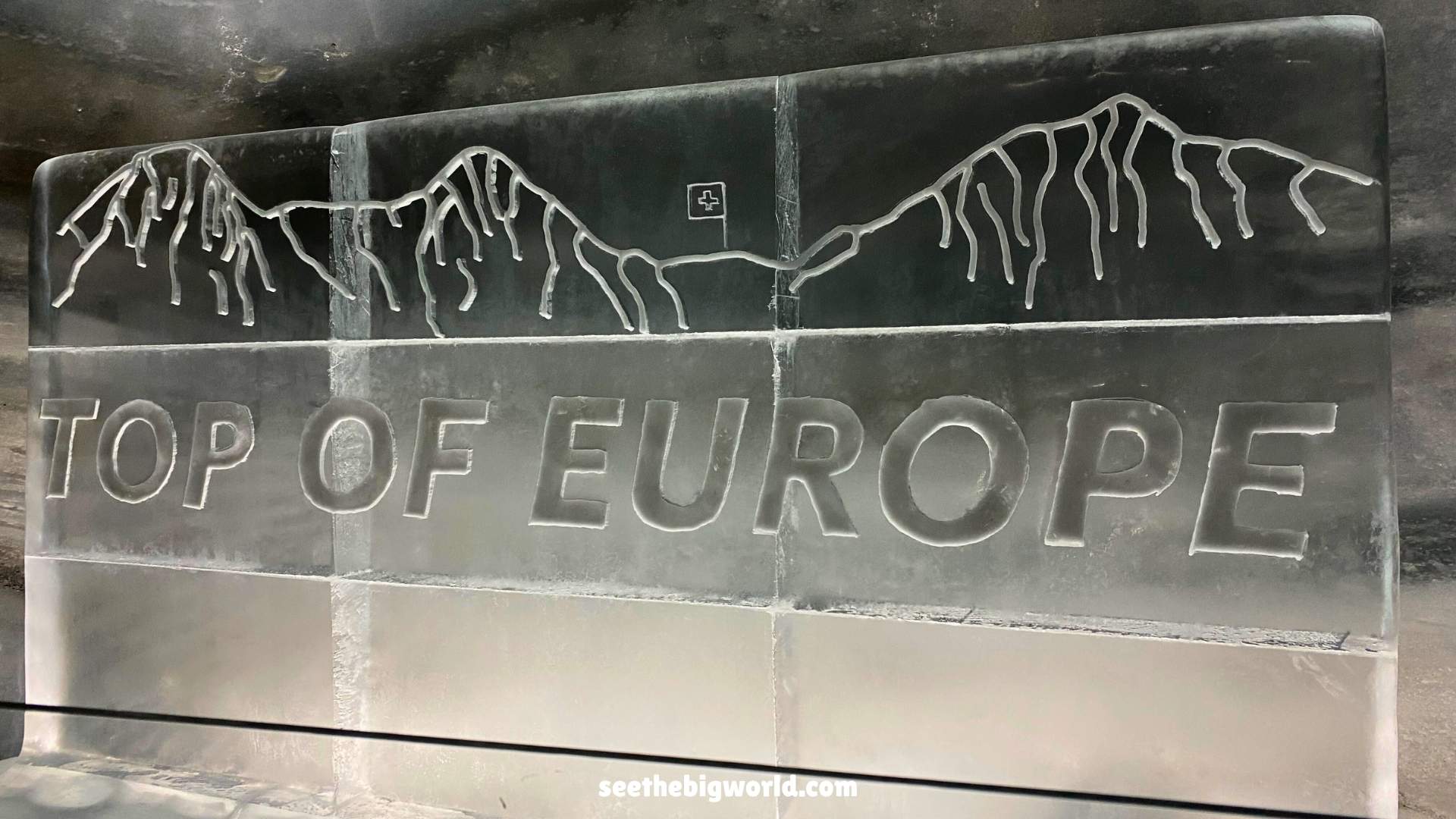
At 3,454 metres above sea level, the Jungfraujoch railway station is known as the “Top of Europe.” It holds the record as the highest railway station in the world and remains one of those “once-in-a-lifetime” destinations for many travellers.
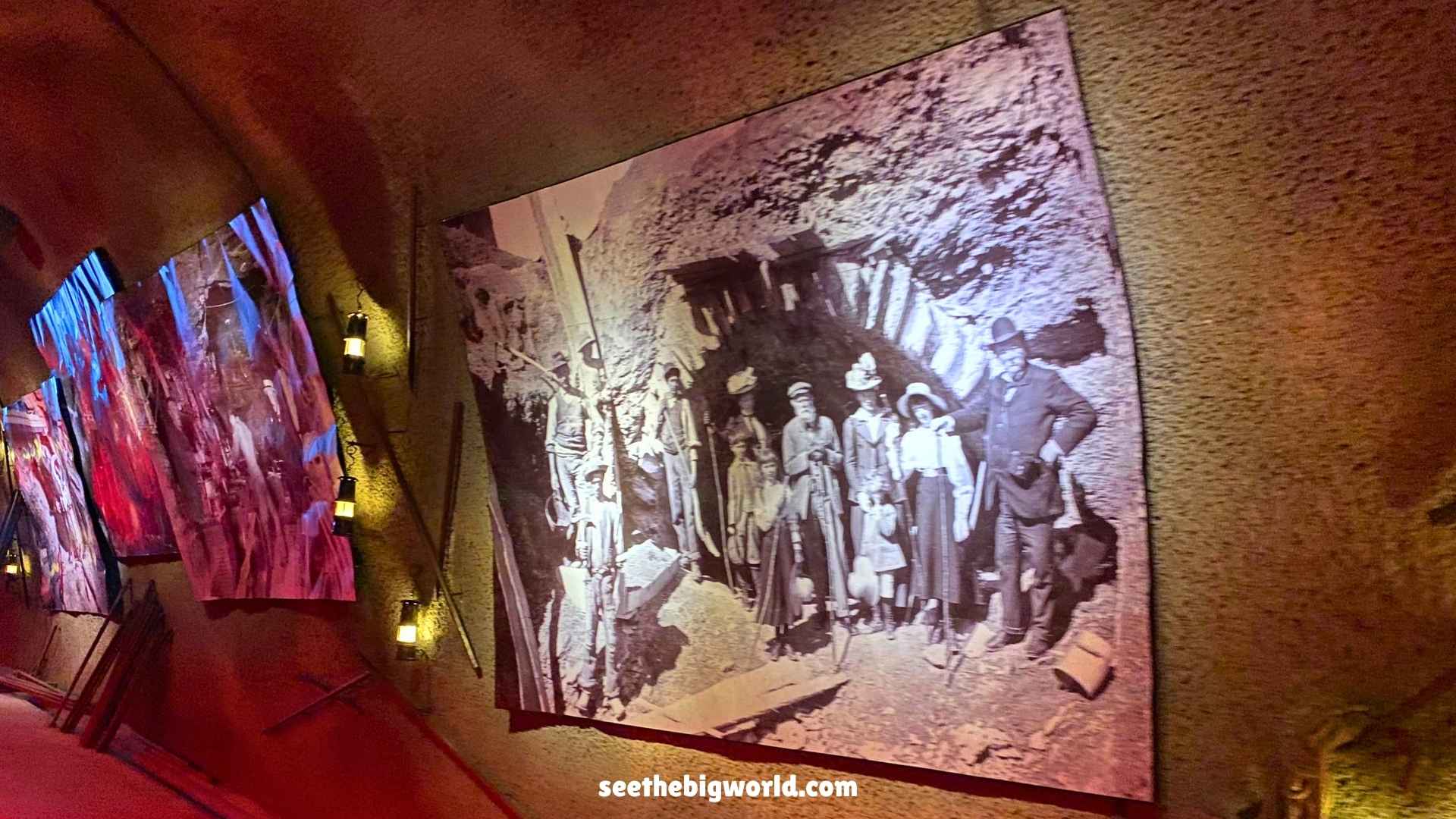
The project was conceived and led by Swiss industrialist Adolf Guyer-Zeller in 1893. Stretching about 9 kilometres, its main tunnel cuts through the Eiger and Mönch mountains. The construction faced multiple challenges, including financial difficulties and fatal accidents, yet it ultimately became an indispensable symbol of Swiss Alpine tourism.
Best Routes and Ticket Information
For the smoothest and most efficient ascent to Jungfraujoch, the recommended route is:
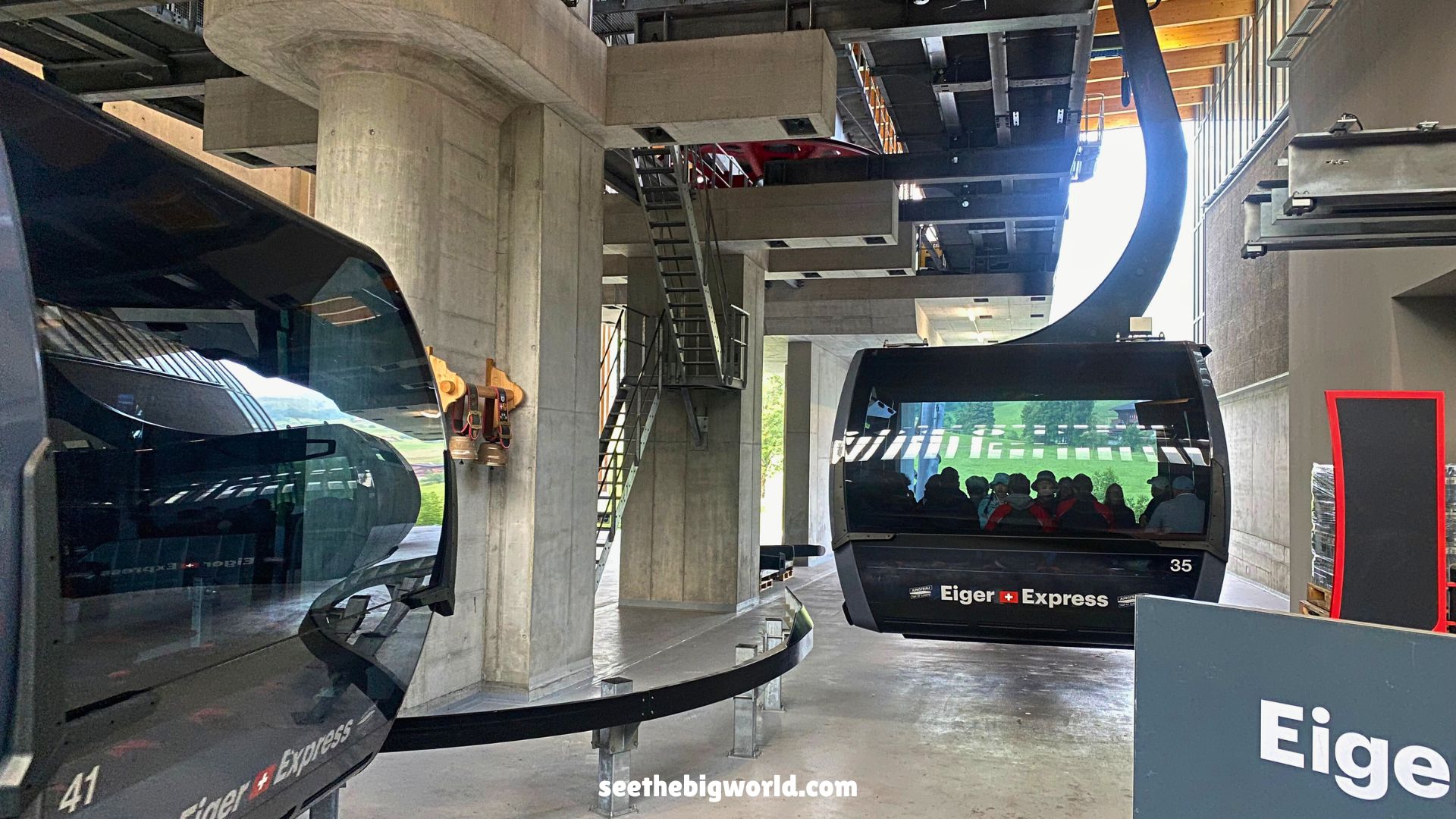
- From Interlaken Ost, take the train to Grindelwald Terminal, then transfer to the high-speed Eiger Express cable car for a 15-minute ride to Eigergletscher. From there, board the Jungfrau cogwheel train for another 25 minutes to reach Jungfraujoch station and the observation deck at 3,454 m above sea level.
- The entire journey takes about 1.5 to 2 hours.
- This route combines breathtaking alpine scenery with Switzerland’s most classic mountain railway experience — a must for any traveller.
Prices
- Adult round-trip fare: CHF 227–250 (2025; varies by departure point and season)
- Swiss Travel Pass : around CHF 168
- Swiss Half Fare Card : around CHF 113–120
- During peak season (May to August), visitor numbers are high — reserve your time slot in advance on the Jungfrau Railways Official Website is recommended.
- Reservation fee: CHF 10 per person (mandatory)
- If you prefer not to purchase tickets yourself, consider joining: a day tour to Jungfraujoch from Interlaken
Best Time to Go, Stay and Return
Here’s how to plan your Jungfraujoch visit for ideal weather, comfort, and sightseeing:
- Depart between 7 a.m. and 9 a.m. — mornings offer clearer skies, better visibility, and shorter queues at the Swiss-flag photo spot
- Stay on the summit for at least 2–3 hours to explore the Ice Palace, Sphinx Observatory, gift shops, and dining area
- Return between 2 p.m. and 4 p.m. to avoid late-day fog and ensure a relaxed descent
Jungfrau Travel Pass vs Swiss Travel Pass
Jungfrau Travel Pass
Designed specifically for the Jungfrau Region, covering trains, cable cars, and lake boats, valid for 3–8 consecutive days.
- Price: 3 days ≈ CHF 210 / 8 days ≈ CHF 330; holders of a Swiss Travel Pass or Half Fare Card get 7–15% off.
- Features: Unlimited rides on many mountain routes, with discounts on parts of the Jungfraujoch railway.
- Who it’s for:
- Travellers staying several days in the Jungfrau area
- Families (with discounted child tickets).
Swiss Travel Pass
Valid for all Swiss trains and city public transport, available for 3–15 days, either as consecutive travel days or a “Flex Pass” used on selected days within one month.
- Includes free travel on most trains and boats; Jungfraujoch routes offer discounts but require a supplement.
- Who it’s for: Travellers touring multiple cities or regions across Switzerland.
Which is better value?
- If you’re on a short trip and mainly travelling between cities → Swiss Travel Pass
- If you plan to explore the Jungfrau area in depth and take several mountain rides → Jungfrau Travel Pass
- If you’re only visiting Jungfraujoch for 1–2 days and already have a Swiss Travel Pass or Half Fare Card, discounted single tickets are sufficient.
What to See at Jungfraujoch
Once at the summit, facilities are well organised — plan to spend 2–3 hours there.
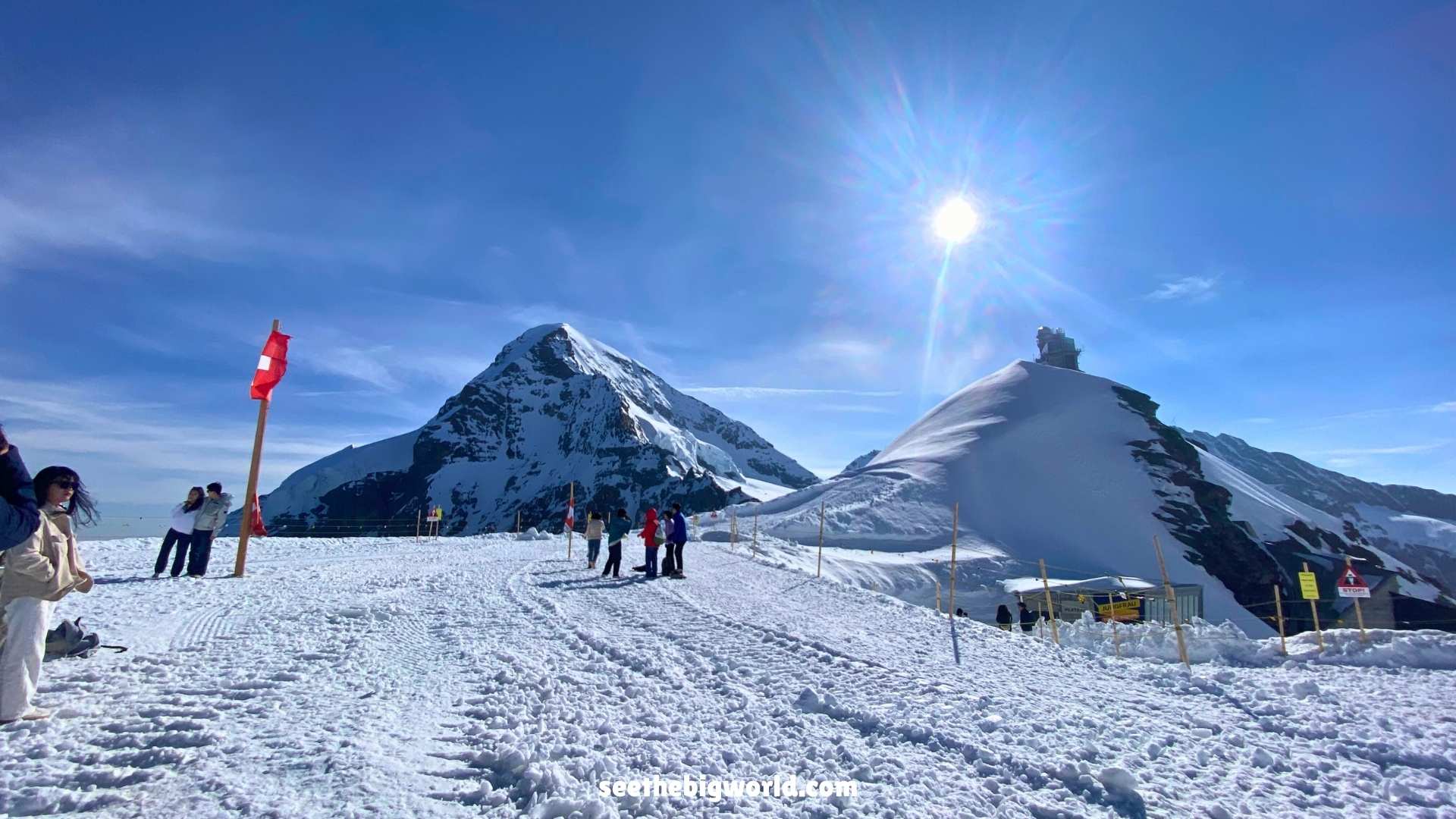
Top of Europe Swiss-Flag Photo Spot
Posing by the Top of Europe sign and Swiss flag is a must-do for every visitor.
On clear days, the bright blue sky and white glacier form the perfect backdrop.
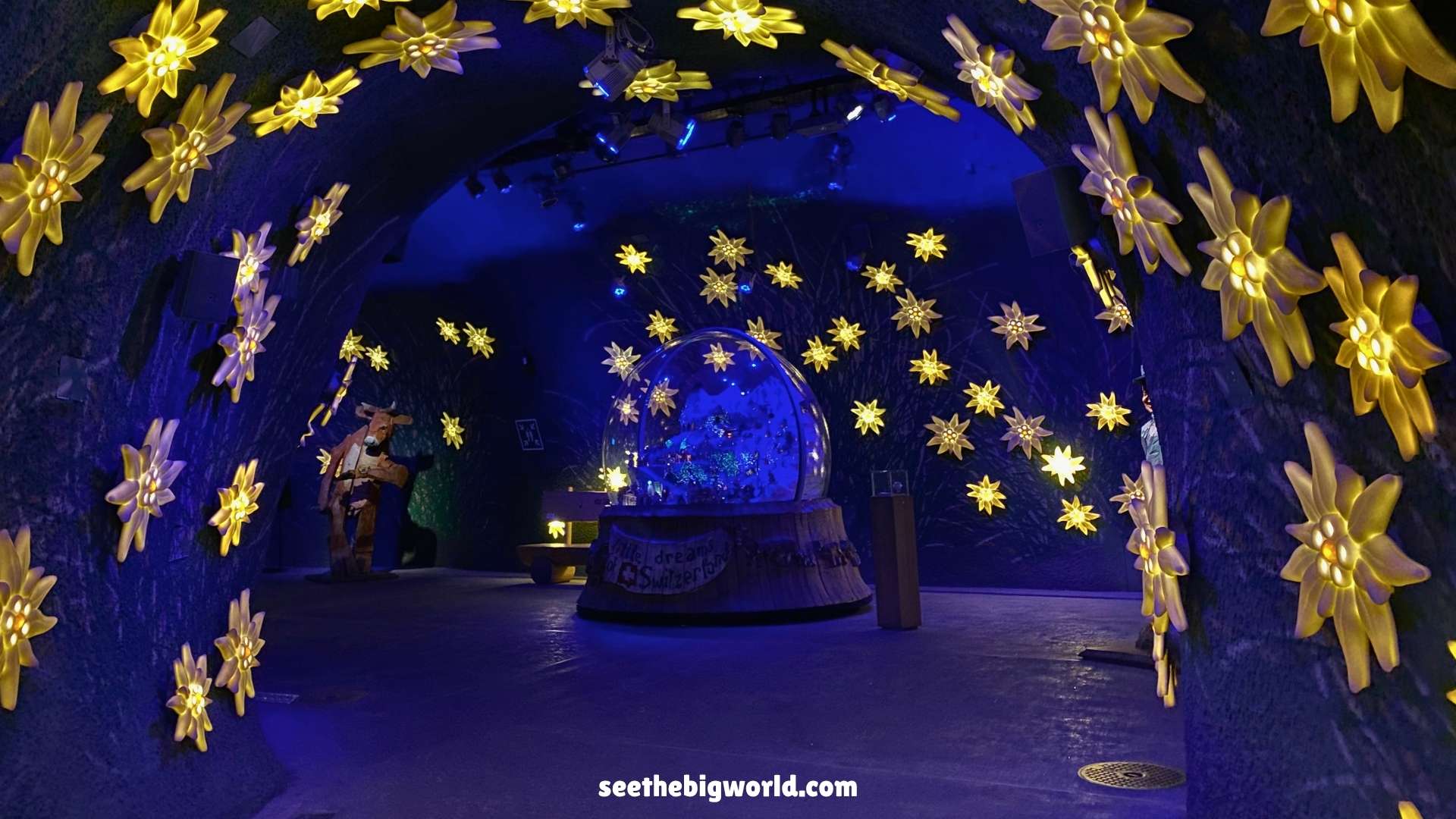
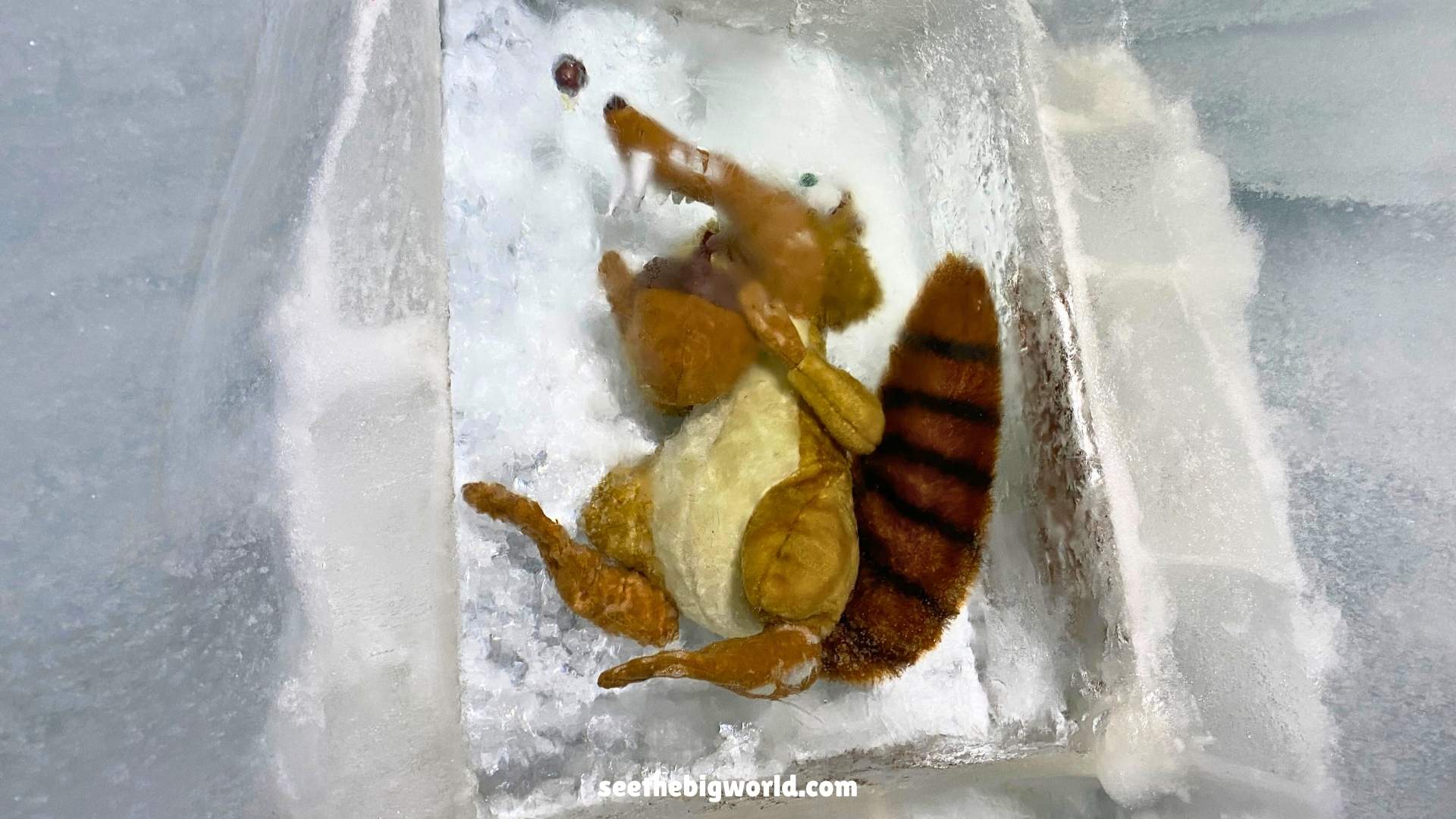
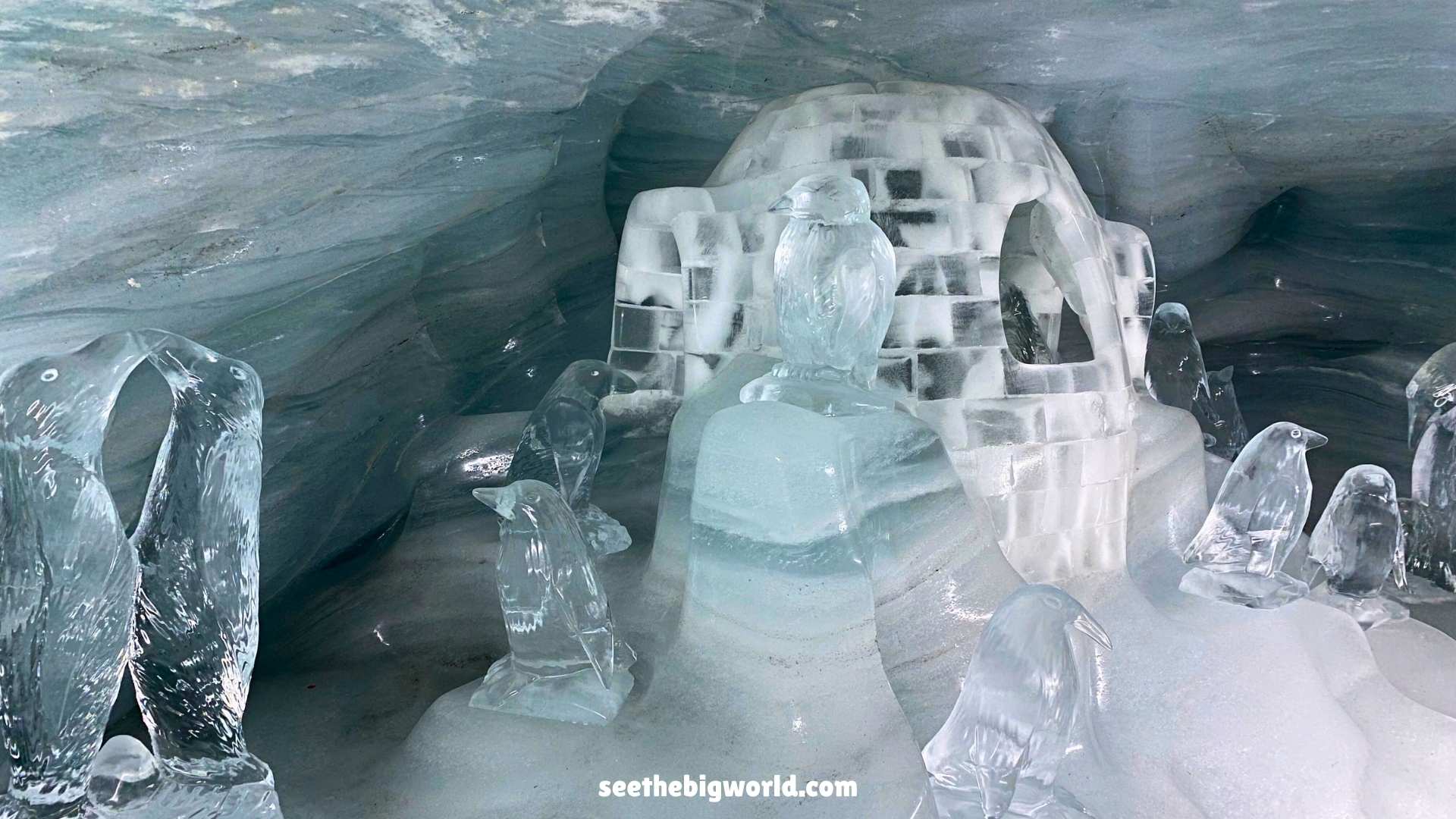
Ice Palace
A network of tunnels carved within the glacier, filled with ice sculptures and corridors. The temperature stays around -3 °C, so wear warm layers and non-slip shoes.
Sphinx Observatory
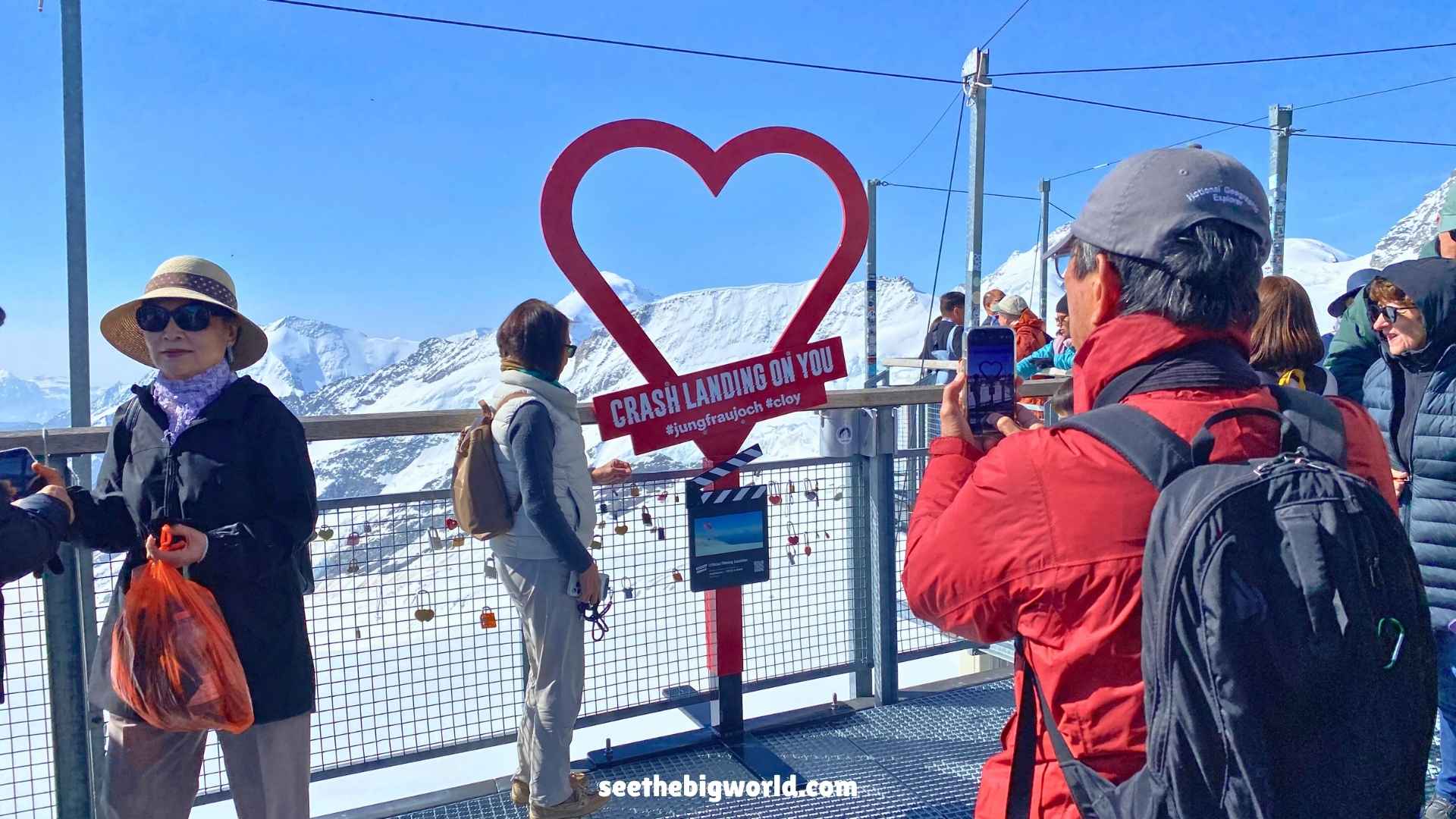
At 3,571 metres above sea level, this is a filming location for the K-drama Crash Landing on You.
From the viewing deck, you can see the Aletsch Glacier in its full majesty.
Restaurants and Shops
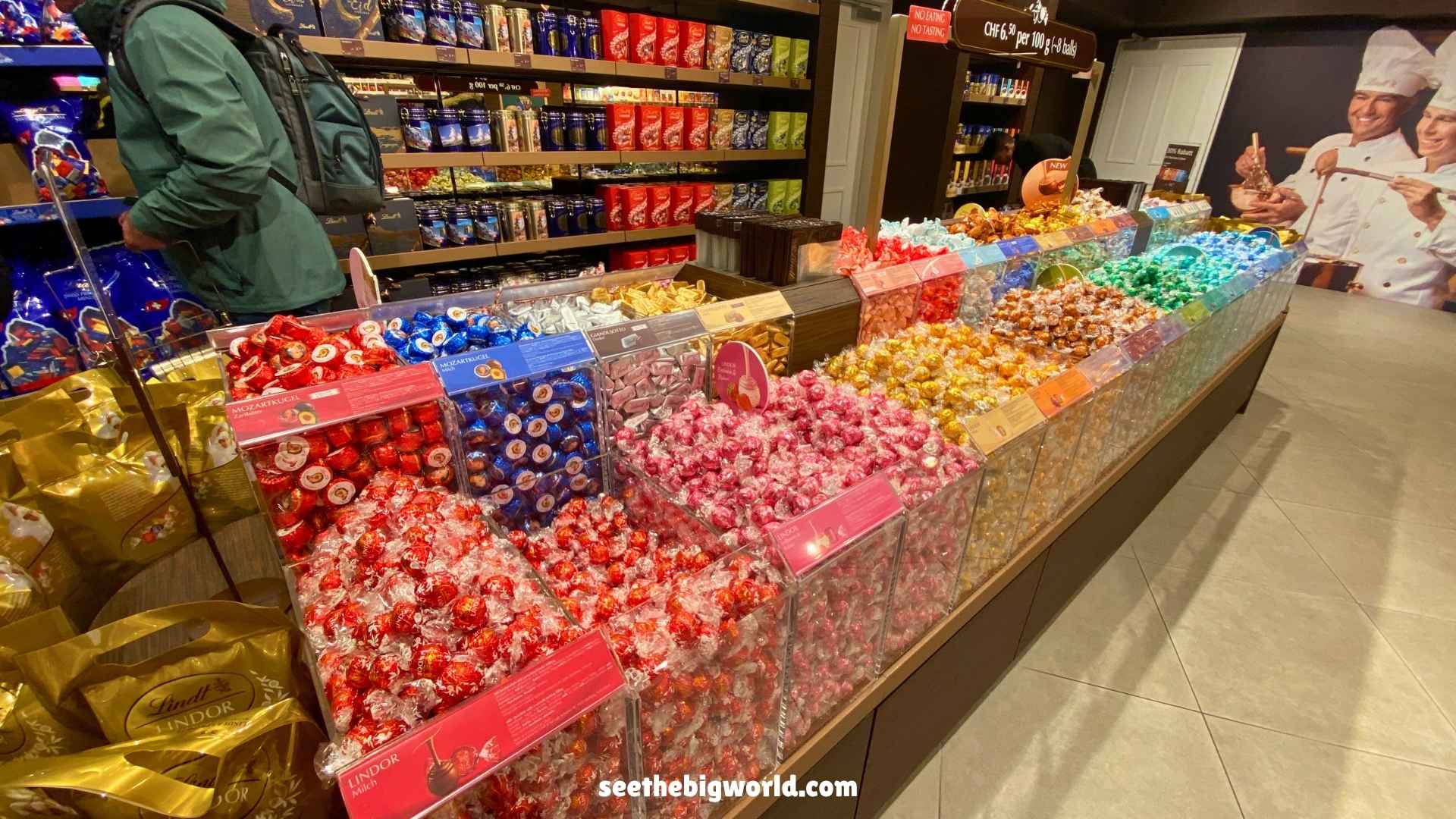
The summit offers cafés and souvenir stores where you can send “Top of Europe” postcards and buy exclusive chocolates and stamps — a cozy rest stop above the clouds.

Jungfraujoch Weather and Live Cams|Check Before You Go
Weather changes fast at Jungfraujoch — it can be sunny in the valley and foggy at the summit.
Before departure, check live conditions and forecasts:
- The Jungfrau Railways website and app provide real-time Live Webcams for visibility and cloud status.
- Morning offers the clearest views; afternoons often see more cloud cover.
- If conditions are poor or visibility low, delay your trip to avoid paying high fares for no view.
Best Places to Stay Before Heading Up
| Area | Highlights |
| Grindelwald | Closest to Jungfraujoch; easy access to Eiger Express; many mountain view hotels. |
| Interlaken | More dining and transport options; budget-friendly; good base for both lakes and mountains. |
| Lauterbrunnen | Surrounded by waterfalls; quiet and scenic; ideal for photographers and slow travellers. |
Jungfraujoch Nearby Attractions
The Bernese Oberland region around Jungfraujoch offers plenty of great day-trip options:
- Grindelwald First:cliff walks, zip-lines and alpine trails.
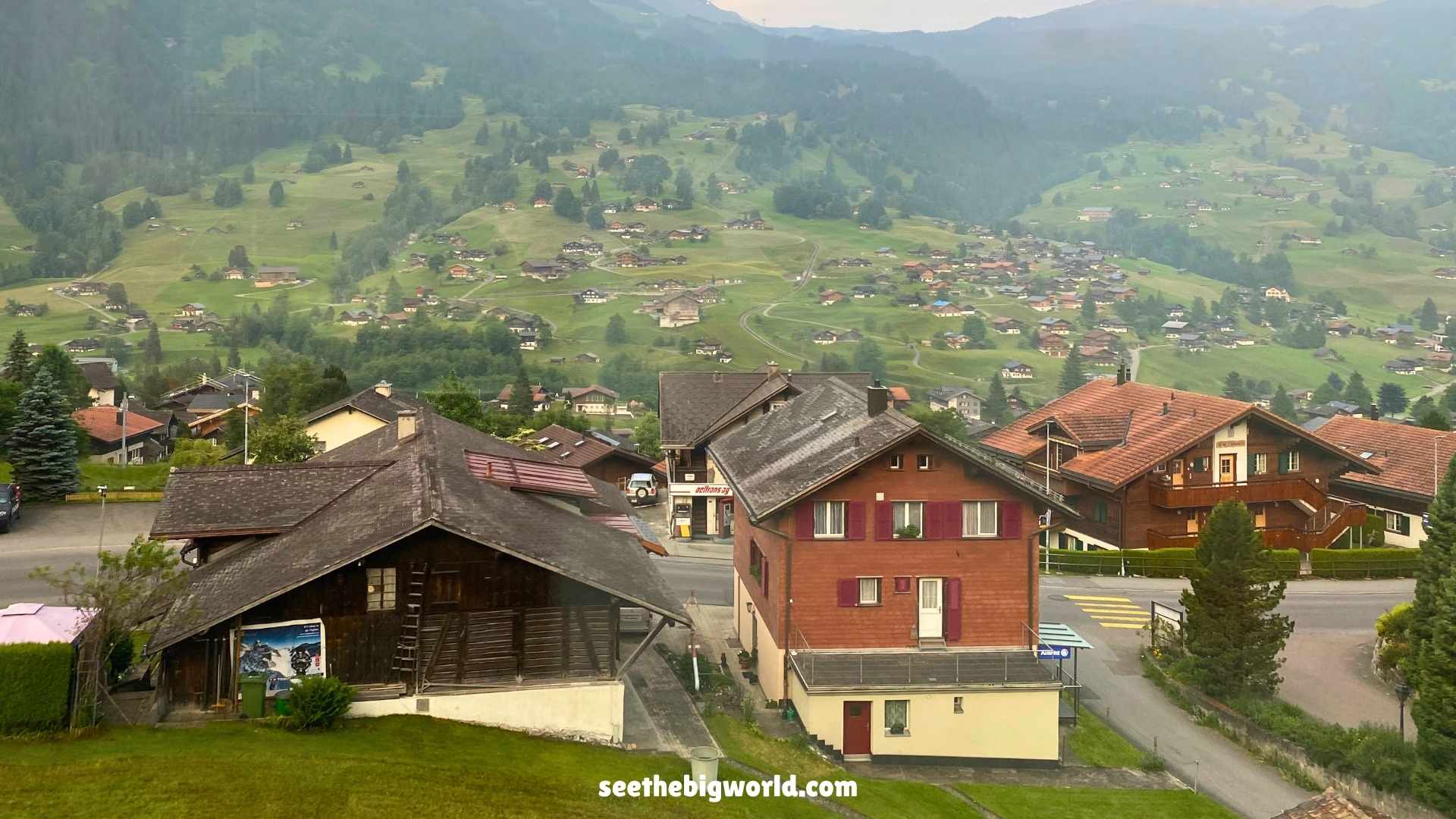
- Grindelwald Village:stroll through the valley and enjoy meals with mountain views.
- Lauterbrunnen Valley:known as the “Valley of 72 Waterfalls,” one of Switzerland’s most dramatic landscapes.
- Interlaken:take a boat on Lake Thun or Lake Brienz and explore the charming lakefront towns.