Updated on 22/12/2025 | Published on 12/12/2024
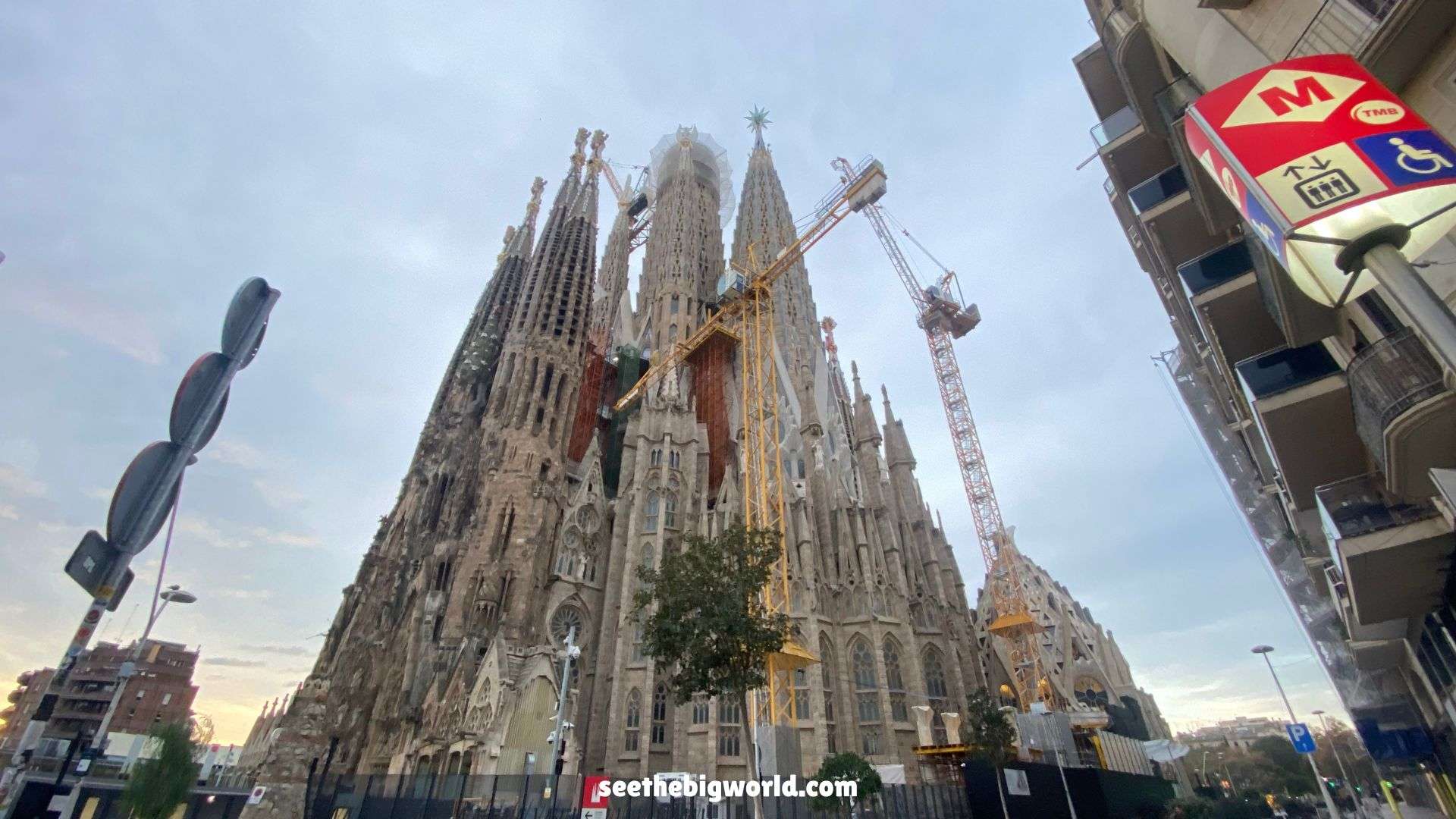
The Sagrada Família is the unmissable icon of Barcelona. This guide tackles the three big questions every traveller asks: what should you actually see, how do you get those perfect photos, and how on earth do you navigate the confusing ticket, tower, and tour options? I’ll start with the history and Gaudí’s vision, simply because understanding the backstory is the only way to really get what you're looking at. It transforms the visit from a quick walk-through into reading a stone epic fuelled by a century of faith. After that, I’ll share my own experience, including how I got on with the Go City Pass, the best time of day for photography, and the practical tips you need to know to make your trip run smoothly.
Sagrada Família Fast Facts
- How to Get There:Metro L2 (Purple) or L5 (Blue) to Sagrada Família station; the exit is right outside.
- Opening Hours:General hours: 9:00–20:00 (seasonal variations)
- How Long to Spent:1.5–2 hours just for the church; give yourself 2.5 hours if you're doing a tour or climbing a tower.
- Tickets:Check latest prices & booking options
- General Entry: Just the Basilica.
- Guided Ticket: Includes a guide or audio tour
- Tower Access: You have to pick a side, 'Nativity Facade' or 'Passion Facade'.
- Free Entry with Go City Barcelona Pass , with a live guided tour.
Sagrada Família Architecture: History, Gaudí’s Ideas, and What Not To Miss
The Sagrada Família is the unfinished masterpiece that Catalan architect Antoni Gaudí poured his life into. It’s widely seen as Barcelona’s most defining Catholic sanctuary.
It is not merely a church, but a "Catalan epic of faith" written in stone, binding together spirituality, nature, and mathematical structure.
From Gothic Revival to Gaudí’s Vision
- The Beginning:Work started back in 1882. The original architect, Francisco de Paula del Villar, planned a standard Gothic Revival church—traditional, symmetrical, and by the book.
- Gaudí Takes Over:Villar quit a year later after a disagreement, and Gaudí took the reins in 1883. While he kept the crypt that had already been started, he completely scrapped the design for everything above ground. He created something entirely new, fusing Gothic elements with nature.
- A Lifetime of Dedication:Gaudí worked on it from 1883 until his death in 1926, by which point less than a quarter of it was finished.
Why Has It Taken So Long? Completion Dates & Funding
- Donation-Based Construction:The Sagrada Família is an "Expiatory Temple," which means it can’t use government money—it relies entirely on private donations and ticket sales.
- Funding Sources:Early on, money was tight, and the Spanish Civil War caused massive delays and damage. These days, tourism pays the bills.
- When Will It Finish:The current goal is to finish the main structure and the Tower of Jesus Christ by 2026—the 100th anniversary of Gaudí’s death—which will make it the tallest church in the world.
- Gaudí’s Patience:Gaudí wasn't worried about the timeline, famously saying, "my client is not in a hurry." This quote is often cited to show his calm approach to divine time.
Gaudí’s Philosophy: Copying Nature
- Originality = Origins:Gaudí believed that "originality consists of returning to the origin." He didn't want to invent new shapes just for the sake of it; he wanted to use the logic of nature.
- Curves vs Straight Lines:He famously said, "the straight line belongs to men, the curve to God." That’s why you’ll struggle to find a sharp, straight line anywhere in the church. Instead, the structure mimics skeletons, tree branches, and spirals.
- Local Stone:Early parts of the church used stone from Barcelona’s Montjuïc hill, making it feel like the building "grew" from the land. Later phases have had to import stone from across Spain, England, and France.
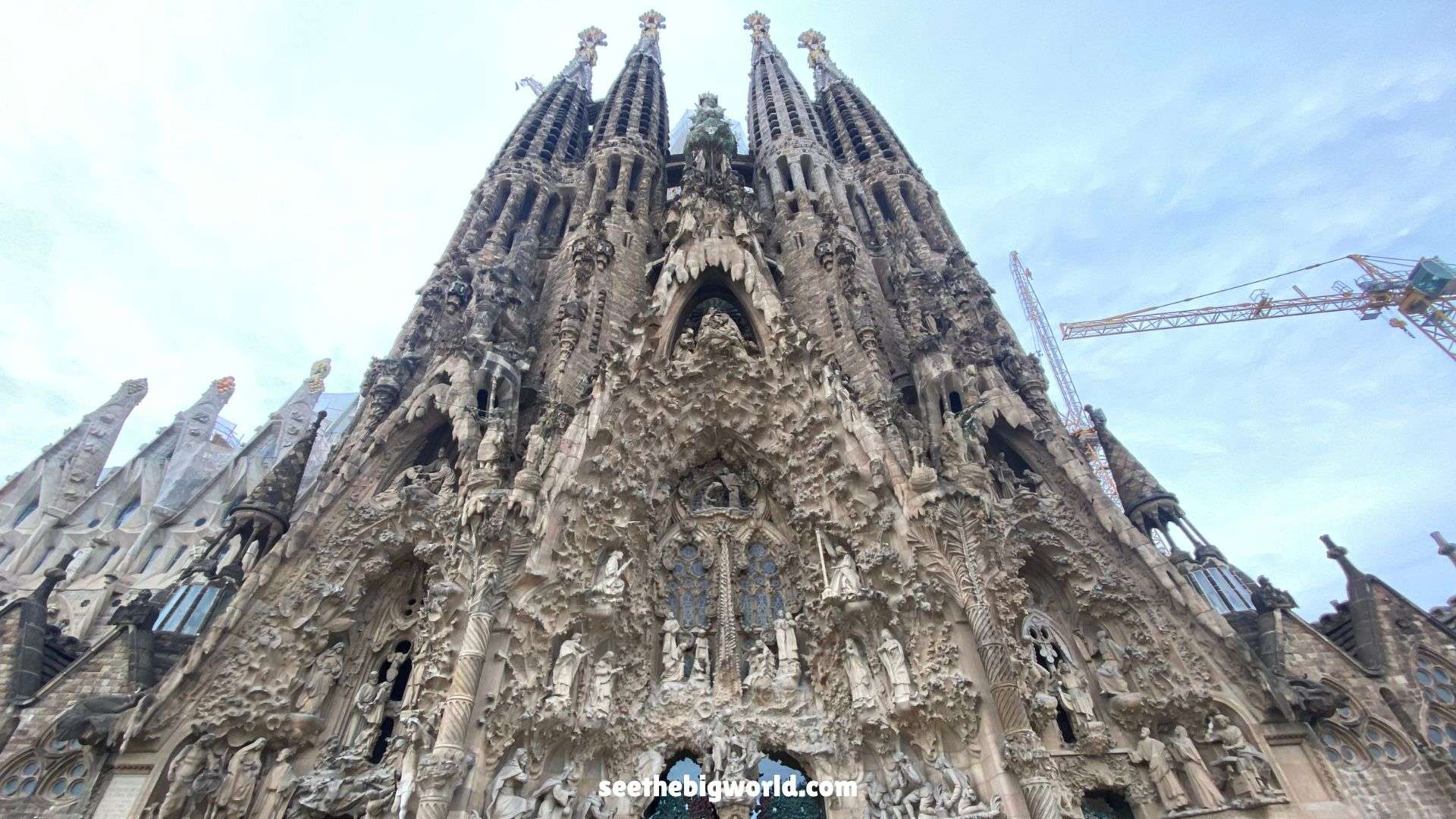
The Three Facades: A Story Carved in Stone
The church has three main facades, each telling a different part of Jesus' life with a totally distinct style.
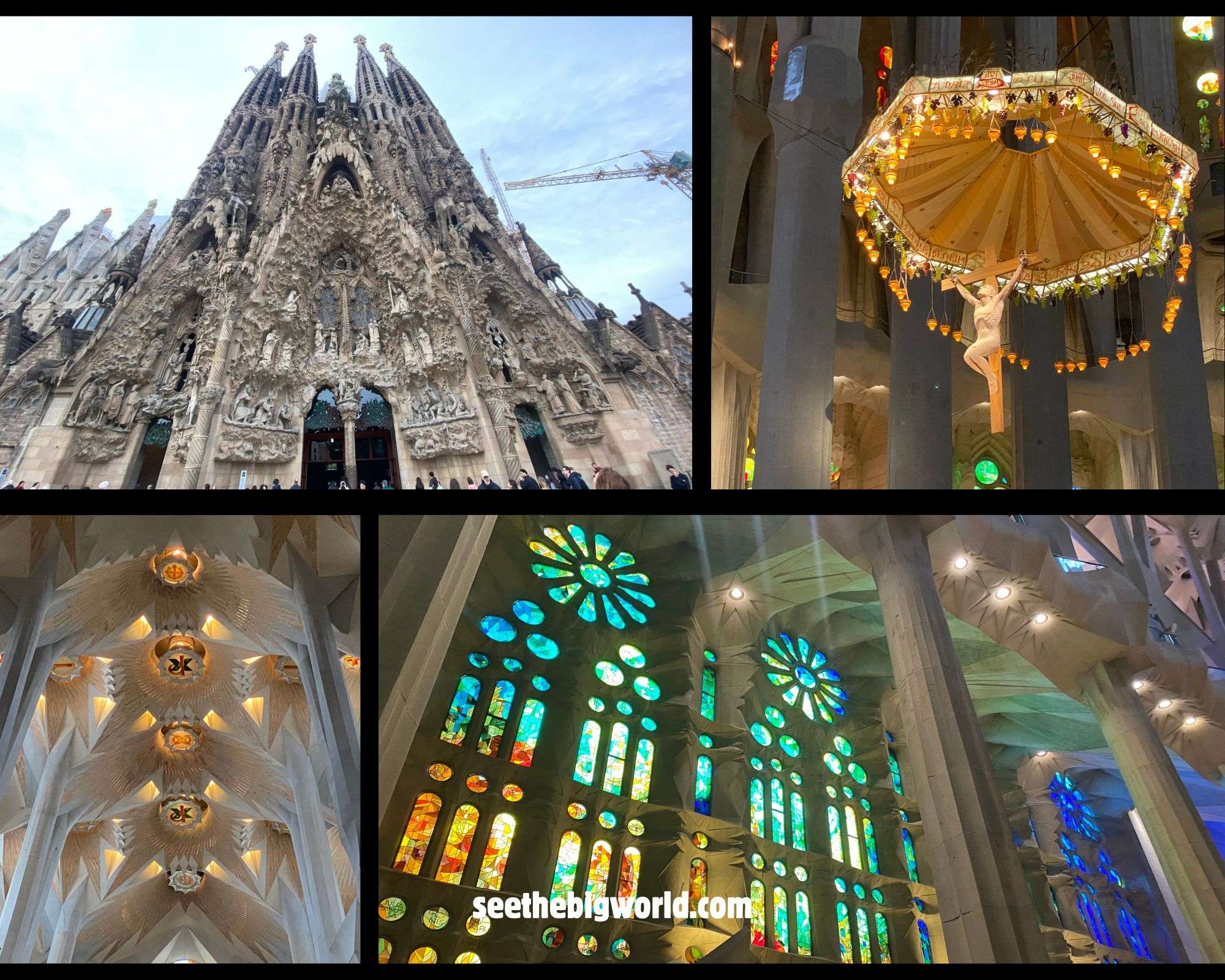
- The Nativity Facade (East):This is all about the joy of birth. Gaudí personally oversaw this part, so it’s the most "him." It’s teeming with plants, animals, and intricate details—it feels alive and organic.
- The Passion Facade (West):This side depicts the suffering and death of Christ. Sculpted much later by Josep Maria Subirachs, it’s the complete opposite of the Nativity side. It’s harsh, angular, and bare, designed to look like bones and shadows to evoke a sense of pain.
- The Glory Facade (South):This is still under construction but will eventually be the main entrance. It’s going to be the grandest of them all, depicting the Last Judgement, heaven, and hell.
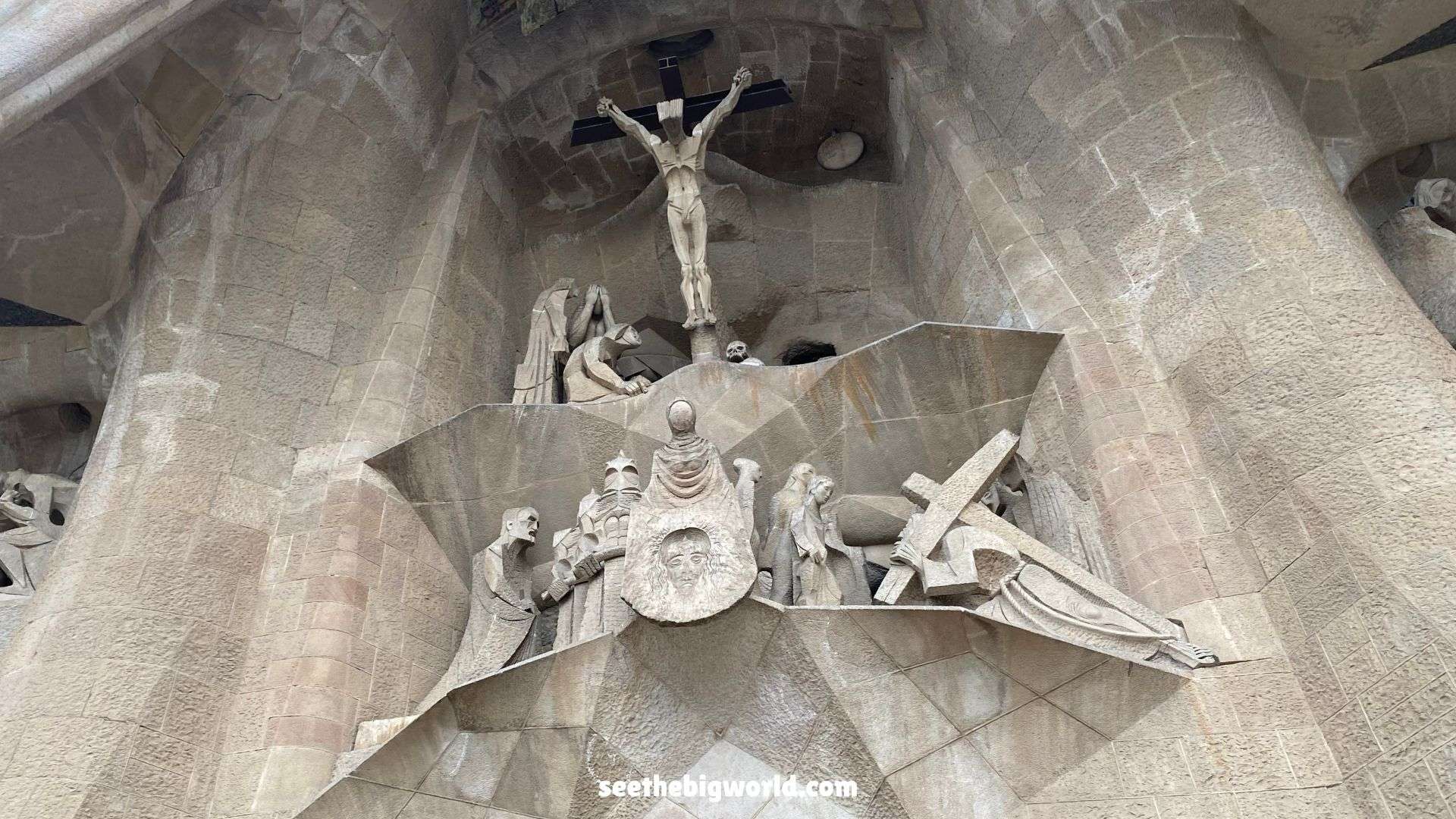
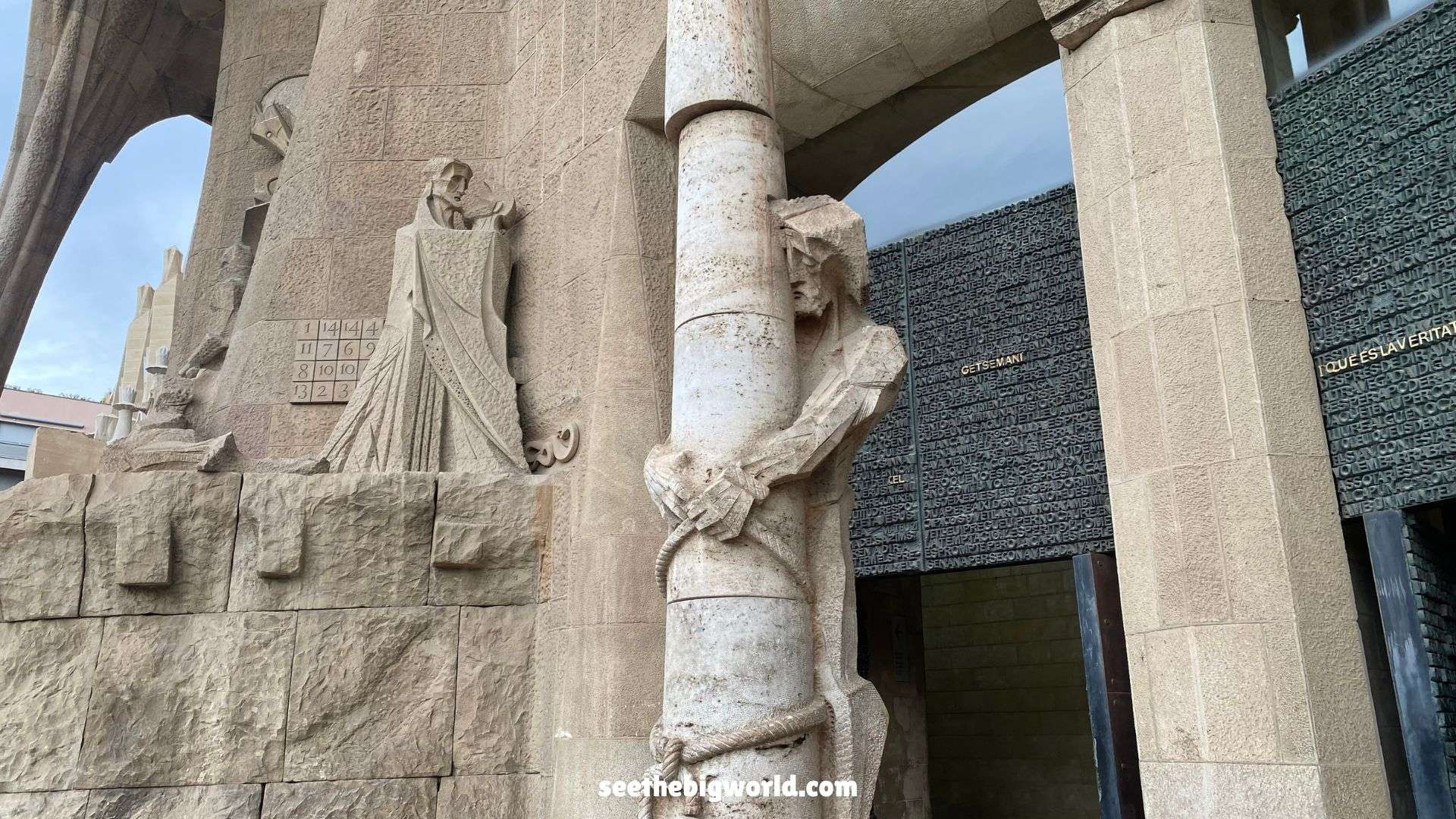
The Towers: A Lesson in Humility
- 18 Towers:When it's done, there will be 18 towers representing the Apostles, Evangelists, Virgin Mary, and Jesus. The heights increase based on importance.
- The Tallest Point:The Tower of Jesus Christ will reach 172.5 metres, making it the tallest church in the world.
- Respecting Nature:This height is intentional. Gaudí insisted it stay just a few metres shorter than Montjuïc mountain (approx. 173m). His rule was simple: "the work of man must not exceed the work of God."
Inside the Basilica: A Forest of Stone
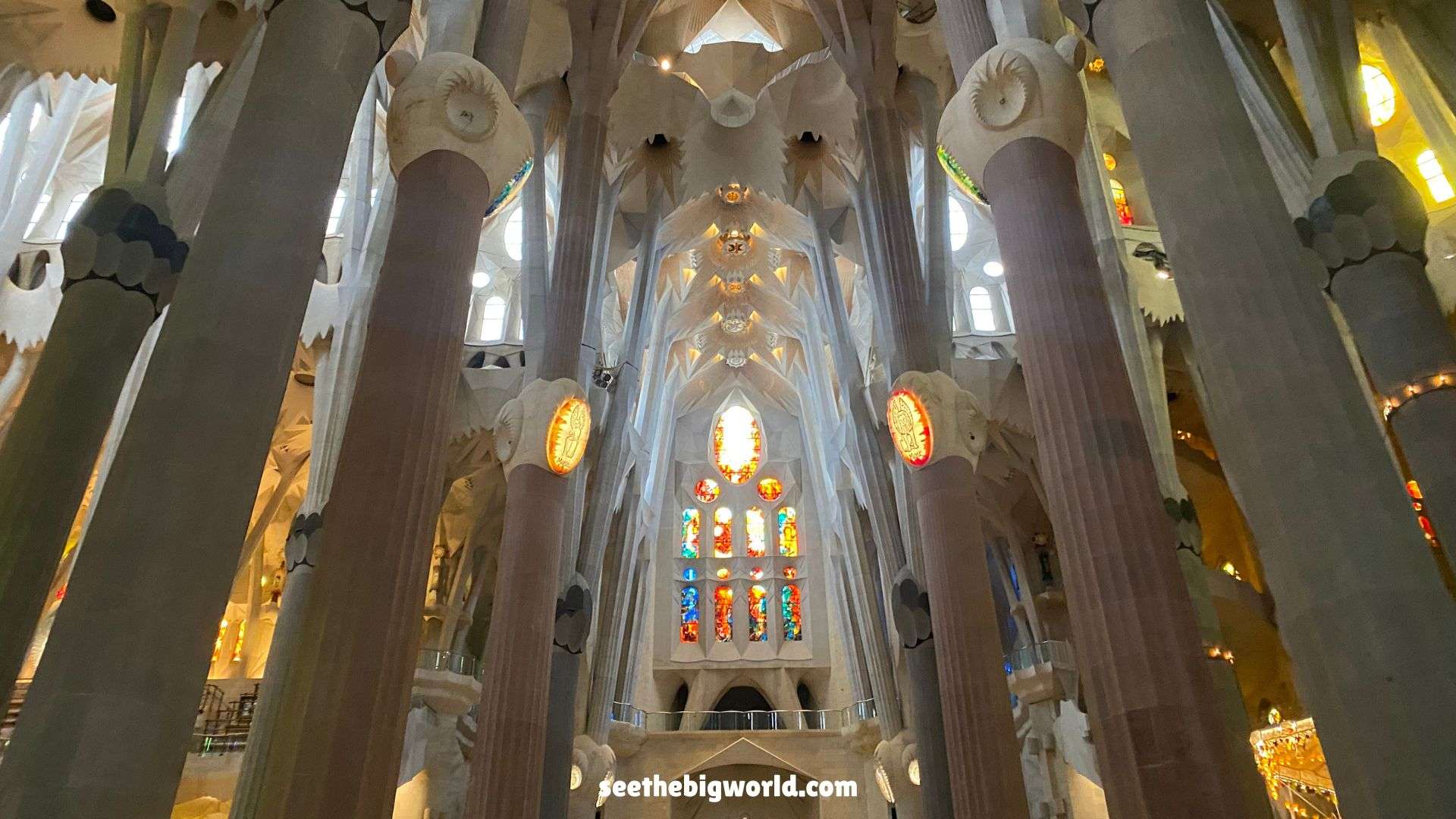
- Tree Columns:Walking inside, the first thing that hits you is the sheer scale of the columns. Gaudí designed them to look like trees, branching out at the top to hold up the ceiling. It creates a canopy effect, like standing in a stone forest.
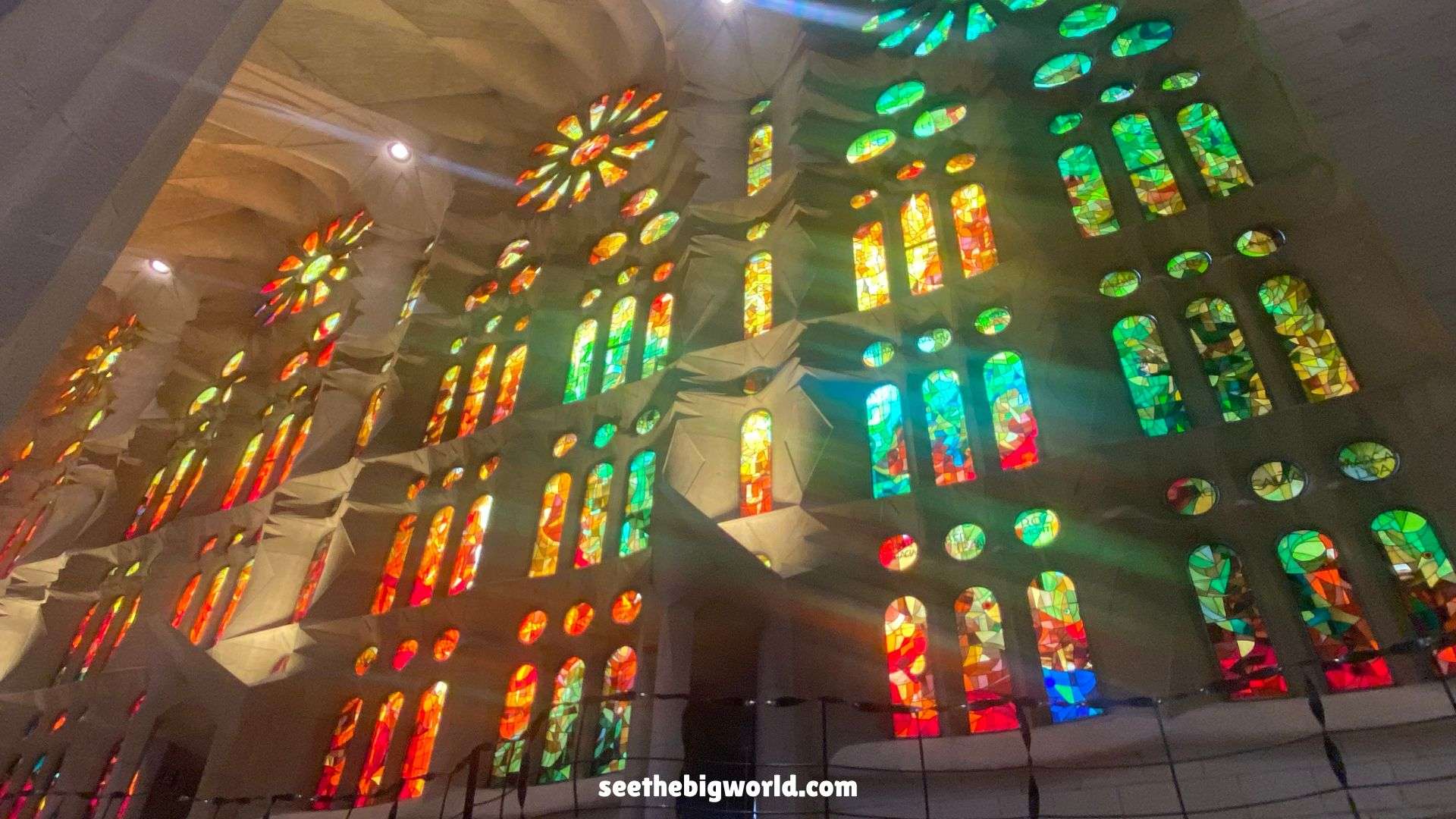
- Painting with Light:The stained glass isn’t random. The East windows (Nativity side) are cool blues and greens for the morning sun; the West windows (Passion side) are fiery reds and oranges for the sunset.
- Time Lapse:Depending on when you visit, the entire mood of the church shifts from cool and peaceful to burning and dramatic in a matter of minutes.
My Visit Reviews & Practical Tips: Is It Worth It?
My Experience: Did the Go City Pass Actually Save Time?
I used the Go City Barcelona Pass for this trip and booked the 09:00 slot that came with it.
- The Reality:The real game-changer here was the "Group Entrance." Our guide whisked us straight through a dedicated lane, completely bypassing the massive queues for general tickets. In high season, this easily saves you 30–60 minutes.
- Just a Heads-Up:"Skip-the-line" means skipping the ticket line. You still have to queue for security, everyone does. Make sure you leave a bit of buffer time for that.
Do You Really Need a Guide?
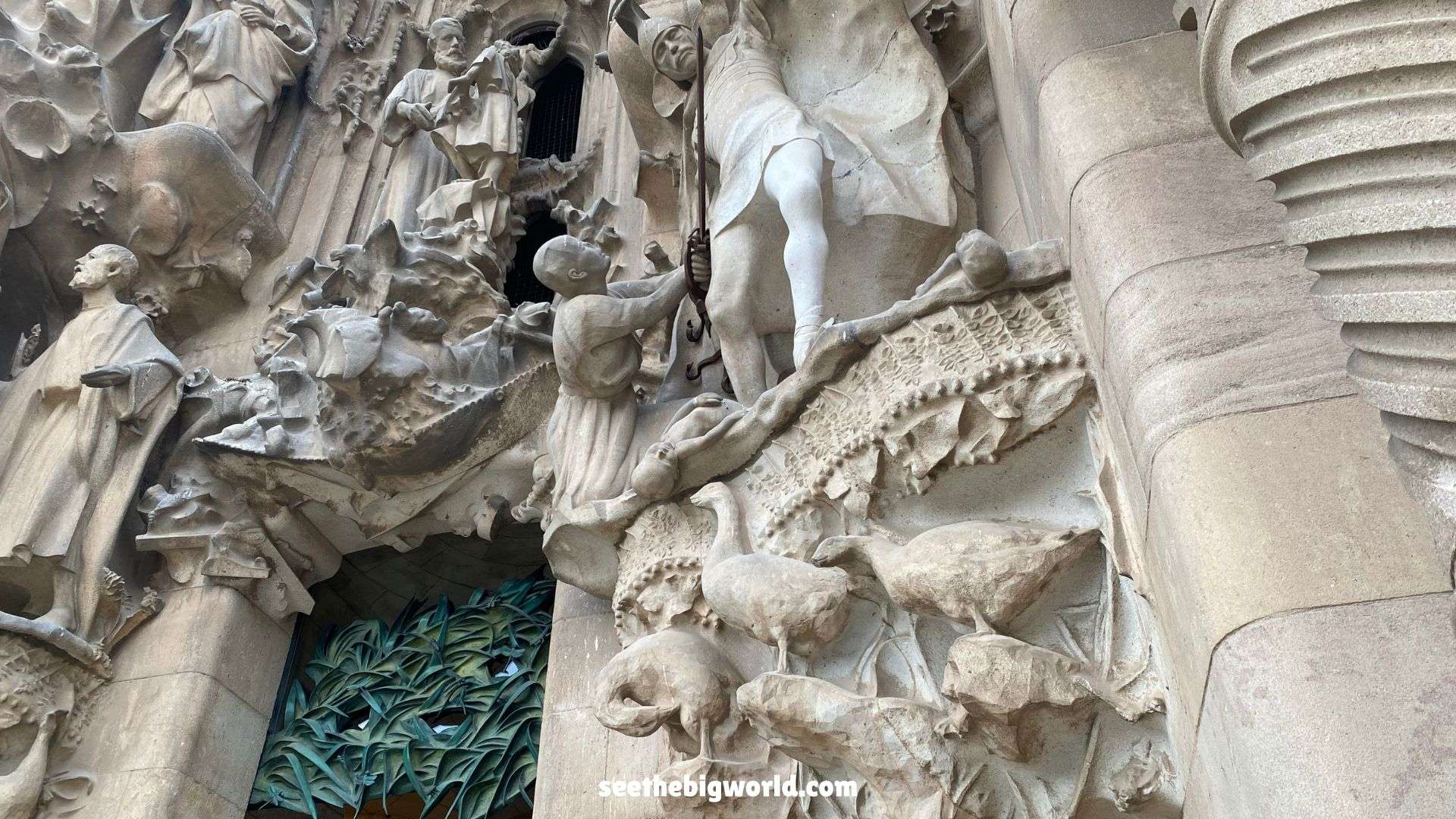
- My Verdict:Honestly? Yes. Our guide stood in front of the Nativity Facade and pointed to a sculpture of a baby (the photo below), explaining that Gaudí actually used a stillborn infant to make the cast, capturing the terrifying reality of life and death. She then pointed out another figure representing Jesus’ mentor.
- Honest Advice:Without him, I would have just thought, "wow, nice statues," and kept walking. If you have the Pass, use the included tour. If you’re buying a standard ticket, at least pay the extra for the audio guide. Otherwise, you’re just looking at pretty walls without knowing the story behind them.
To Climb or Not to Climb?
- My Choice:I decided not to buy a tower ticket this time. I wanted to focus on the core experience: the sculptures, the interior forest, and the light.
- Physical Effort:While there is a lift to get up, you have to walk down a narrow spiral staircase of about 400 steps. If you’re travelling with small kids (no pushchairs allowed), are pregnant, or have bad knees, just skip the towers. The ground floor is fully accessible.
- If You Go:Pick the Passion Facade for views over the city, or the Nativity Facade to see the architectural details up close.
Photography Guide: Chasing the Light
- Interior Light (Choosing Your Slot)
- We went in around 10:00 am. The sun was streaming through the East windows, bathing the whole place in dreamlike cool blues and greens (symbolising morning/hope).
- Our guide gave us a great tip: "If you want drama, come in the evening. The sun hits the West windows and the whole church burns gold and orange."
- Don't worry about which is "best", just decide if you prefer blue/green (morning) or gold/red (evening).
- That Classic Reflection Shot
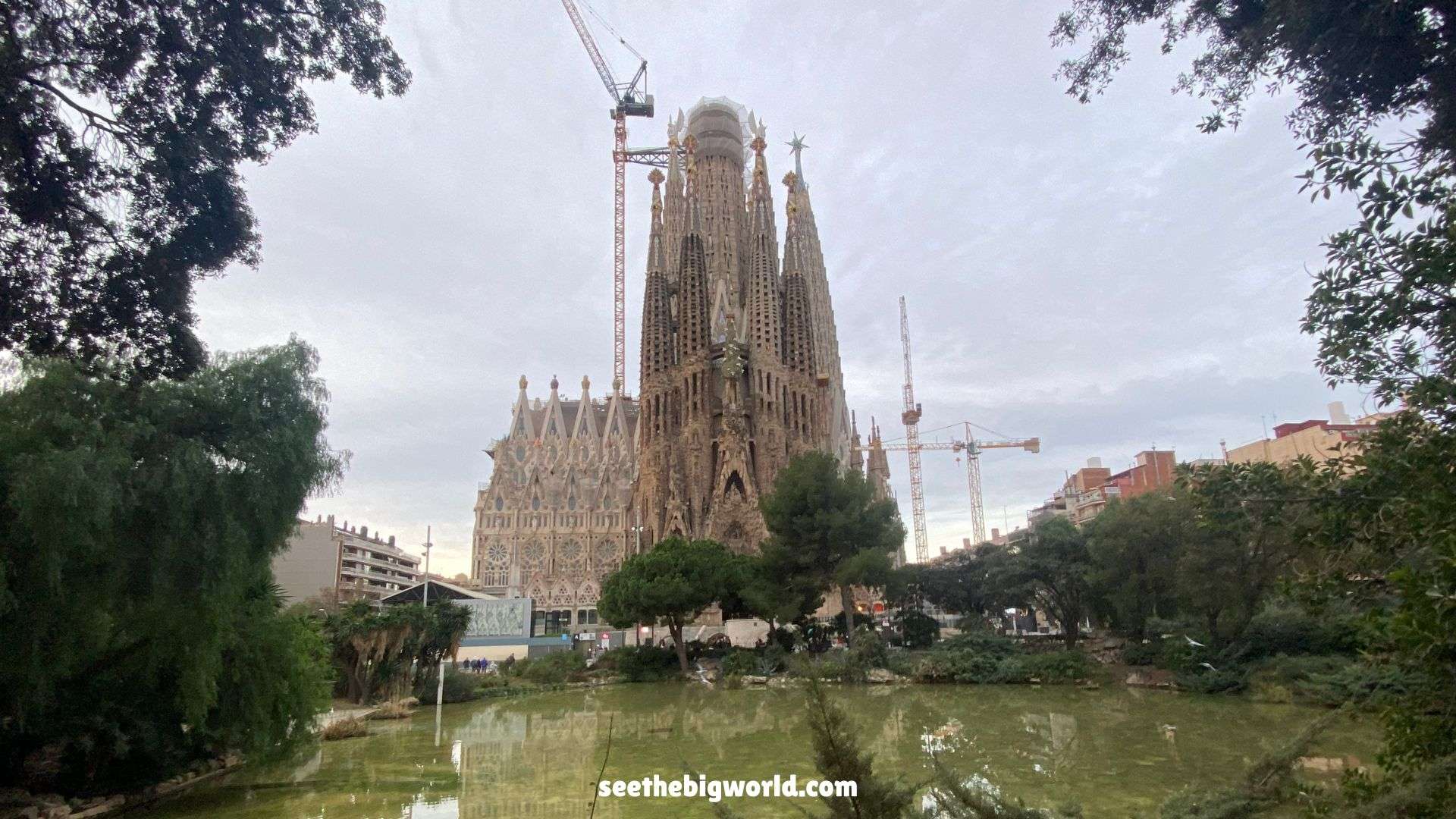
- Before our 09:00 tour, I popped across the street to Plaça de Gaudí. There’s a pond there, and it’s the only spot where you can get a photo of the church reflected in the water.
- My day was a cloudy day, but on a sunny morning, the details are crisp; in the evening, you get a stunning silhouette. It’s the best free photo spot in the city.
Security & Clothing
- Airport-Style Security:Don’t take this lightly. Bags go through X-ray machines, and they will confiscate knives, glass bottles, etc. Travel light so you don’t get stuck at bag check.
- Dress Code:Remember, this is an active place of worship. Avoid deep V-necks, open backs, see-through tops, or very short shorts. Skirts and trousers should cover your knees. Don’t let a wardrobe malfunction get you turned away at the door—it happens more often than you think.
Read More
- Next Stop:Hospital de Sant Pau (A stunning, less crowded architectural gem just a 10-minute walk away).
- More Gaudí:Park Güell|Casa Batlló|La Pedrera (Casa Milà)|Casa Vicens|Palau Güell
- Planning Guides:The Ultimate Barcelona City Guide|Barcelona Transportation Guide