Updated on 21/12/2025 | Published on 18/12/2024
Beneath Barcelona’s Gaudí-dominated skyline, the Palau de la Música Catalana is one of the few Modernist landmarks that can genuinely hold its own, and in sheer craftsmanship, it arguably goes even further. Designed by Lluís Domènech i Montaner, it is not only a UNESCO-listed concert hall still in daily use, but also a statement of early 20th-century Catalan middle-class pride, built in brick, mosaic, and stained glass. In this guide, I’ll start with a practical fast-facts box (transport, ticket prices, and booking links), then unpack the historical and architectural context behind this “temple of light,” before finishing with my on-the-ground review, including the visiting route, photo angles, and whether the ticket is truly worth it beyond the tourist glow.
Palau de la Música Catalana Fast Facts
- How to Get There:Take Metro L1 or L4 to Urquinaona station (5 min walk); or a 10-minute walk from Plaça de Catalunya.
- Opening Hours:Daily 09:00 – 15:30.
- How Long to Spent:Approx. 1 – 1.5 hours for a visit; allow an extra 30 minutes for a guided tour.
- Tickets:Check latest prices & booking options
- Visit Tickets: Options for self-guided or guided tours.
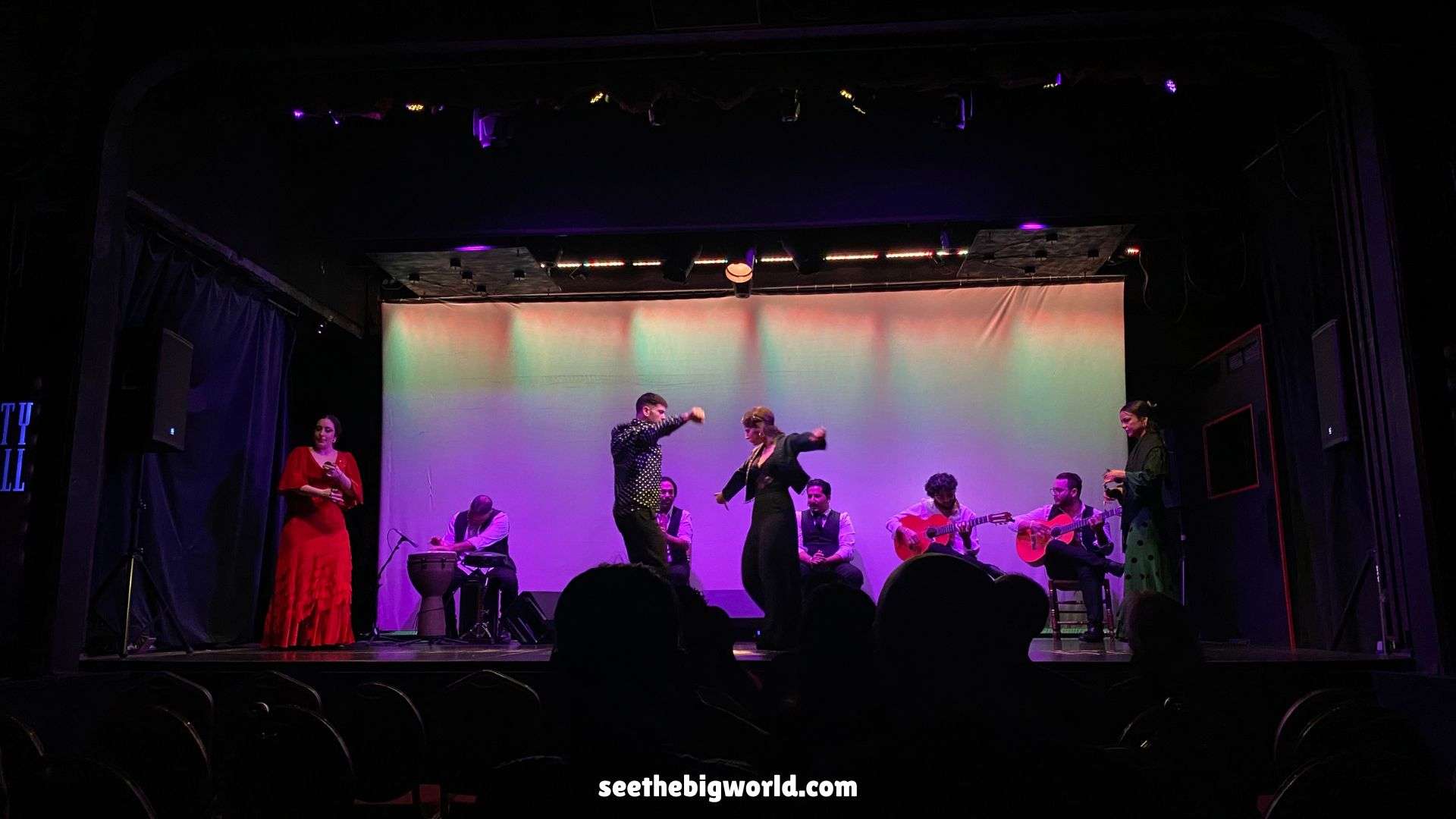
- Performance Tickets: Check the official programme; experiencing a live concert or Flamenco show is highly recommended.
The Story of the Palau: Soul of the Catalan Renaissance
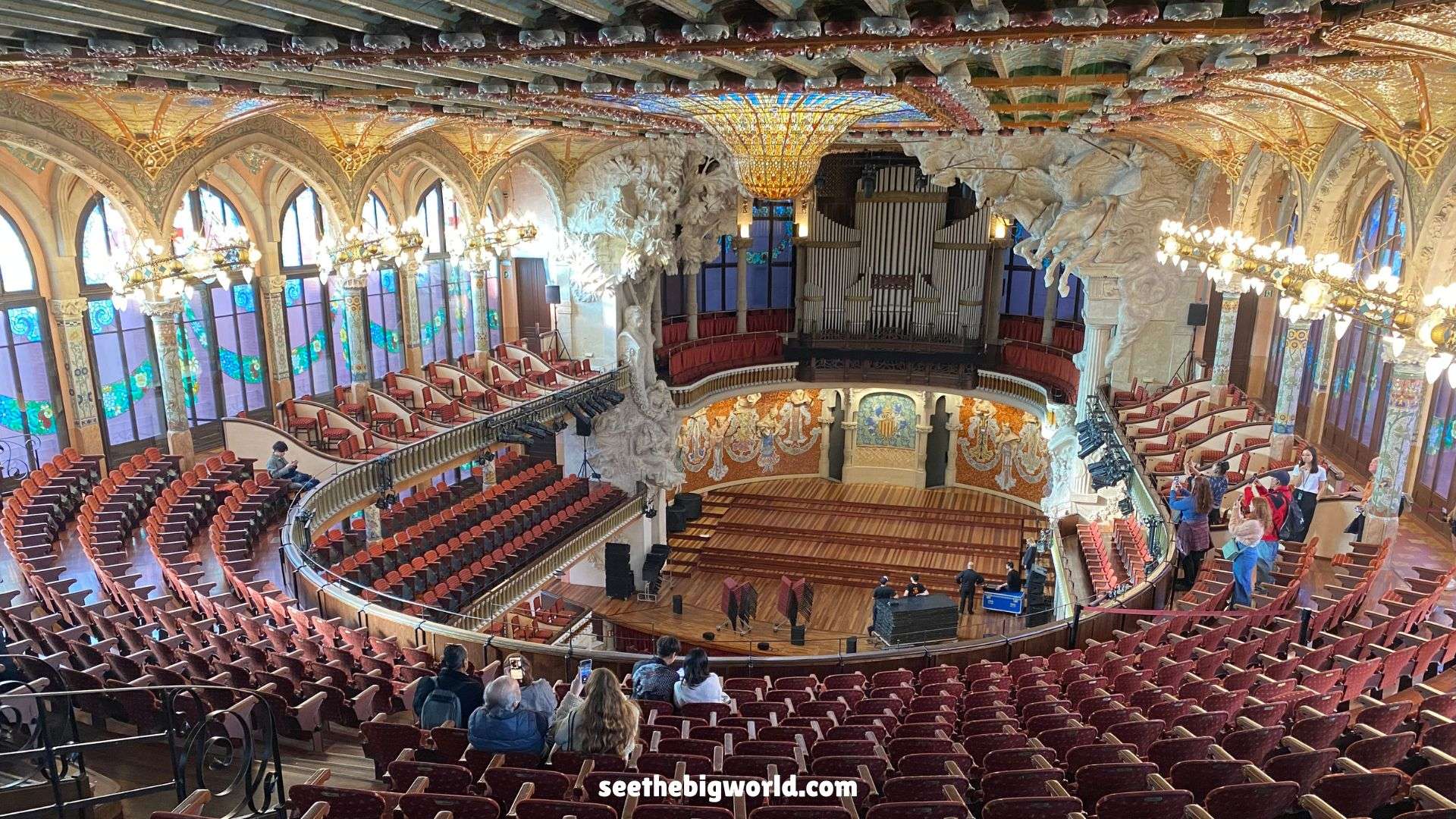
Palau de la Música Catalana is a world-famous concert hall in Barcelona, designed by Catalan Modernist architect Lluís Domènech i Montaner and completed in 1908.
This architectural masterpiece is celebrated for its vibrant and intricate artistic decorations. Recognised as a UNESCO World Heritage Site in 1997, the building is characterised by its flowing curves, natural elements, and symbolic motifs, showcasing the unique aesthetics of Catalan Modernism.
Moreover, the concert hall stands as a symbol of the Catalan Renaissance (Renaixença). At that time, Catalonia sought to reaffirm its identity and culture through music, literature, and architecture, and the Palau de la Música became a landmark of this cultural awakening. Commissioned by the Catalan Choral Society, it continues to serve as a central venue for civic life and cultural activities today.
Who Was the Mastermind? Gaudí’s Mentor Domènech and the Philosophy of Naturalism
Domènech, the architect of the Palau, was Antoni Gaudí’s teacher and deeply influenced Gaudí’s design philosophy. Domènech’s emphasis on blending natural elements with art was a key inspiration for Gaudí, with both masters leaving behind an extraordinary architectural legacy in Barcelona.
Palau de la Música Review: My Regret & Must-See Highlights
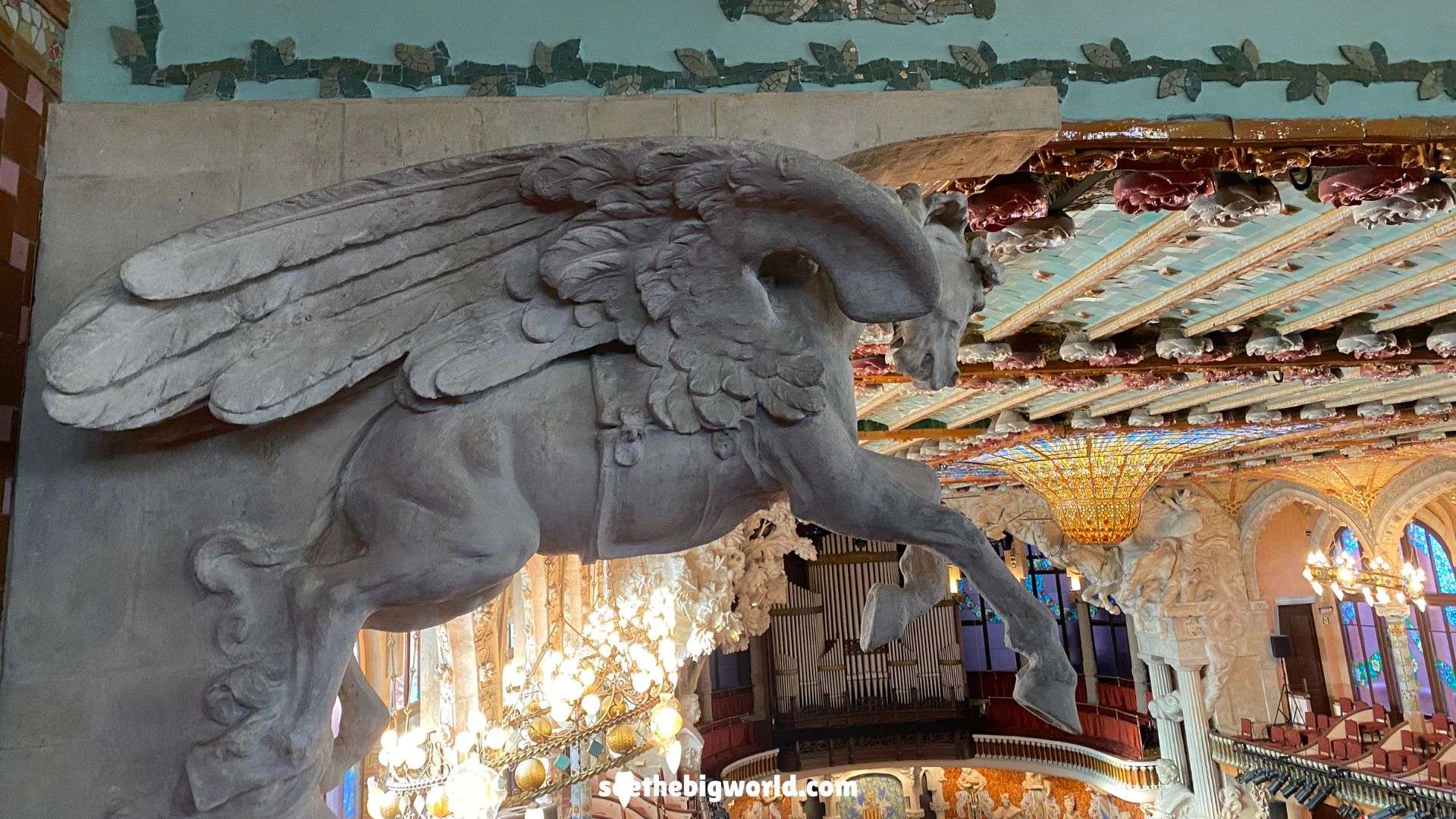
This concert hall is, without a doubt, the most beautiful I have seen in Europe.
However, I do have a small regret: I wasn't able to fit a Flamenco performance into my schedule this time. Shows are held here irregularly, so if your dates align, I strongly recommend booking a ticket directly. Watching a performance amidst such top-tier acoustics and visual splendour is absolutely a bucket-list experience. Regrets aside, just visiting the architecture itself is worth it. Here are the five details you must look up to see once inside:
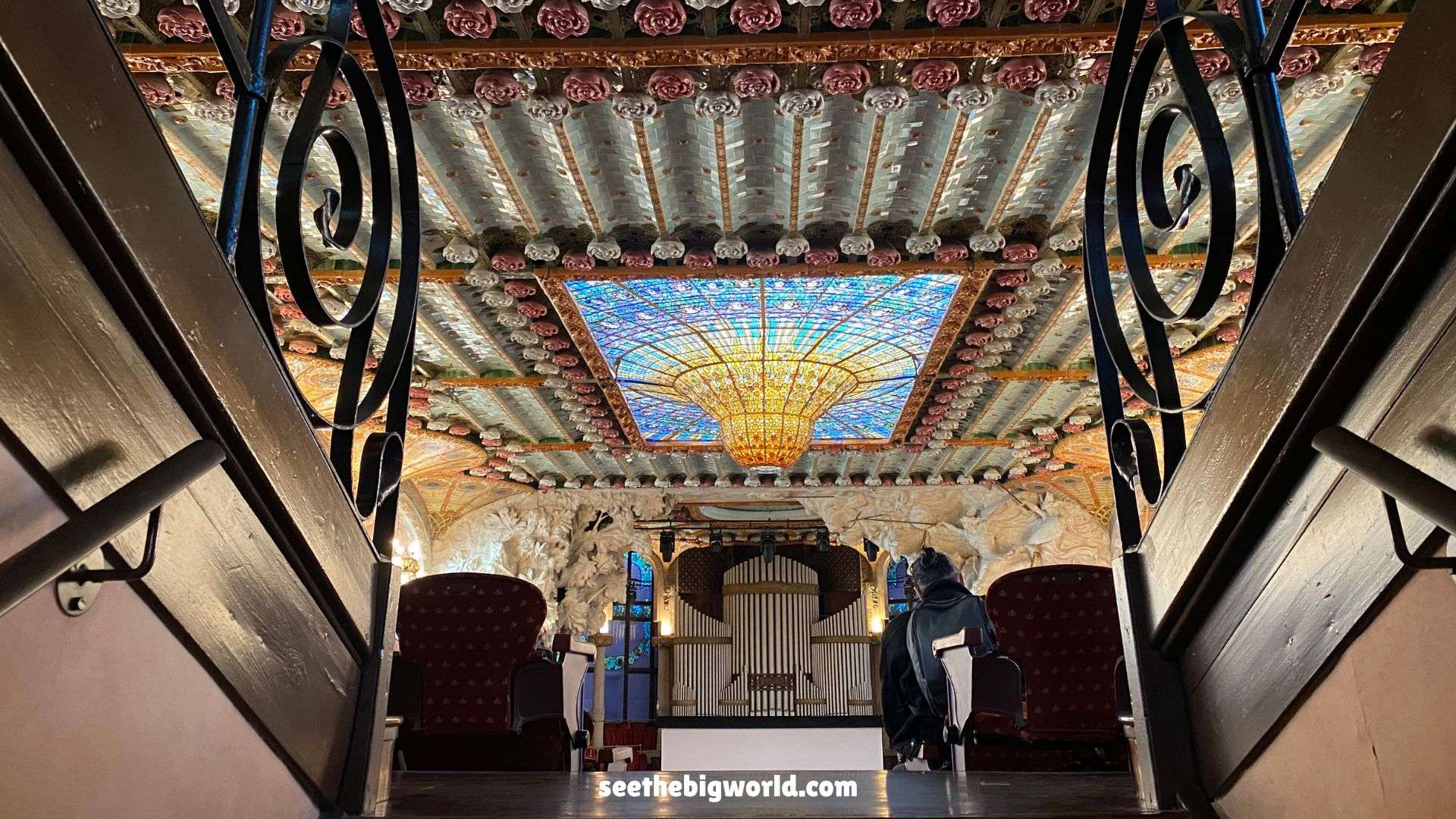
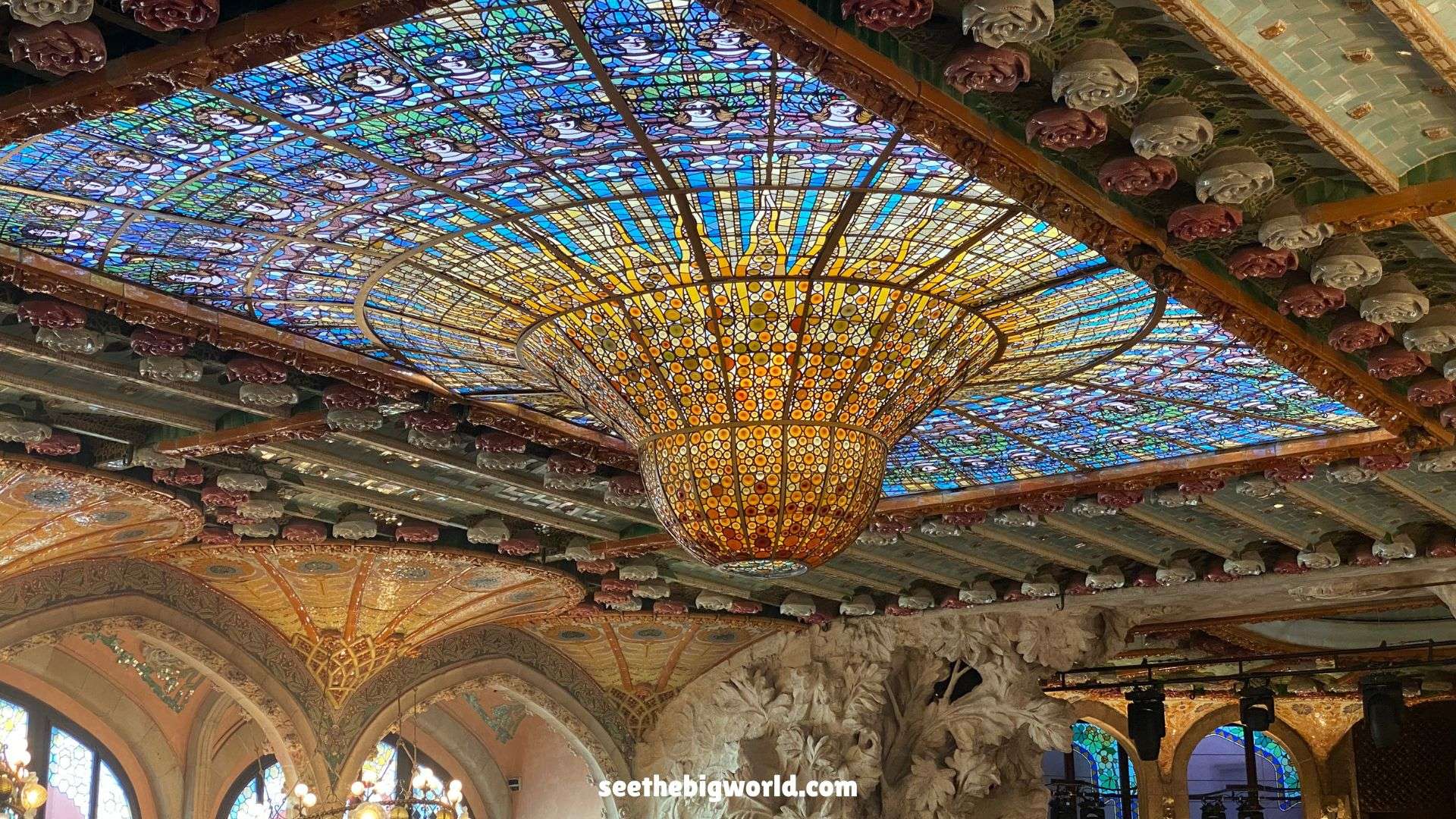
1. Spectacular Central Glass Skylight
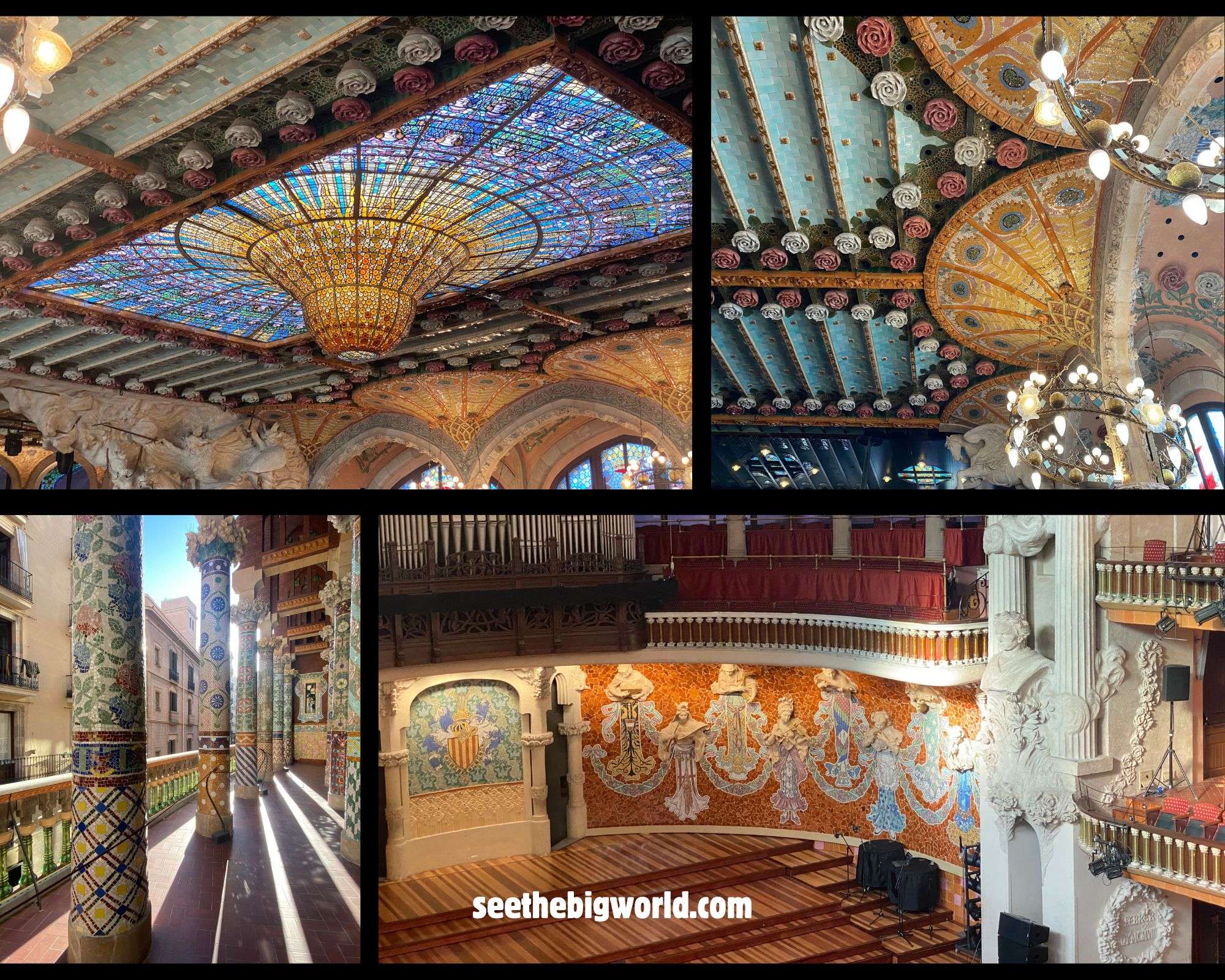
The centrepiece of the concert hall is a stunning stained glass skylight, resembling an inverted sun. This feature enhances natural lighting and is a hallmark of modernist architectural design.
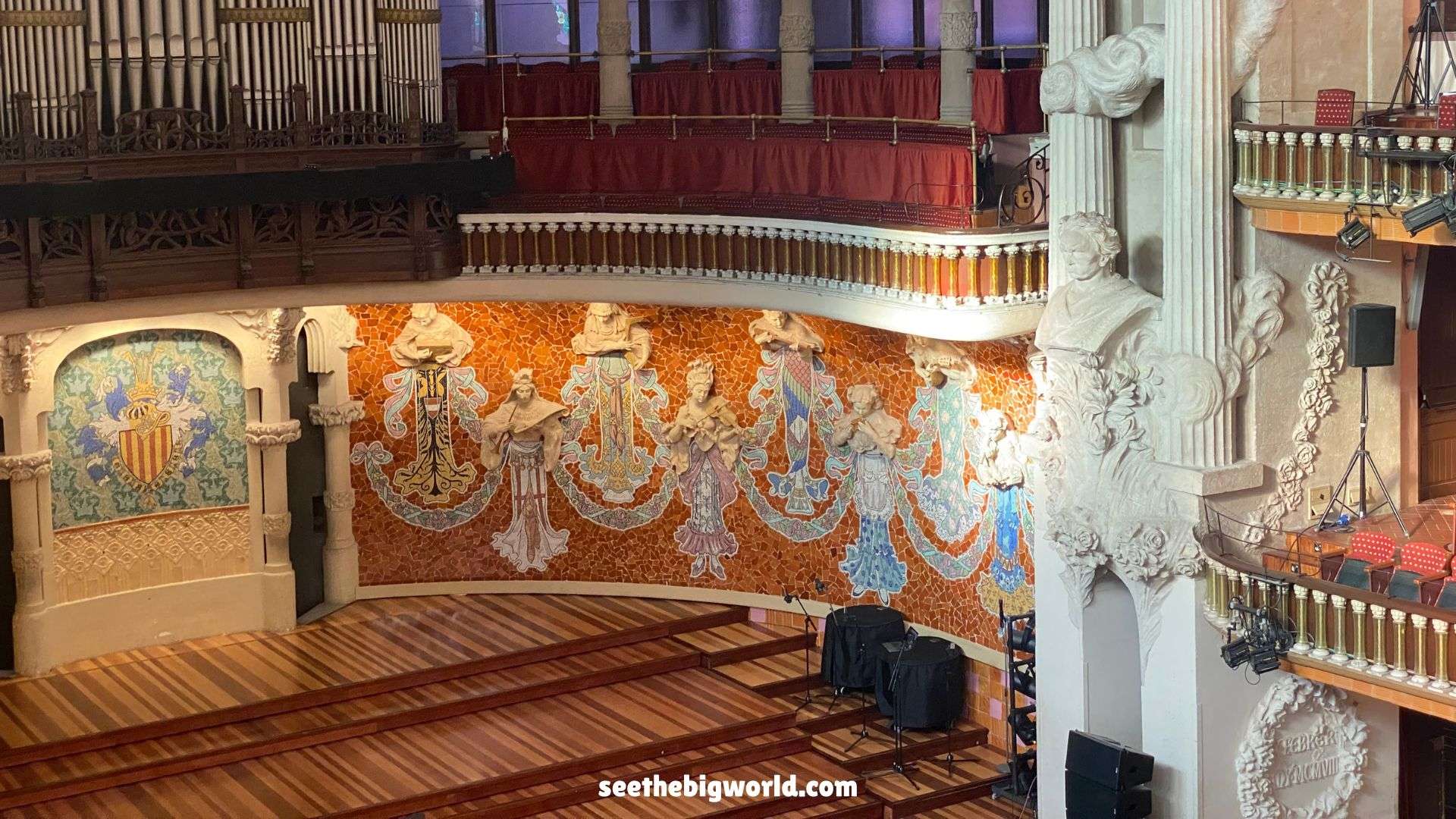
2. Female Sculptures with Mosaic Details on the Stage Walls
The walls surrounding the stage feature intricate sculptures of women’s upper bodies, transitioning into vibrant mosaic patterns for their lower halves. This unique design showcases the architect’s attention to detail and innovative expression of modernism.
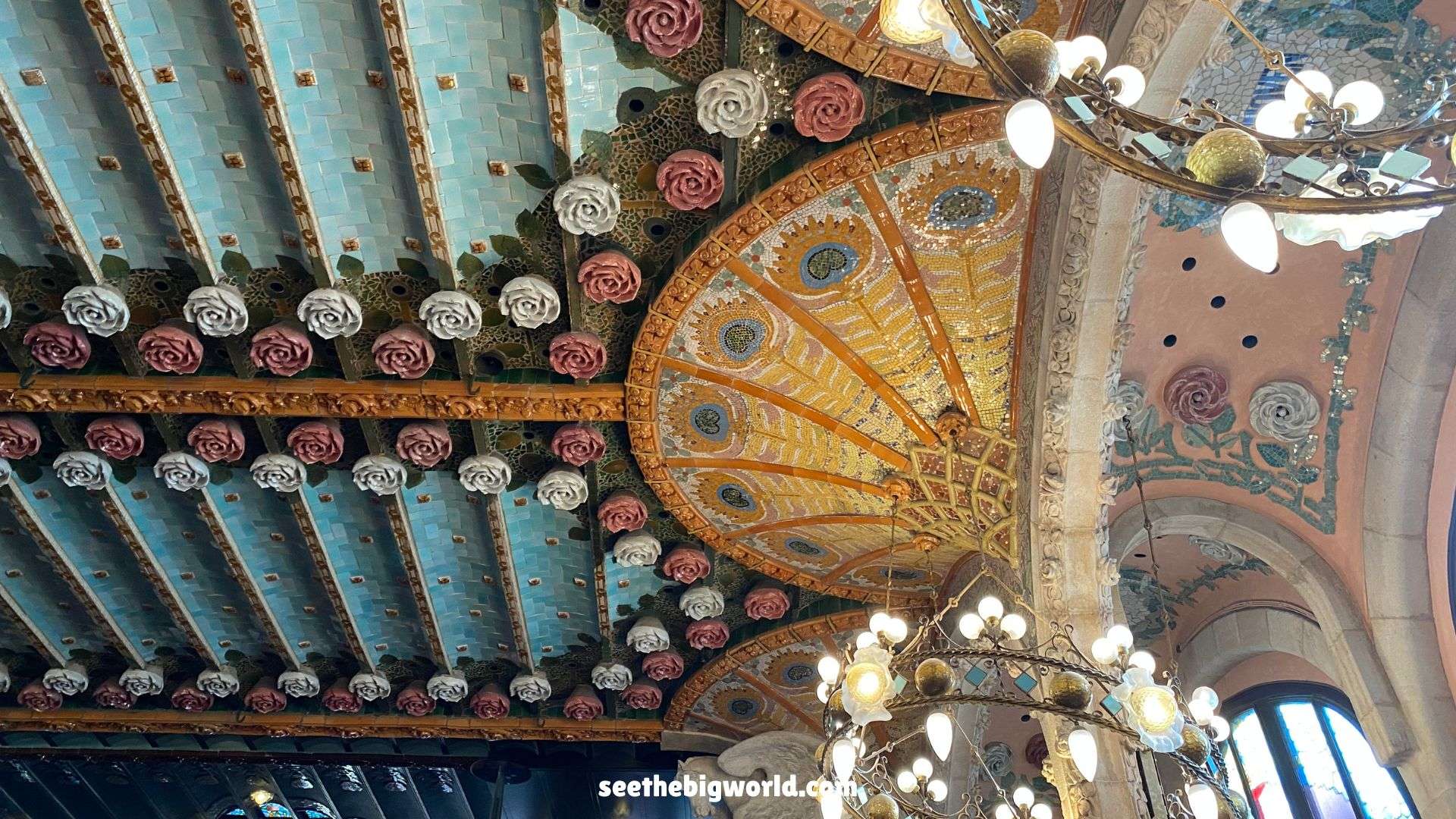
3. Abundant Rose Carvings on the Ceiling
The ceiling is adorned with numerous rose carvings, symbolising love and beauty. These delicate details highlight the craftsmanship of the design and infuse the space with a romantic and artistic atmosphere.
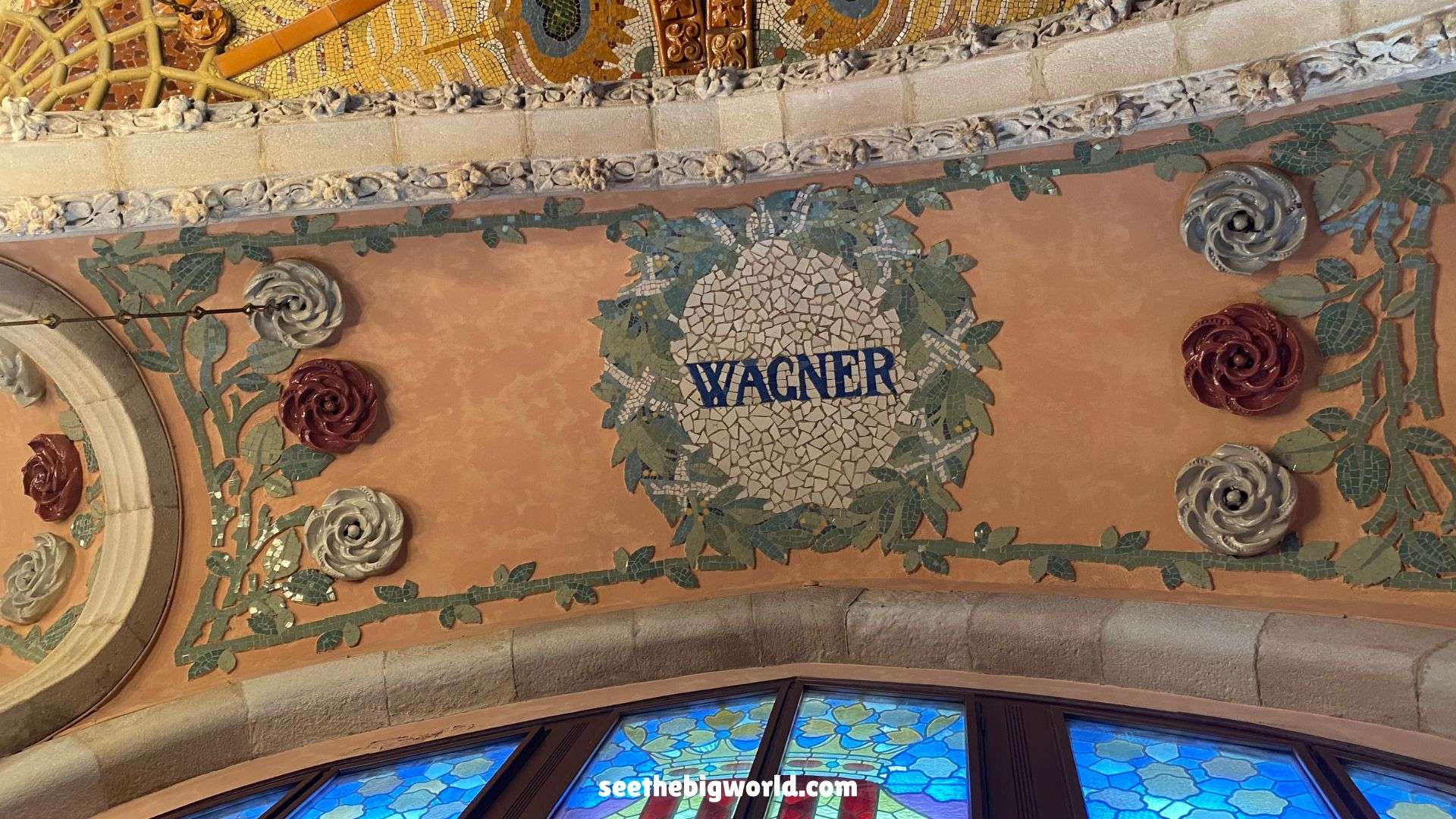
4. Names of Renowned Composers on the Ceiling and Walls
Names of legendary composers such as Beethoven, Bach, and Mozart are engraved on the ceiling and walls. These tributes honour the history of music and imbue the venue with a deep respect for musical culture.
5. Exterior and Balcony
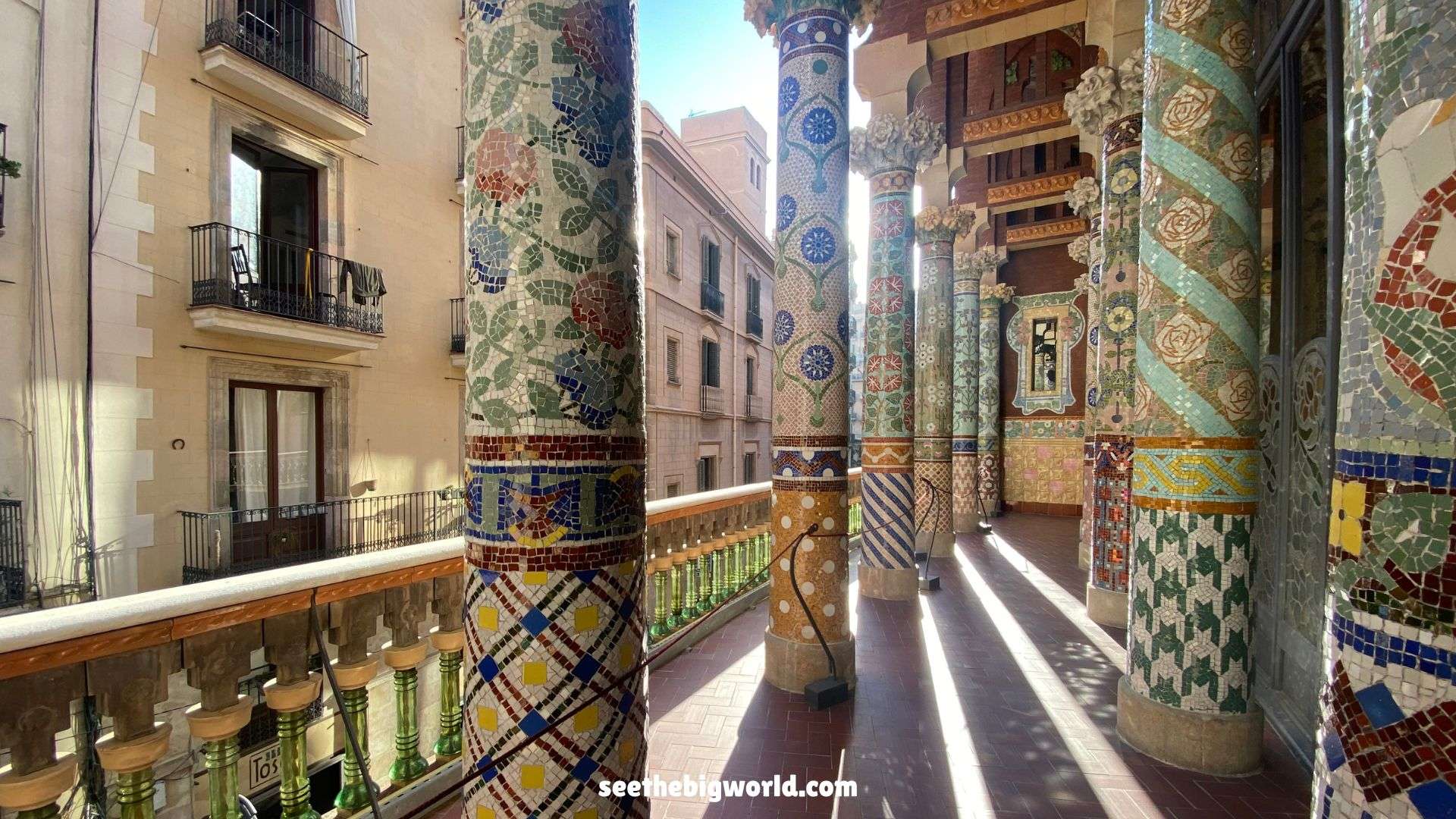
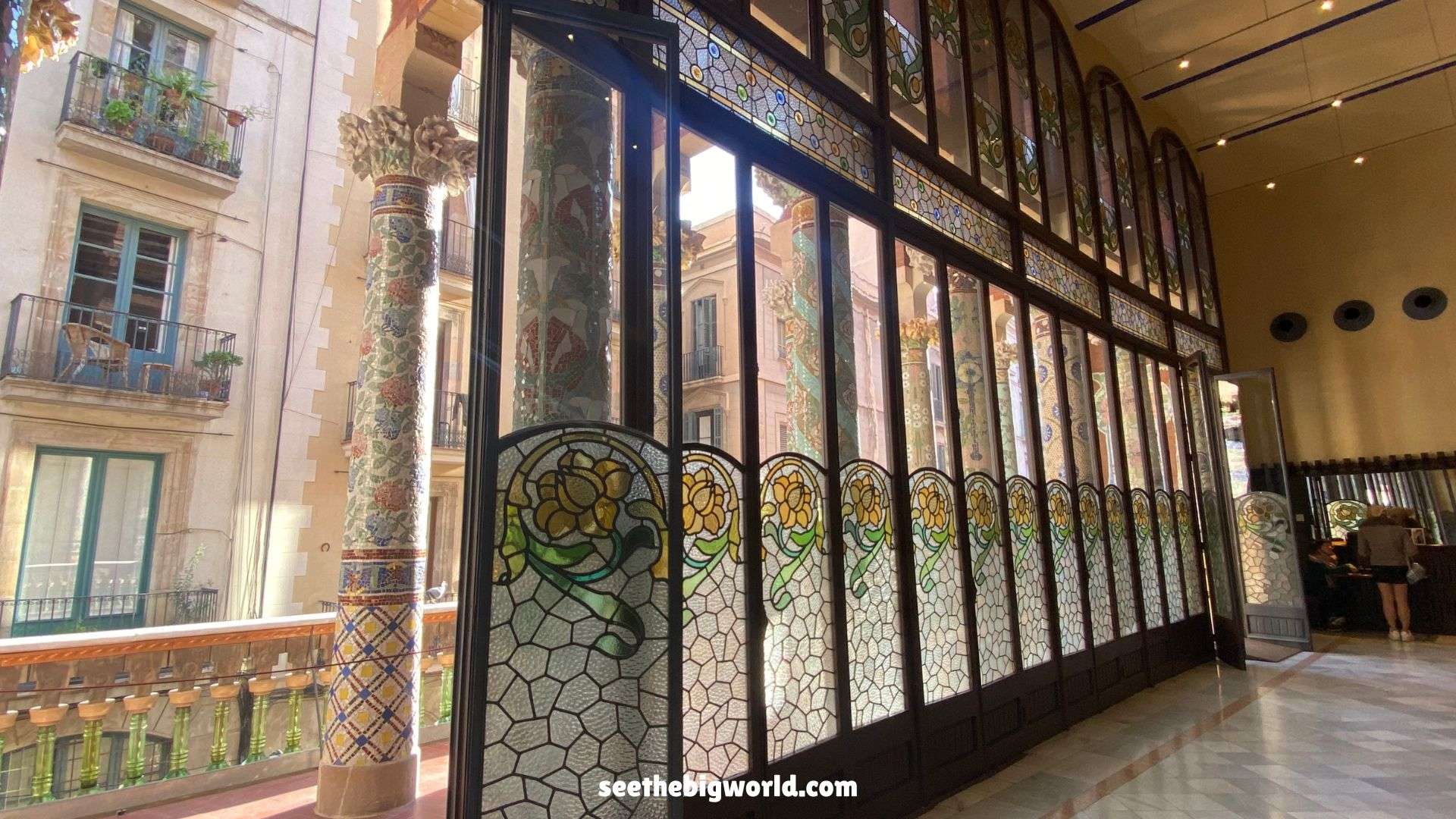
The façade of Palau de la Música Catalana is equally captivating, blending modernist architectural elements with colourful mosaics and intricate carvings. The building stands out as a visual masterpiece in Barcelona’s urban landscape. The balcony offers visitors a chance to admire the detailed exterior up close, adding to the overall experience.