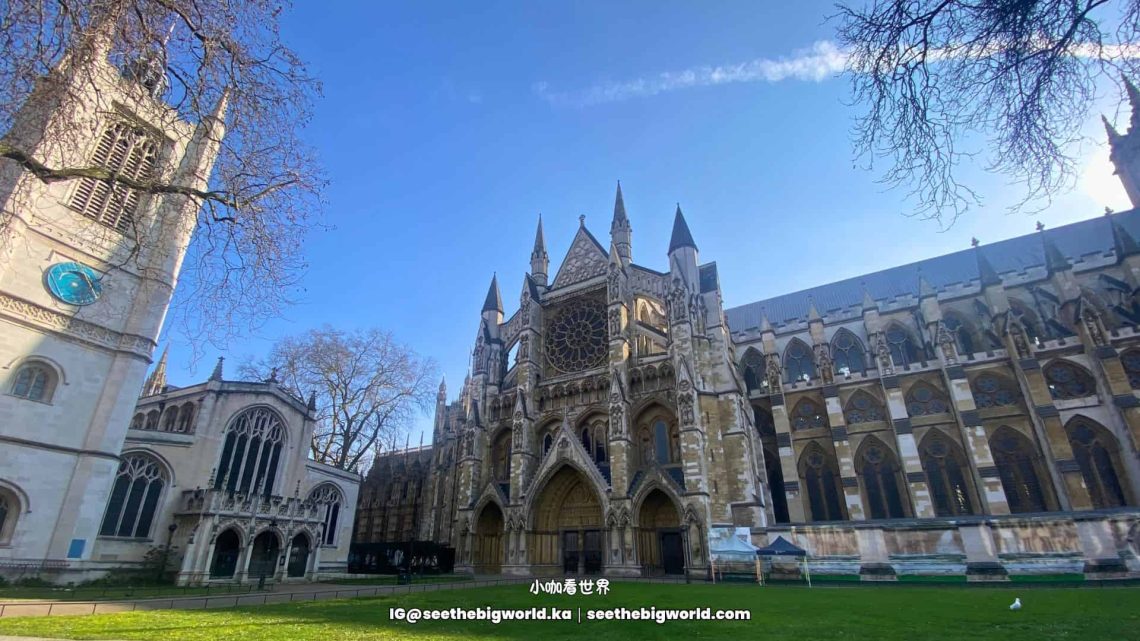
Westminster Abbey is a distillation of royal power and national identity in the UK. Since William I in 1066, every English/British monarch has been crowned here, and it has also witnessed countless royal weddings and state funerals. In this article, I’ve pulled together Westminster Abbey’s historical depth, hard-earned ticket advice from the perspective of a London resident, and practical first-hand experience of entering this sacred space for free by attending service. The aim is to help you see the soul of the British Empire inside this thousand-year-old monument.
Westminster Abbey Visitor Info
- How to Get There:Underground to Westminster Station (Jubilee, District, Circle lines) or St James’s Park Station, then walk about 5–10 minutes.
- Opening Hours:Monday–Friday 09:30–15:30, Saturday 09:00–15:00; Sundays are for service only and not open for sightseeing visits
- How Long to Spent:About 2 hours
- Tickets:Check latest prices & booking options
- Standard admission includes a multimedia audio guide (Chinese version available); skip-the-line ticket options are available as an upgrade
- The Queen’s Diamond Jubilee Galleries require an additional combined ticket
- London Pass Free entry; during Easter, June–August, and around Christmas, entry is only after 13:00. On other days, entry is available all day
A Symbol of Royal Power
Westminster Abbey means far more to British people than an ordinary church: it is both the stage for royal coronations and the resting place of national figures, and is widely seen as a symbol of “British identity and political continuity”. Every coronation, wedding, or state funeral held here is, in effect, a renewed declaration to the world of the continuity of the nation and the monarchy.
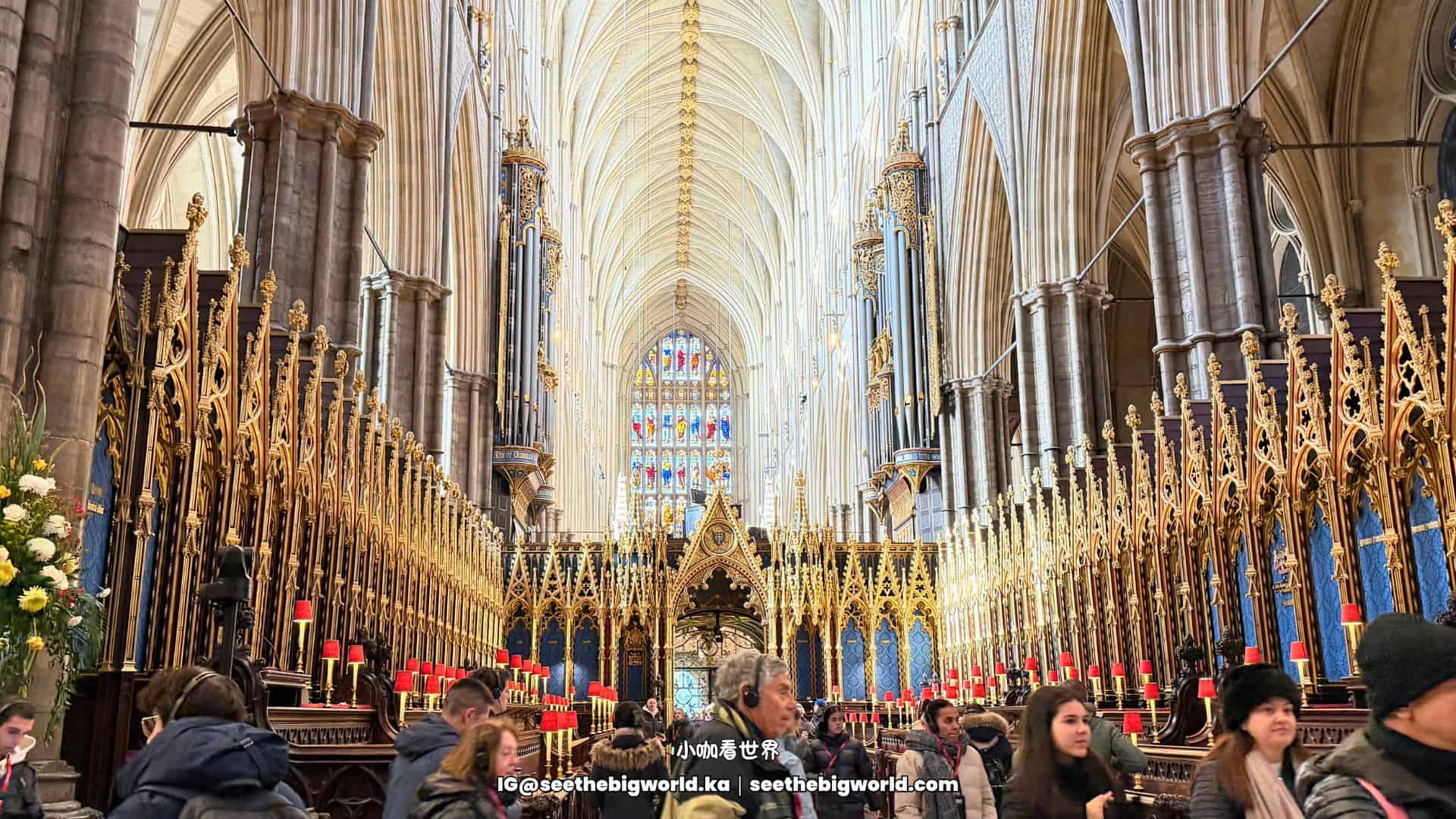
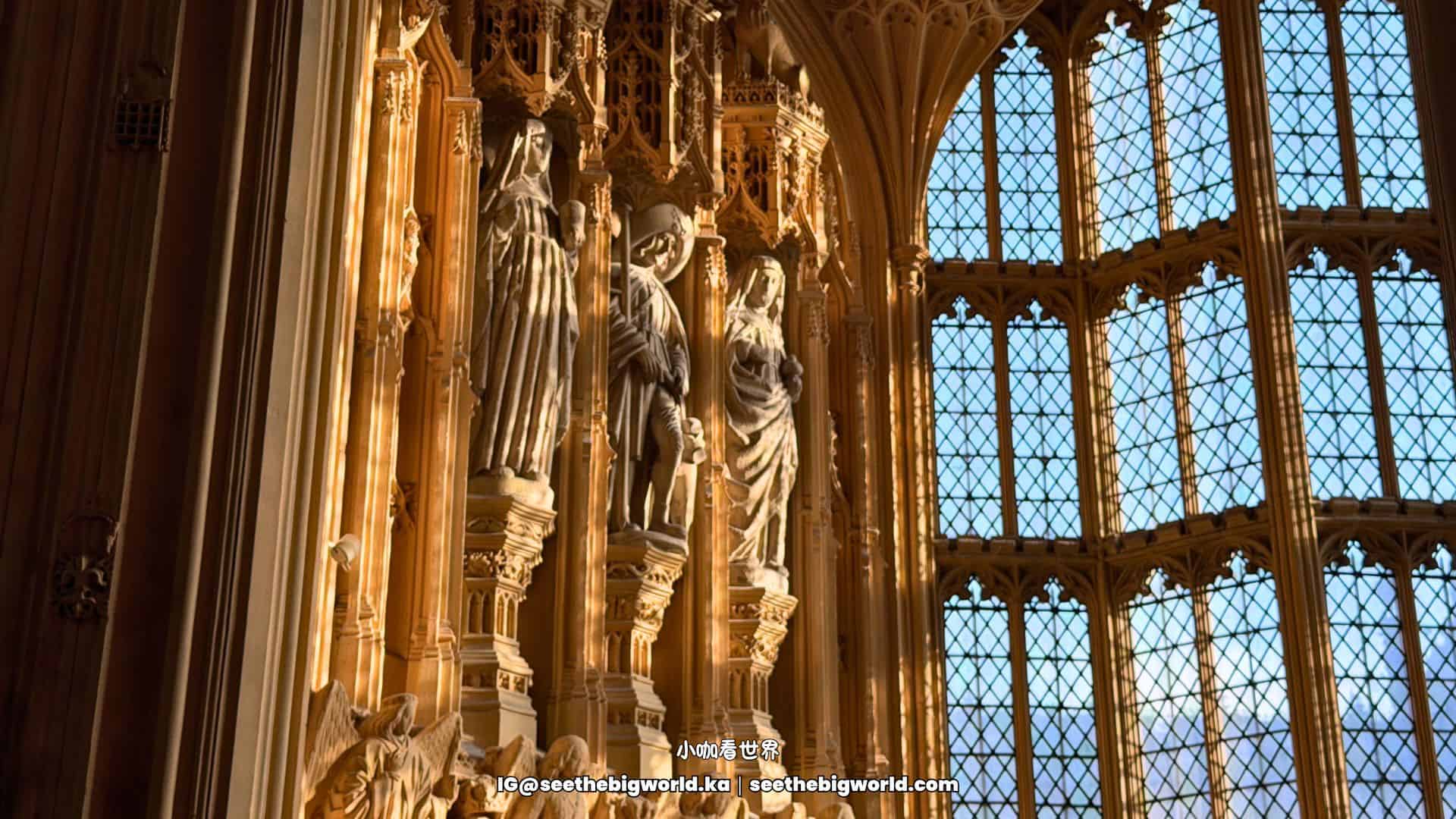
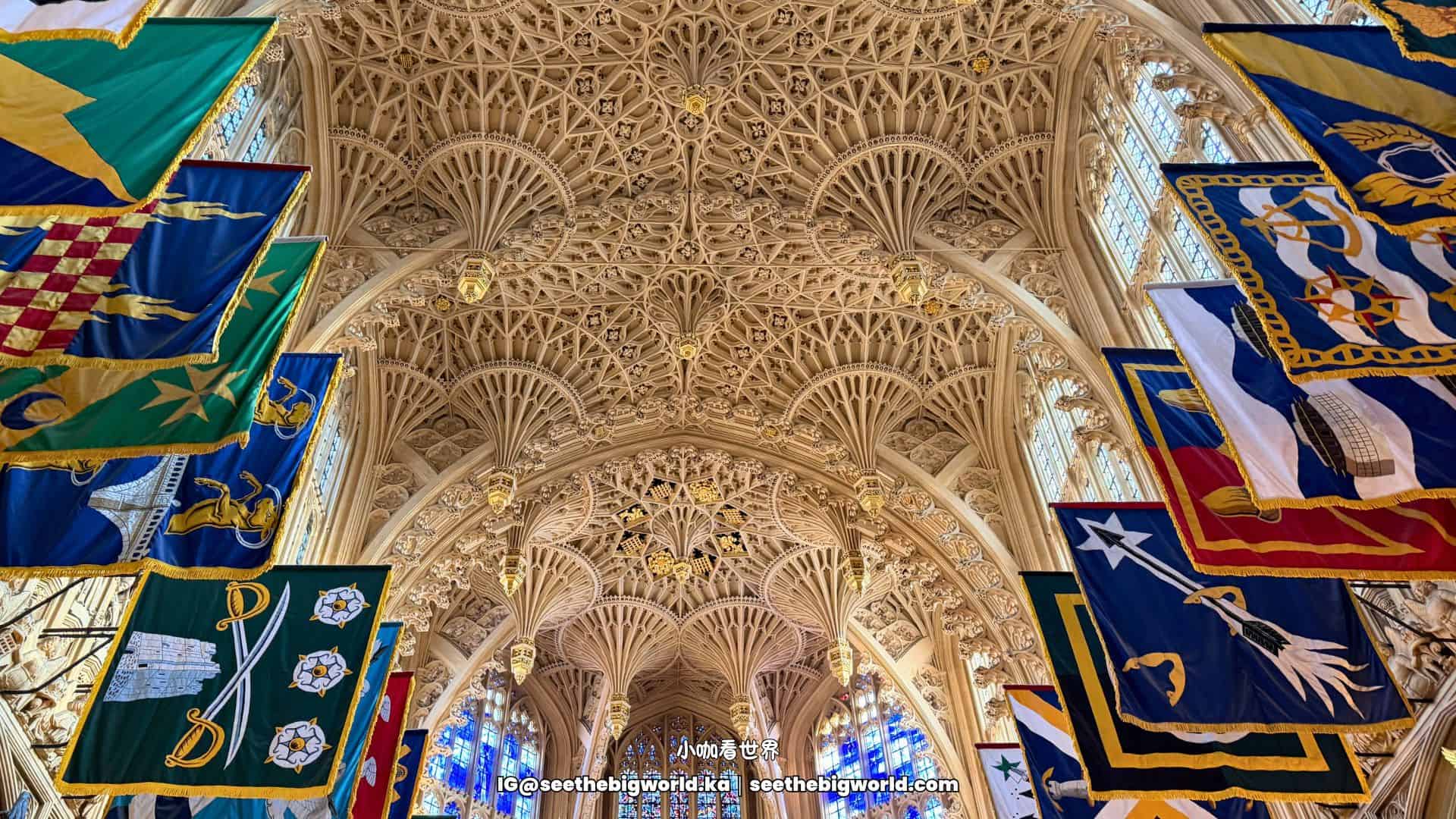
Since Edward the Confessor established a church here, Westminster Abbey has had an inseparable relationship with the monarchy; the Norman Conquest and the Tudor dynasty merely amplified that symbolism. Inside, the Perpendicular Gothic style, especially the breathtaking fan vaulting in Henry VII’s Lady Chapel, is regarded as a pinnacle of late medieval English stonemasonry.
Placed within the wider urban structure of London, Westminster is the core of politics and royal authority, while the City of London is the centre of finance and commerce, forming a “dual-core” map of urban power. Westminster Abbey stands firmly on the power side of that map, surrounded by the Houses of Parliament, the Prime Minister’s residence, and government departments. The space itself carries an unspoken sense of authority.
Book Westminster Abbey Tickets in Advance
While living in London, I walked to Westminster Abbey several times but never went in: because I hadn’t booked in advance, I kept seeing “same-day tickets sold out” at the entrance, and even if you are physically standing there, you can only leave disappointed.
Later, I booked a standard timed-entry ticket online for Boxing Day. It was not a “skip the line” ticket, but even during this relatively “off-peak” period, I still had to queue after arriving at my booked time, and I waited 30 minutes in practice.
If you only have a short time in London and happen to be travelling during peak season, you may want to consider a skip-the-line ticket. When I saw people walk straight in without queuing, it honestly felt like a lesson in class inequality in real time. (Laughs)
From the Hall of Science to the Royal Core
The visiting route inside Westminster Abbey is basically one-way: you enter from the north door, follow the crowd and signs through the nave and Poets’ Corner, and finally leave from an exit near the west door.
Below is the actual route I took that day:
Science vs Faith: Darwin and Newton
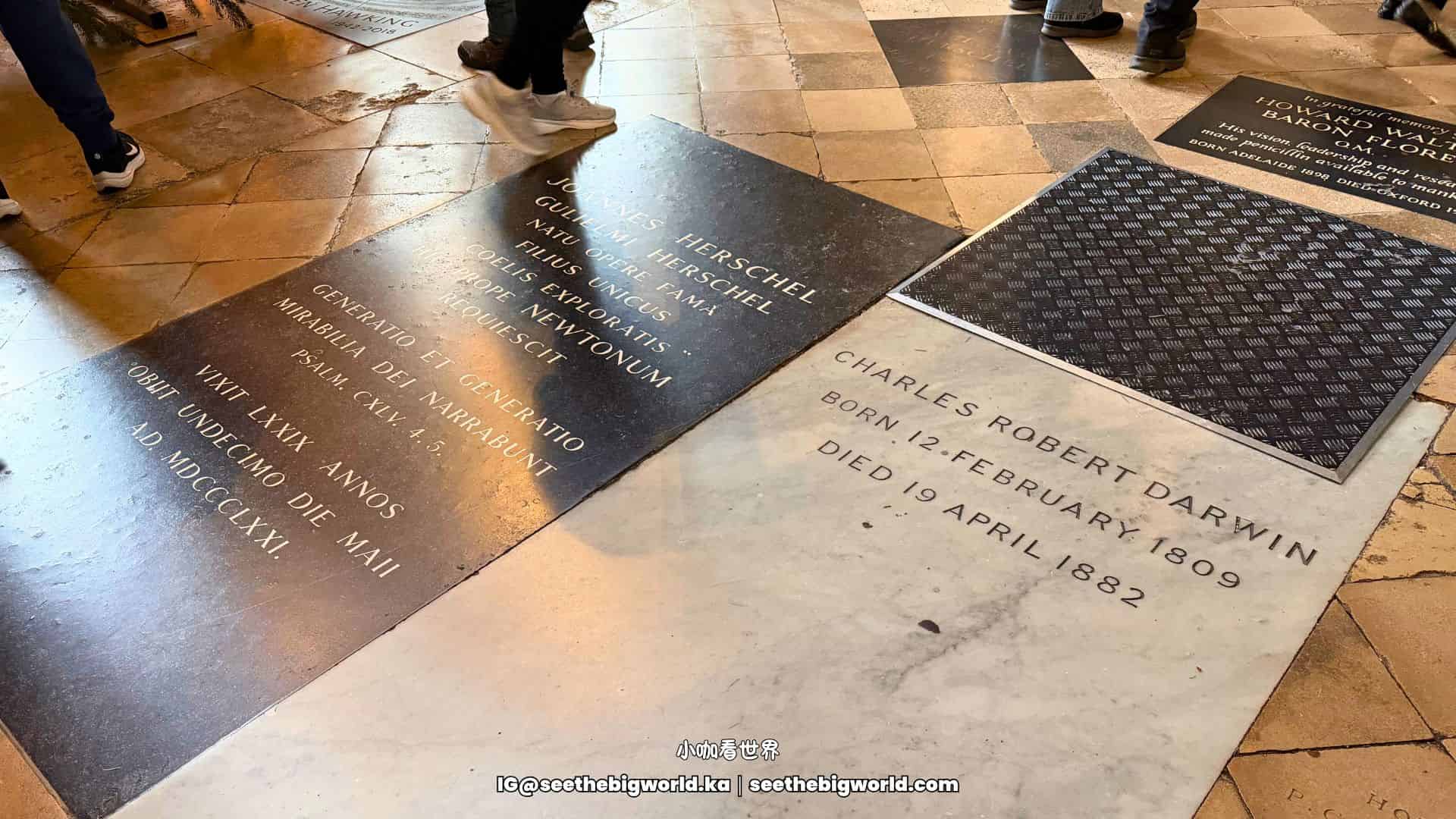
After stepping into Westminster Abbey through the North Door, you follow the preset route through a relatively dim side aisle and several monuments. While your eyes are still adjusting to the light, you are already being drawn gradually into the main space. Look down at your feet and you’ll see Charles Darwin’s grave inscription set into the floor, as if modern science has been quietly embedded into the core of this religious and national seat of authority.
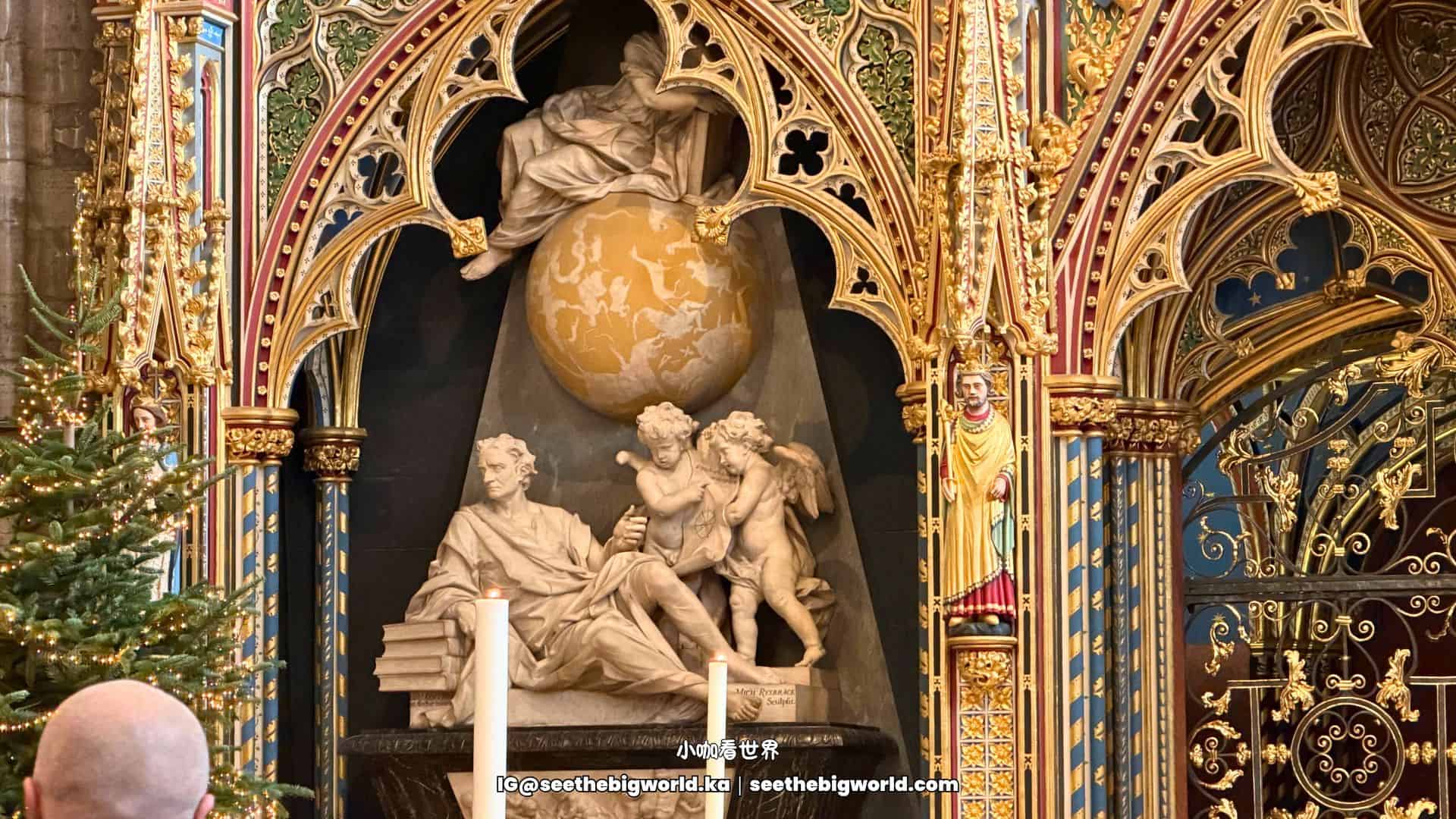
Not long after, you will come across the very striking memorial to Isaac Newton. The sculpture itself is highly dramatic, and it is the strongest visual symbol of the “science vs faith” tension along the whole route.
In reality, because Westminster Abbey is a working church, if preparations are underway for certain ceremonies that day (for example, an important service or state event), this area may sometimes be temporarily filled with chairs, and you may only be able to glimpse the memorial from a distance over people and chair backs.
The Grave of the Unknown Warrior
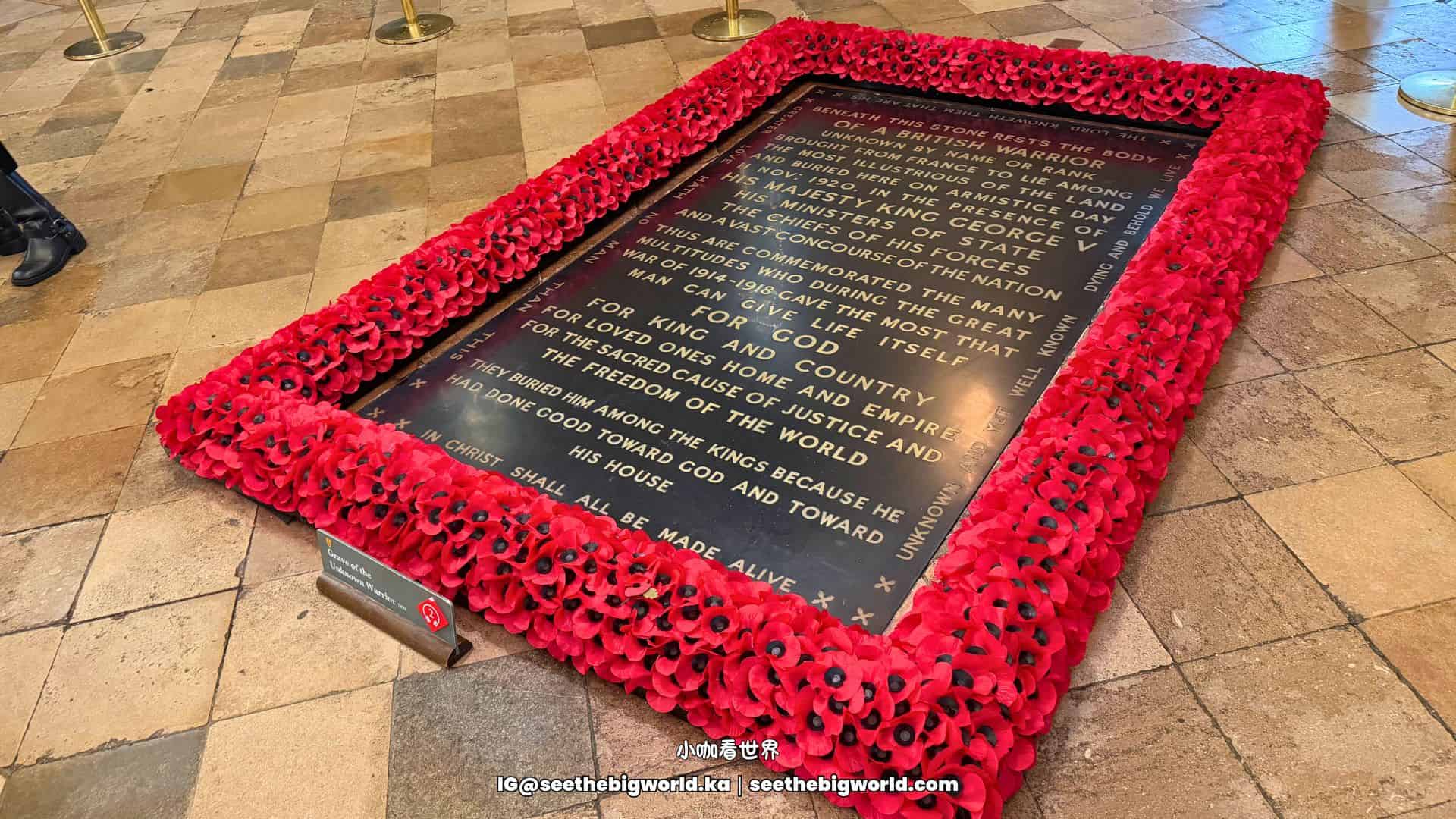
Continue along the route into the Nave, the space where most services and Christmas worship take place, and you will see The Grave of the Unknown Warrior.
There is a black gravestone on the floor, often surrounded by poppies and wreaths. This area is explicitly protected: no one may step on it. Even members of the Royal Family deliberately walk around it during state ceremonies, symbolising the highest respect for the unknown soldiers of the First World War.
Coronation Area and Royal Tombs
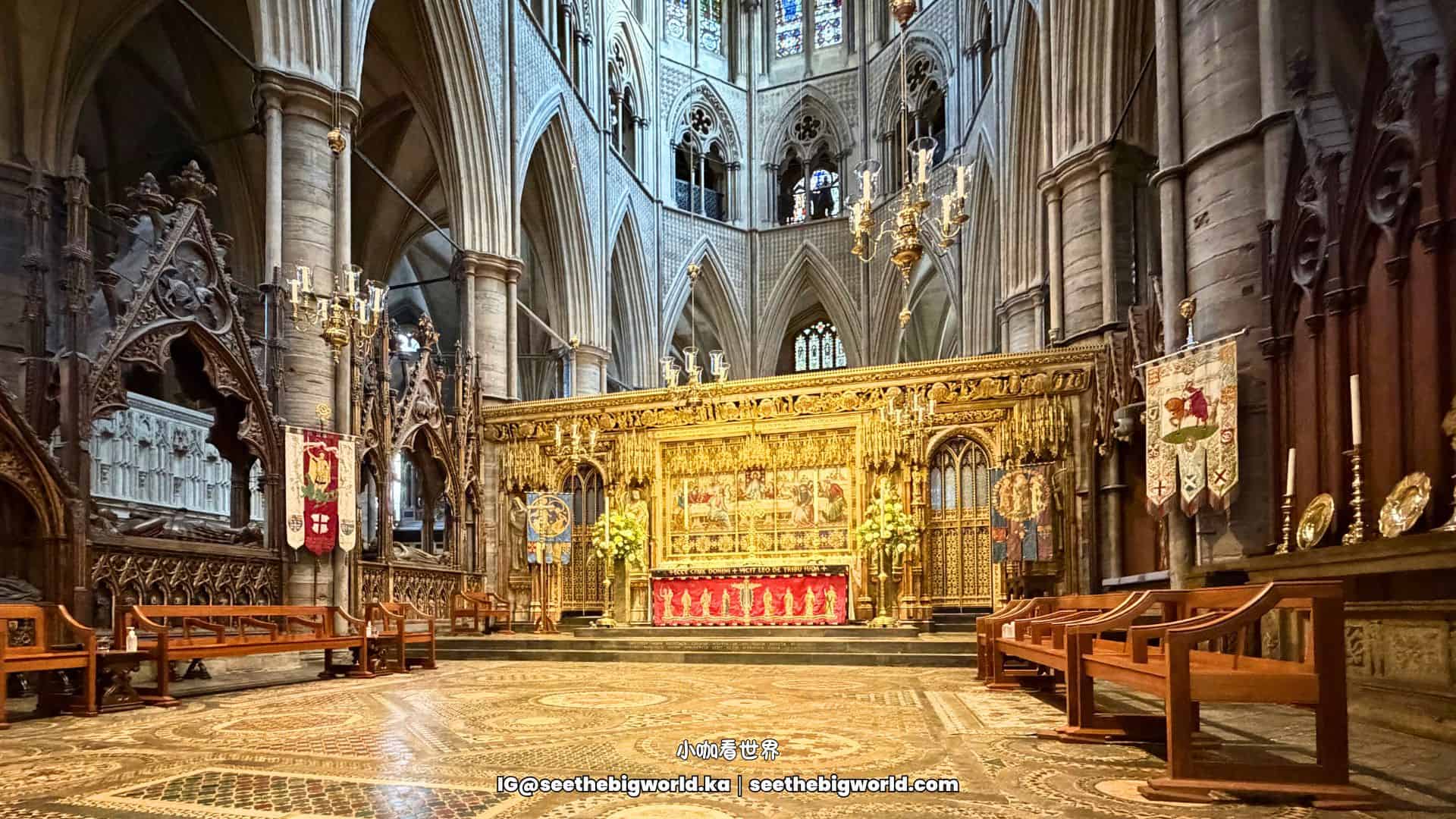
Following the route towards the front of the altar brings you to the core area of coronation rites: the High Altar and the so-called Coronation Theatre. This is where each British monarch is crowned, where the “crowning” itself takes place, not at the nave entrance that often appears in photographs.
You are then guided into a series of narrow chapels, spaces almost packed with royal tombs and memorials. Henry VII’s Lady Chapel in particular compresses centuries of power and death into a small space. This section has the heaviest historical atmosphere on the whole route, and it is also where movement tends to slow most because of crowds.
Literary Pilgrimage Site: Poets’ Corner
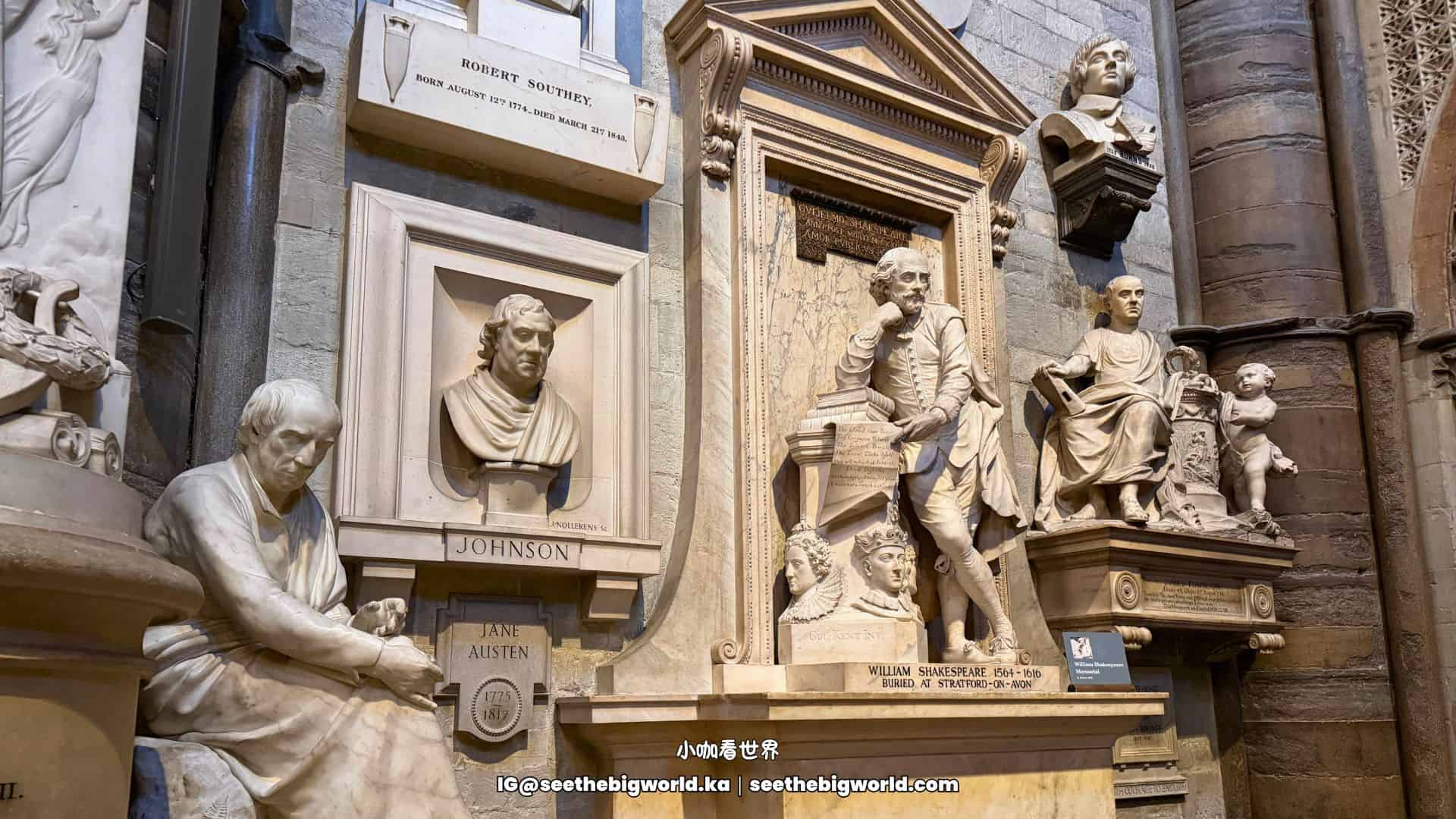
After leaving the royal tomb area, the route takes you to the famous Poets’ Corner. Literary and artistic giants including Dickens and Shakespeare are buried or commemorated here. The walls and floors are densely filled with names and symbolic motifs—it is a full pilgrimage site for fans of British literature and culture.
I strongly recommend spending time here with the audio guide. Many of the names may not be that familiar in the Chinese-speaking world, but viewed through the lens of “how British people see their own cultural tradition”, it is very interesting.
The Queen’s Diamond Jubilee Galleries
After leaving Poets’ Corner, you will come to a fork in the route:
If you bought the add-on for the Queen’s Diamond Jubilee Galleries: you can look down over the nave and altar from the upper level, and view precious artefacts and architectural details up close.
However, because I had already seen The Crown Jewels at the Tower of London before, I did not buy the gallery ticket on this visit.
Semi-Open Cloisters
If you do not buy the Queen’s Diamond Jubilee Galleries add-on, the route takes you out of the main church and into a semi-open cloister walk (the Cloisters). Arcades run along all four sides, with a lawn in the middle, officially called the Cloister Garth.
This was originally a place for Benedictine monks to walk and meditate. Today, it has become a quiet corner where visitors can mentally “switch off” a little before leaving, and from here you can also access the Chapter House and several small gardens.
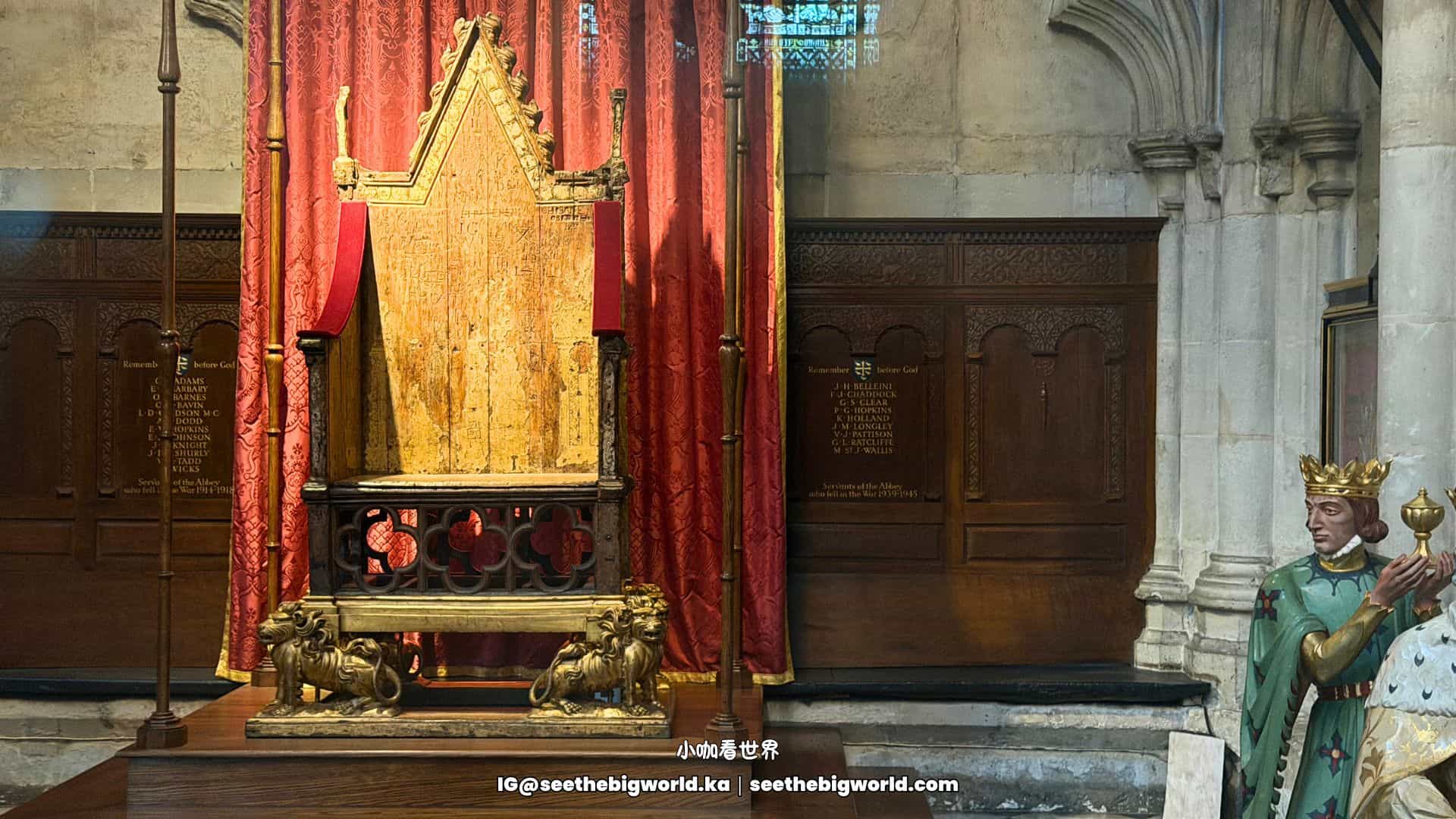
The Real Location of the Coronation Chair
Many people assume The Coronation Chair is placed in front of the altar, but in everyday conditions its “home” is actually near the end of the visitor route. The Coronation Chair is now kept in St George’s Chapel, near the Great West Door, protected strictly behind glass.
This 700-plus-year-old wooden chair, covered with graffiti and carved marks, is moved to the centre of the Coronation Theatre only for coronations. At all other times, it stands quietly in this small chapel, allowing you to complete the final piece of this journey through symbols of power just before the exit.
How to Enter Westminster Abbey for Free?
If you do not want to pay for sightseeing admission, or you care more about the religious and musical experience, Westminster Abbey also offers options for free entry for worship purposes. But the premise is important: you must be there to attend worship, not to “use it as a free sightseeing opportunity”. The route and accessible areas are completely different.
Regular Services and Evensong
Weekday Evensong is usually held in the afternoon, with free entry and no ticket or reservation required. You simply queue a bit early at the designated entrance, go through security, and staff will guide you to your seat. Seating is usually concentrated in the nave and the choir stalls area.
Westminster Abbey religious services timetable
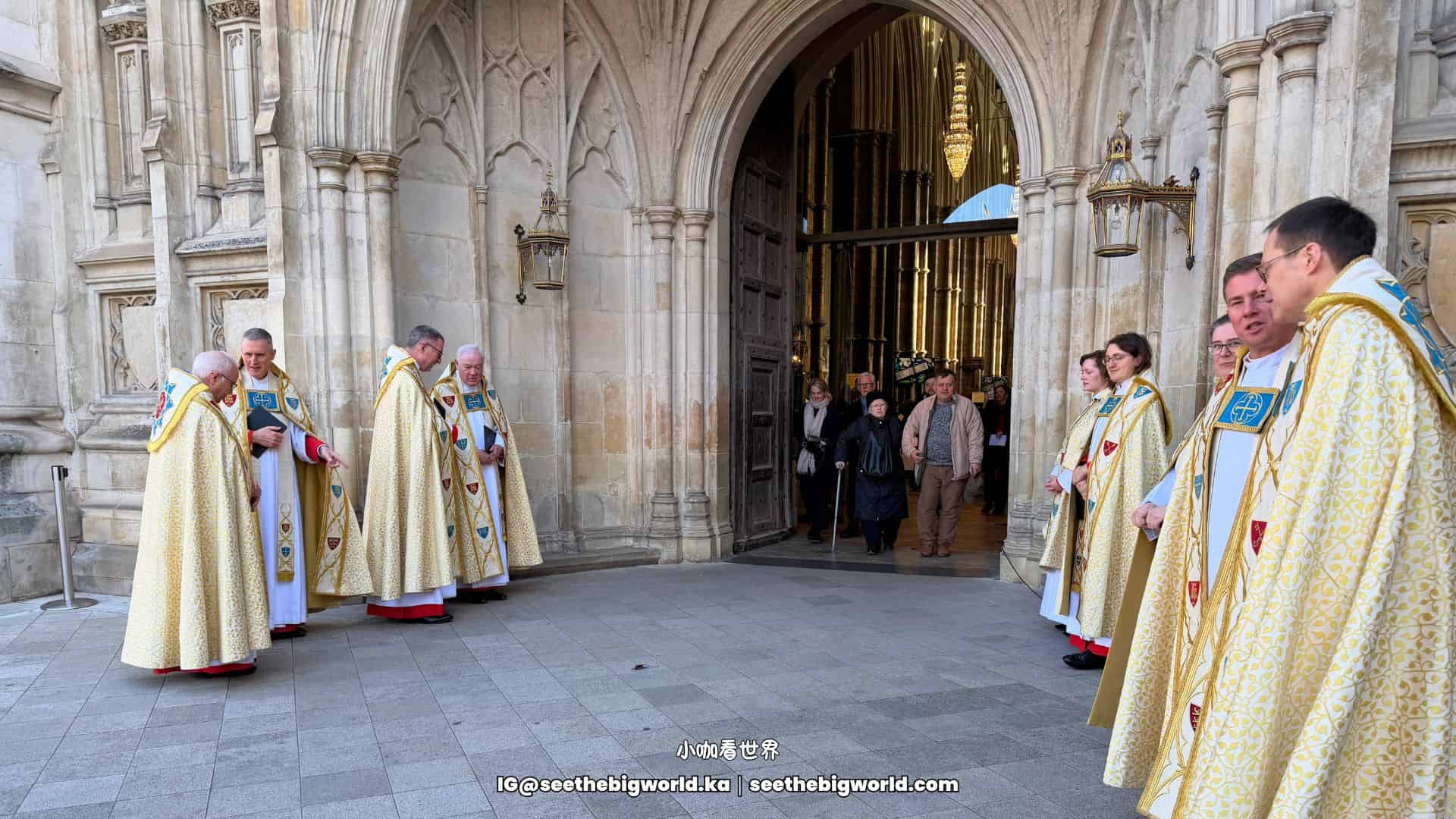
Christmas Day Sung Eucharist: First-Hand Experience
If you plan to enter Westminster Abbey on 25 December (Christmas Day), you can attend the 10:30 Christmas Day Sung Eucharist. This service usually lasts about 90 minutes and requires advance booking of a free ticket on the official website.
My actual experience was this: although you can get “free entry”, your movement area is basically limited to the Nave. You take part in the service at the pace of the congregation, sitting, standing, and receiving Holy Communion, and you cannot move around freely as you would during a standard visit. Naturally, you also cannot wander over to Poets’ Corner or the royal tomb areas and explore slowly.
At the same time, photography, filming, and walking around are strictly prohibited during the service. It is better understood as a religious and cultural experience, rather than a sightseeing alternative to a paid ticket. The full service includes scripture readings, psalms, and prayers, together with choral singing by the Westminster Abbey Choir. If you care about music and ritual atmosphere, this experience can be more penetrating than sightseeing alone.
If you want both the Christmas service atmosphere and a full visit for photography and exhibitions, it is better to choose another non-Christmas morning and buy a normal ticket to do the full route properly.
Photography, Worship, and Respect
Normal sightseeing hours
You may take photos in most open areas (for personal use), but filming, flash, tripods, and selfie sticks are strictly prohibited.
Photography is completely prohibited in areas including The Shrine of St Edward the Confessor, St Faith’s Chapel, and The Queen’s Diamond Jubilee Galleries. Pay close attention to signs and staff instructions.
During services and Evensong
Whether you are attending regular Evensong or the Christmas Sung Eucharist, photography and filming are prohibited for the entire service from start to finish.
This is the setting for many people’s life ceremonies (baptisms, weddings, funerals). Respecting the space and the congregation matters more than getting the shot.
Read More
Passes:London Pass|BritRail Pass|Euro Train Pass
London Articles:London Travel Guide|London Pass Guide|London Itinerary|London for Seniors|London Transportation Guide|Top Things to Do in London|Buckingham Palace Changing of the Guard|Westminster Abbey|St Paul's Cathedral|Tower of London|Day Trip to Greenwich|Harrods|West End Musicals|London Skyline
Other UK Cities:Cities Near London|Liverpool Guide